
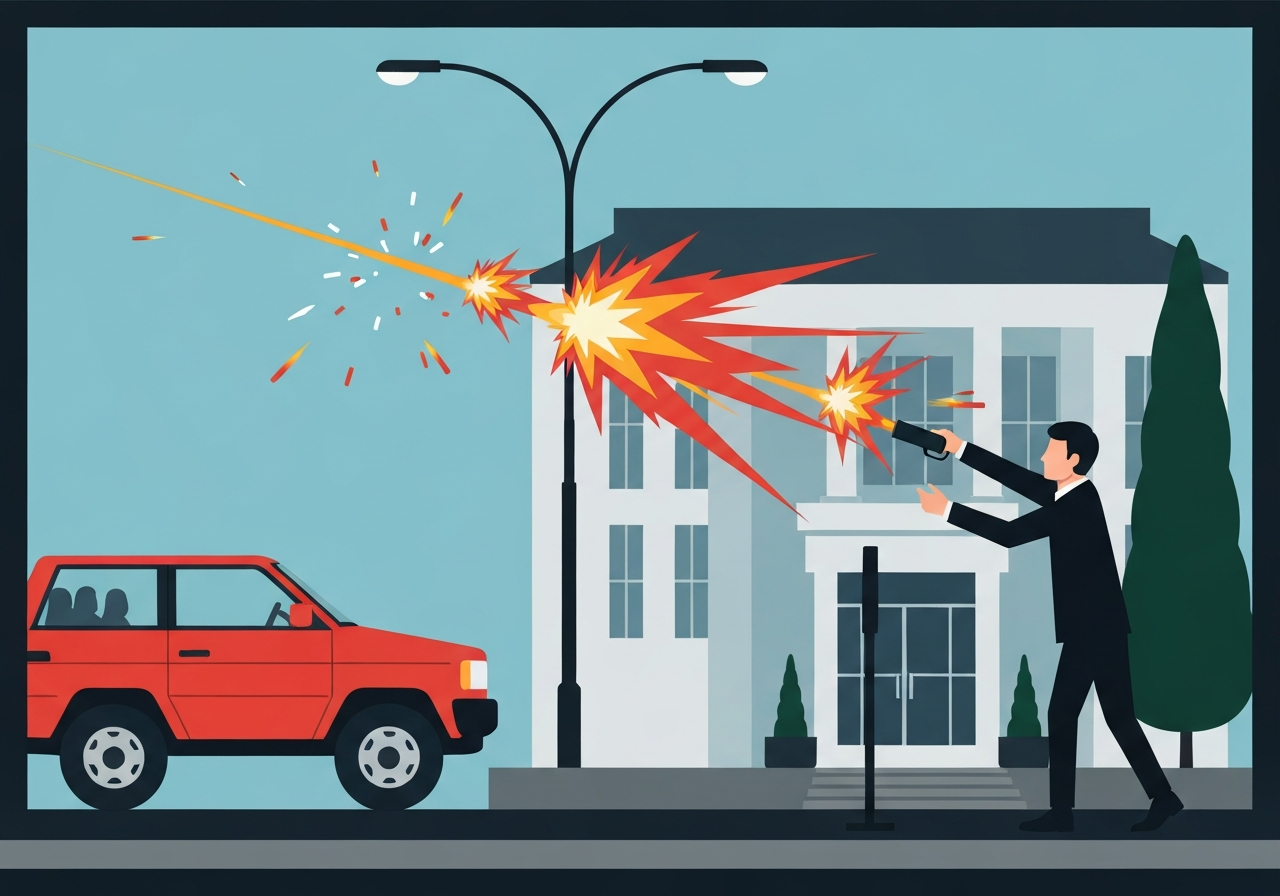
On March 10, 2026, at about 4:30 a.m., two men drove past the U.S. Consulate in downtown Toronto, exited a white Honda CR-V and fired multiple rounds with a single handgun, police said. The incident left visible marks on the consulate’s entrance glass, prompted a partial road closure and drew a large forensic response, but resulted in no reported injuries. Toronto Police and the Royal Canadian Mounted Police (RCMP) are treating the event as a national security investigation and asked the public for dash‑cam or other footage. Authorities also announced enhanced protection for American and Israeli diplomatic missions in Toronto and Ottawa.
Key Takeaways
- Two suspects fired multiple shots at the U.S. Consulate in downtown Toronto on March 10, 2026, at approximately 4:30 a.m.; no injuries were reported.
- Shooters arrived in a white Honda CR-V, both discharged rounds from a single handgun and fled the scene in the same vehicle.
- Bullet strikes were visible on the consulate’s glass entrance; part of the boulevard leading to Ontario’s legislature was closed for forensic work.
- Toronto Police requested witness video, including dashboard camera footage, to aid the investigation.
- The RCMP announced heightened security for U.S. and Israeli consulates in Toronto and Ottawa following the shooting.
- Police linked the event to a national security investigation amid recent local incidents, including shots fired at three Toronto synagogues last week.
- Investigators deployed a large forensics team and examined exterior cameras mounted on the building.
Background
The U.S. Consulate sits on a wide, often busy boulevard in downtown Toronto near Ontario’s legislature, major courthouses, hospitals and City Hall. Because of its downtown location and role, the consulate is frequently the focus of public demonstrations, including protests this past weekend against the American and Israeli attack on Iran. Diplomatic missions are protected under international conventions, but they remain vulnerable in high‑visibility urban settings where protesters and counterprotesters gather.
In recent weeks Toronto law enforcement has responded to a cluster of security incidents that have raised local concerns: last week, shots were fired at three synagogues in the city, prompting community alerts and stepped‑up policing. Canadian and allied security services typically coordinate after threats or violent acts that target diplomatic sites, and designation of an event as a national security investigation triggers broader information sharing and specialized investigative resources.
Main Event
According to Deputy Chief Frank Barredo of the Toronto Police Service, the two men pulled up in the white Honda CR-V around 4:30 a.m., exited the vehicle and fired multiple shots using a single handgun before returning to the SUV and leaving. Television footage and on‑scene photographs showed at least two bullet impacts on a glass door at the consulate’s main entrance. Barredo described the scene and confirmed that no one on site was physically harmed.
Officers arriving in a forensics van photographed the largely stone facade and exterior cameras of the consulate, which has visible security features. Part of the road directly in front of the mission was closed at sunrise to preserve evidence and allow investigators to canvass the area for witnesses. Police appealed to drivers and passersby to check any dash‑camera or mobile phone recordings that might have captured the vehicle or events leading up to the shooting.
Superintendent Chris Leather of the RCMP said the shooting was being treated as a national security matter and that additional security would be provided to both the American and Israeli consulates in Toronto and Ottawa. The RCMP emphasized vigilance by diplomatic protection teams while investigators work to establish motive, identify the suspects and determine whether the incident is related to other recent attacks.
Analysis & Implications
Labeling the incident a national security investigation broadens the investigative remit beyond a routine criminal inquiry: it typically involves federal agencies, liaison with international partners and an assessment of whether the act was intended to intimidate or send a political message. For the consulate and other diplomatic missions, such an event raises questions about perimeter security, surveillance coverage and rapid response protocols in dense urban corridors.
An escalation in visible threats to diplomatic sites can compel governments to increase guard details, temporarily restrict public access to plazas and sidewalks near missions, and reallocate law enforcement resources—actions that carry financial and civic trade‑offs. Local authorities must balance the right to protest with the need to protect diplomatic personnel and facilities, a tension that becomes acute when international conflicts spur demonstrations.
Diplomatic fallout is possible even if no staff were injured: the United States may press for expedited investigative cooperation and temporary changes to consular operations, while Canadian authorities will be under pressure to demonstrate effective deterrence and timely arrests. Intelligence sharing with allied services could accelerate if investigators find links to organized groups or cross‑border actors.
Comparison & Data
| Date | Target | Location | Injuries/Status |
|---|---|---|---|
| March 10, 2026 | U.S. Consulate | Downtown Toronto | No reported injuries; forensics active |
| Early March 2026 (last week) | Three synagogues | Toronto (various) | Shots fired; publicly reported details limited |
The table summarizes the incidents publicly reported so far and underscores the recent uptick in targeting of community and diplomatic sites. Authorities have released limited operational detail while forensic teams and national security investigators work to determine motive, suspect identities and any pattern linking events.
Reactions & Quotes
Toronto police leadership briefed reporters at the scene, describing the basic sequence and urging anyone with recordings to come forward. The RCMP warned of increased protection for diplomatic missions while the probe continues.
“There was a firearm discharge at the consulate early this morning; we are following up on all available footage and leads,”
Deputy Chief Frank Barredo, Toronto Police Service
RCMP officials framed the response in national security terms and stressed the need for public cooperation to lower tensions and support investigators.
“These consulates deserve a heightened amount of vigilance and security at this time,”
Superintendent Chris Leather, Royal Canadian Mounted Police
Community leaders and local officials have signaled concern about the string of recent incidents and called for calm while urging thorough investigations. Police statements have been factual and circumspect as evidence collection proceeds.
Unconfirmed
- Whether the shooting was motivated by the recent demonstration against the American and Israeli attack on Iran remains unconfirmed and under investigation.
- Any direct connection between the consulate shooting and the shots-fired incidents at three Toronto synagogues last week has not been established publicly.
- The identities, criminal histories or international links of the two suspects have not been released; apprehension status is unconfirmed.
Bottom Line
The early‑morning shooting at the U.S. Consulate in Toronto on March 10, 2026, caused material damage but no injuries; investigators have prioritized the case as a national security matter and have appealed for public video evidence. The event follows other recent violent incidents in the city and has prompted immediate security upgrades for diplomatic missions in Toronto and Ottawa.
For residents and visitors, expect a continued visible police and forensic presence in the downtown corridor while investigators seek leads. The investigation’s findings—whether they point to a politically motivated attack, isolated criminality or organized actors—will shape both short‑term security measures and longer‑term community responses.
Sources
- The New York Times — media/press report on the incident and official statements