
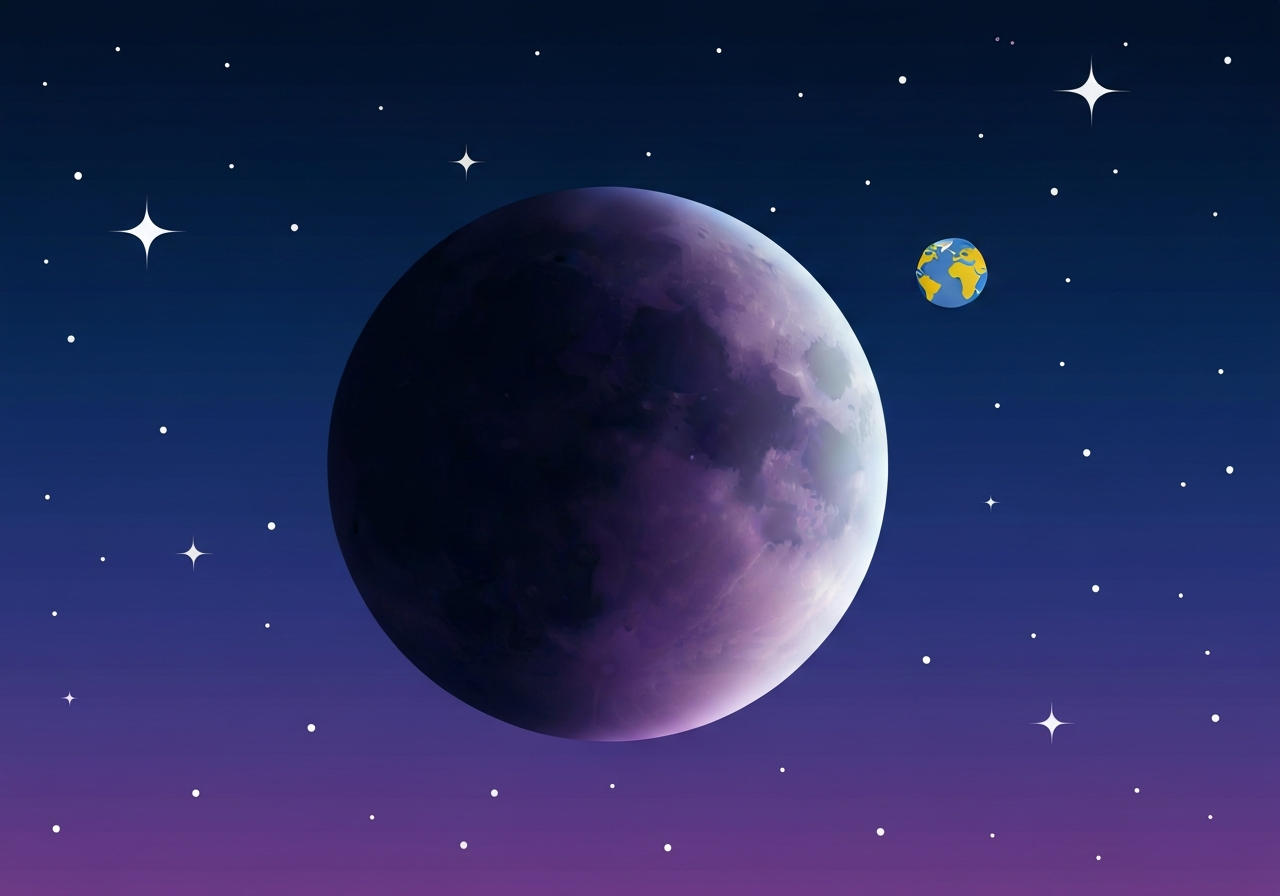
On March 2–4, 2026, Earth will cast its full shadow on the Moon, producing a total lunar eclipse that will create a pronounced “blood moon” for observers across large parts of the night side. The event is the first lunar eclipse of 2026 and will be prominently visible from western North America, Australia, New Zealand and eastern Asia, weather permitting. For many locations in those regions the best views will occur during the nocturnal hours of March 3 local time. This eclipse is also notable because it will be the last total lunar eclipse visible from anywhere on Earth until the New Year’s Eve 2028–2029 event.
Key takeaways
- The total lunar eclipse spans March 2–4, 2026, with peak totality visible on March 3 for much of the target regions.
- Visibility covers western North America, Australia, New Zealand and eastern Asia; billions on the night side of Earth may see at least part of the event, contingent on local weather.
- This is the first lunar eclipse of 2026 and the final total lunar eclipse until Dec 31, 2028–Jan 1, 2029.
- Observers in the western half of North America and across the Pacific (including Australia) should have the best prospects for full, prolonged views of totality.
- Viewing quality will depend on local cloud cover and horizon position; urban light pollution affects contrast but not the underlying astronomical sequence.
- Amateur astronomers can safely watch the lunar eclipse with the naked eye, binoculars or small telescopes—no eye protection is required.
Background
Total lunar eclipses occur when the full Moon passes through Earth’s umbra, the darkest part of its shadow. The March 2026 event follows well-established orbital cycles—eclipses can be predicted decades in advance because the positions and motions of Earth, Moon and Sun are precisely known. Lunar eclipses are visible from anywhere on the planet where the Moon is above the horizon at the time of eclipse phases; unlike solar eclipses, they are not restricted to a narrow path. Astronomers and outreach groups routinely use such events for public engagement, taking advantage of the eclipse to explain orbital geometry and to collect visual and photometric observations.
Space.com posted live updates about the event on 2026-02-23 and 2026-02-24 as the eclipse approached, underscoring growing interest among skywatchers. Those updates highlighted viewing windows and regional prospects for visibility, while reiterating that cloud cover remains the primary local risk to seeing totality. Scientific institutions monitor eclipses for amateur and professional data collection—timings of contacts and modest brightness measurements can feed long-term studies of Earth’s atmospheric opacity.
Main event
The eclipse sequence begins as the Moon enters Earth’s penumbral shadow and progresses into the umbra, where partial and then total phases occur. Observers who are positioned under clear skies in western North America will see the event during the pre-dawn hours of March 3 local time, while viewers in Australia and New Zealand will experience it during their evening on March 3. In eastern Asia the sequence will unfold during local night and early morning hours, with exact visibility windows depending on longitude. Across regions where the Moon is rising or setting during the eclipse, viewers may see only part of the sequence, including the onset or the end of totality.
During totality the lunar surface typically takes on a reddish hue—colloquially called a “blood moon”—because sunlight is scattered and refracted through Earth’s atmosphere and illuminates the Moon. The precise shade and brightness depend on atmospheric conditions such as volcanic aerosols or widespread wildfire smoke, which can dim and redden the light reaching the lunar surface. Photographers and observers should plan for extended exposures or steady binocular use to capture color and shadow detail, and should check local rise/set times to know whether the Moon will be high enough above the horizon for good views.
Organized viewing events and planetarium programs are expected in many population centers within the visibility footprint. Public outreach teams often provide live streams for viewers outside the direct visibility zone, enabling global audiences to follow totality in real time. Because the event lasts many tens of minutes from the start of partial phases through totality and back, it presents a comfortable schedule for both casual viewers and scientific teams aiming to record gradual brightness and color changes.
Analysis & implications
Scientifically, total lunar eclipses are modest but useful probes of Earth’s atmosphere: the spectral and photometric properties of light refracted through the atmosphere during totality carry information about aerosol loading and the presence of particulates. Systematic observations from different geographic locations can be combined to assess hemispheric differences in atmospheric clarity at the time of the eclipse. While single eclipses are not a substitute for dedicated atmospheric monitoring systems, they provide supplementary, low-cost data that can be valuable when correlated with satellite records.
From a cultural and educational standpoint, total lunar eclipses remain high-impact events because they are accessible to wide audiences without specialized equipment. This accessibility helps sustain public interest in astronomy and supports recruitment for amateur astronomy clubs and university outreach. Institutions will likely leverage the March 2026 eclipse to promote citizen science projects—timing and brightness logs collected by volunteers can enhance large-sample datasets.
Economically the effects are limited and localized: tourism spikes for well-placed viewing sites can occur but are typically short-lived. For astronomy vendors, demand for binoculars, entry-level telescopes and photography accessories often increases ahead of major eclipses. Longer-term, the scarcity of total lunar eclipses (with the next not until the 2028–29 New Year’s Eve) can enhance public anticipation and media coverage, concentrating outreach opportunities into fewer, more prominent dates.
Comparison & data
| Event | Date | Primary visible regions |
|---|---|---|
| Total lunar eclipse | March 2–4, 2026 | Western North America; Australia; New Zealand; eastern Asia |
| Next total lunar eclipse | Dec 31, 2028–Jan 1, 2029 | Global night side (varies by longitude) |
The table summarizes the March 2026 event and the next scheduled total lunar eclipse at the turn of 2028–29. Because lunar eclipse visibility depends on whether the Moon is above the local horizon, exact viewing windows vary by longitude; observers should consult local rise/set and contact times. Compared with typical partial lunar eclipses, total events provide longer windows for color and brightness measurements, making them more useful for coordinated amateur-professional observing campaigns.
Reactions & quotes
Local astronomy clubs and planetariums are preparing public viewing sessions and streaming plans to broaden access. Organizers emphasize the educational value rather than commercial opportunity, typically offering free or low-cost programs timed to the eclipse phases.
A total lunar eclipse will cross the night sky on March 3 for many parts of the Pacific and the Americas.
Space.com (live updates)
Scientific groups note that while eclipses are predictable, atmospheric effects that color the Moon are variable and worth documenting. Observers are encouraged to record timing and visual conditions to help correlate observations with atmospheric data.
This will be the last total lunar eclipse until New Year’s Eve 2028–2029, making March 2026 an important opportunity for coordinated observations.
Space.com (live updates)
Unconfirmed
- Local sky clarity for any given city on March 3 remains uncertain until short-range weather forecasts are available.
- Exact color and brightness of the Moon during totality will vary with current atmospheric aerosol levels; those conditions are not fully predictable far in advance.
Bottom line
The March 2–4, 2026 total lunar eclipse is a widely visible astronomical event and the first lunar eclipse of 2026. Observers across western North America, Australia, New Zealand and eastern Asia stand to see a striking blood moon on March 3, provided local skies cooperate.
Because no other total lunar eclipse will occur until the 2028–29 New Year’s Eve, this event is an important chance for public engagement, citizen science and atmospheric observation. Check local rise/set times and short-range weather forecasts to plan viewing, and consider following live streams if your location has poor visibility.