
Lead
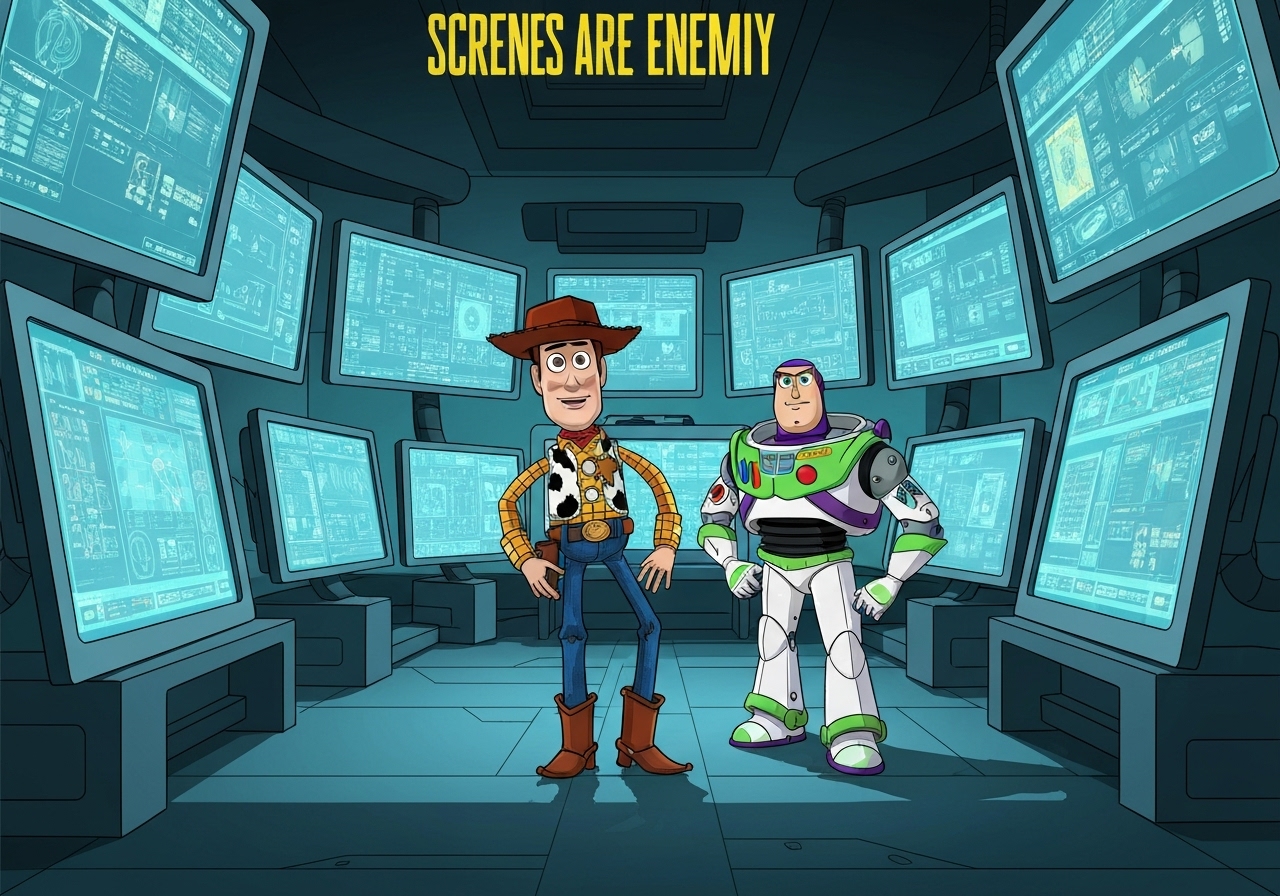
Pixar released a short teaser for Toy Story 5 on Tuesday, November 11, 2025, posing a central question about toys and screen time. The clip — scored by INXS’s “Never Tear Us Apart” — depicts a new tablet called Lilypad arriving at Bonnie Anderson’s home and immediately capturing her attention. Classic franchise figures including Woody and Buzz witness the device’s allure, framing a story about relevance and rivalry between physical play and screens. The trailer closes with the suggestion that the toys face a new kind of competition as the franchise heads to theaters in summer 2026.
Key Takeaways
- The teaser trailer was released on Tuesday, November 11, 2025, and is available on Pixar’s official channels.
- The clip uses INXS’s “Never Tear Us Apart” as its musical backdrop, heightening the trailer’s emotional tone.
- A tablet named Lilypad is revealed inside a package addressed to Bonnie Anderson, who reacts with clear enthusiasm.
- Returning voice talent includes Tom Hanks, Tim Allen and Joan Cusack; newcomers listed in the trailer description are Ernie Hudson, Conan O’Brien and Greta Lee (as Lilypad).
- Pixar frames a thematic conflict around screentime; the film is scheduled for summer 2026 theatrical release.
- The teaser raises a meta question about whether toys — themselves long-standing movie characters — can stay relevant in a screen-first world.
Background
Since 1995, the Toy Story series has tracked changing childhoods, using anthropomorphic toys to explore attachment, loss and identity. The franchise’s third installment culminated in Andy passing his toys to Bonnie Anderson, an emotional moment that shifted the toys’ caretaking to a new generation. Over the past decade, broader cultural concerns about screentime for children have intensified, with parents and educators debating developmental trade-offs between digital and physical play.
Pixar has previously used its sequels to examine social change: Toy Story 3 (2010) centered on moving on and community, while Toy Story 4 (2019) grappled with purpose after separation. Those entries established both a narrative continuity and a commercial blueprint, enabling Pixar to address topical themes while retaining core characters. Stakeholders include the studio, legacy cast members, a multi-generational fanbase, and parents who weigh entertainment choices for children.
Main Event
The teaser opens with a delivery—an anonymously wrapped package arriving for Bonnie Anderson—set to the swelling strains of INXS’s “Never Tear Us Apart.” As Bonnie opens the box, the camera reveals Lilypad, a frog-framed tablet that speaks and invites play. The toys’ reactions range from stunned silence to visible alarm, communicating the stakes without extended exposition.
Bonnie’s immediate engagement with the device is shown in a short, economical sequence: she taps the screen, smiles, and the tablet responds, underlining the immediacy of digital allure. The trailer description on Pixar’s YouTube channel lists returning actors Tom Hanks, Tim Allen and Joan Cusack, and names Ernie Hudson, Conan O’Brien and Greta Lee among newcomers, with Greta Lee credited as the voice of Lilypad. Pixar positions the teaser as a thematic teaser rather than a plot reveal.
While the clip runs only briefly, its narrative choices are deliberate: it foregrounds a generational handover (Andy to Bonnie) and juxtaposes tactile toys with a persuasive screen device. The teaser ends without resolving the central tension, instead signaling that the full film will explore how toys adapt — or fail to adapt — to new forms of play.
Analysis & Implications
The teaser reframes a familiar Pixar concern—identity and belonging—through the contemporary prism of digital technology and screentime. For parents and cultural observers, the image of toys confronting a tablet functions as both literal competition for attention and metaphor for how media shapes childhood. If the film leans fully into that theme, it could spark renewed conversations about play, parenting choices, and media literacy in early childhood.
From a franchise strategy perspective, Toy Story 5 faces a dual task: honoring established characters and attracting new viewers raised on interactive screens. Returning voices such as Tom Hanks and Tim Allen provide continuity for long-time fans, while new cast members and a screen-centered antagonist aim to broaden the film’s appeal to younger, digitally native audiences. How Pixar balances nostalgia with topical critique will influence both critical reception and box-office performance in summer 2026.
There is also a meta-layer to consider: the Toy Story films themselves have been delivered primarily via screens for three decades, making the studio uniquely placed to examine the cultural shift it helped popularize. A careful, nuanced treatment could avoid didacticism by showing the complexity of play rather than issuing a simple condemnation of devices. Conversely, a heavy-handed approach risks alienating viewers who see technology as integral to modern childhood.
Comparison & Data
| Film | Release Year |
|---|---|
| Toy Story | 1995 |
| Toy Story 2 | 1999 |
| Toy Story 3 | 2010 |
| Toy Story 4 | 2019 |
| Toy Story 5 | 2026 (scheduled) |
The table shows the franchise’s cadence: long gaps between late sequels (11 years between 2 and 3, nine years between 4 and 5). That spacing has allowed Pixar to reposition each sequel thematically for new cultural moments. The 2026 release aims to enter a marketplace where family films compete with streaming premieres and interactive media; theatrical timing in summer suggests confidence in box-office draw.
Reactions & Quotes
Early public reaction clustered around nostalgia and curiosity, with discussions online focusing on how the franchise will treat the screentime question. Below are succinct excerpts from the trailer and media coverage that capture the teaser’s tone and subject.
“Let’s play!”
Pixar (teaser trailer)
The tablet’s greeting is the teaser’s pivot: a single, inviting line that makes the device an active rival for Bonnie’s attention. That moment frames the film’s central conflict in the plainest possible terms.
“Is the age of toys really over?”
CNN (coverage of teaser)
This rhetorical question, used in early coverage, encapsulates the teaser’s thematic prompt and has driven commentary about whether the franchise will confront its own role in normalizing screen-centric storytelling.
Unconfirmed
- It is not yet confirmed how central Lilypad will be to the main plot beyond the trailer’s initial appearance.
- The extent to which the film will critique or embrace digital devices remains unclear from the short teaser alone.
- Specific supporting roles for newcomers Ernie Hudson and Conan O’Brien were listed in the trailer description but their character details have not been disclosed.
Bottom Line
The Toy Story 5 teaser reframes the franchise’s enduring questions—belonging, purpose, change—through a contemporary lens of digital competition, using a single device to symbolize broader shifts in play and attention. Pixar’s choice to foreground a tablet named Lilypad puts the studio in a position to comment on modern childhood while leveraging its established emotional vocabulary.
As the film moves toward a summer 2026 release, the industry and audiences will watch whether Pixar balances nostalgia with a thoughtful exploration of screentime, or opts for a simpler comedic conflict. Either path will shape box-office prospects and the cultural conversation around toys, screens and the future of play.
Sources
- CNN — Media coverage of the teaser and initial reactions (news article).
- Pixar (official YouTube channel) — Official teaser trailer and description listing cast and release timeframe (official studio source).