
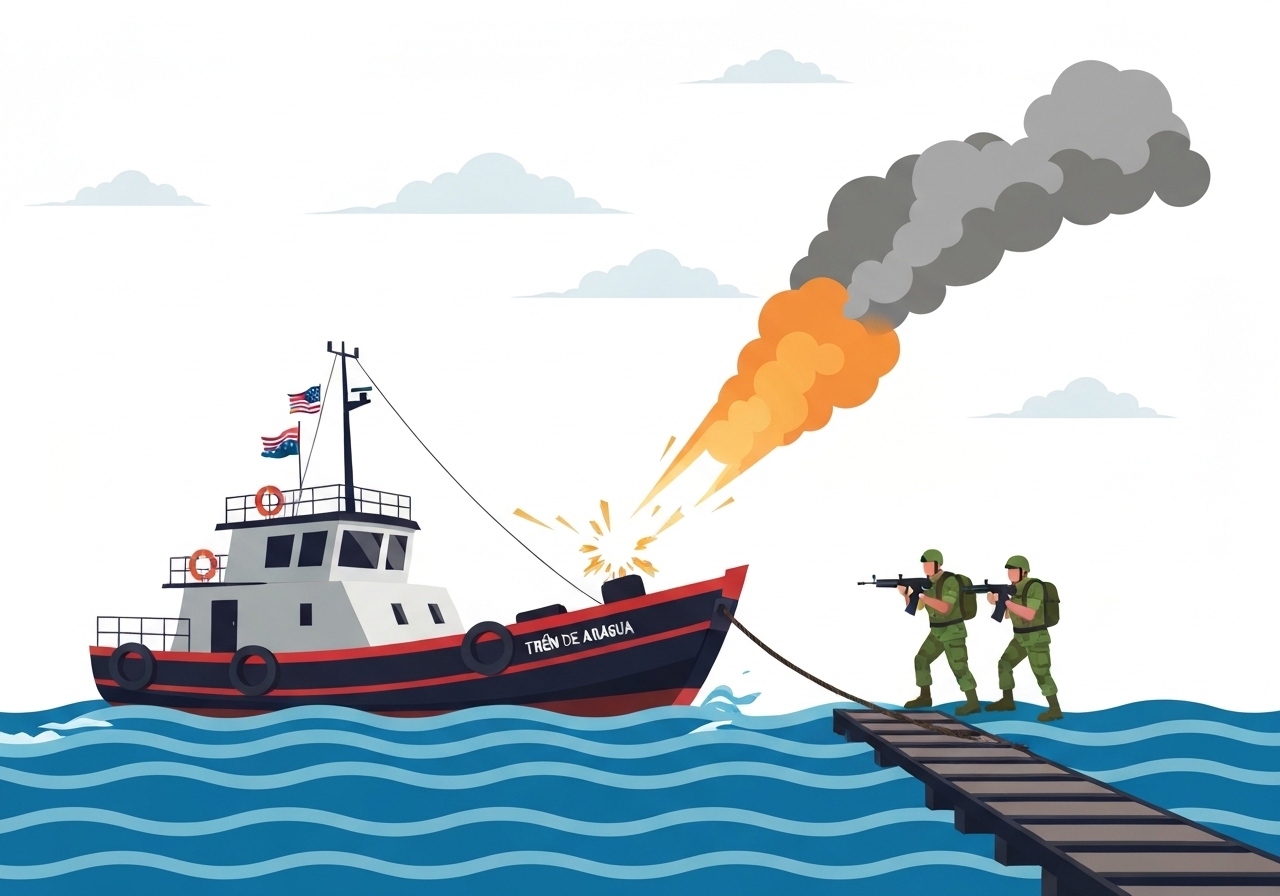
Lead: On Tuesday, Sept. 2, 2025, a U.S. military strike in Caribbean waters off Venezuela destroyed a vessel the White House says was operated by the Tren de Aragua gang; U.S. officials say 11 people aboard were killed and the boat was carrying illicit drugs.
Key Takeaways
- U.S. officials say a military strike this week sank a boat off Venezuela and killed 11 people alleged to be Tren de Aragua members.
- The White House has released limited operational details and has not published names, nationalities or an estimate of the drugs seized.
- Tren de Aragua began inside a Venezuelan prison and expanded across Latin America, linked to extortion, human smuggling and violent crime.
- Intelligence reporting and expert research (InSight Crime) finds the gang’s role in large-scale international cocaine trafficking is limited.
- President Trump designated Tren de Aragua as a foreign terrorist organization and used the Alien Enemies Act in deportation cases, actions now facing legal challenges.
Verified Facts
The strike occurred in Caribbean waters near Venezuela and was described by the White House as an action against a drug-carrying vessel tied to Tren de Aragua. U.S. officials say 11 people aboard were killed; the government has not released their identities or the vessel’s exact cargo weight.
Tren de Aragua traces its origins to a prison in Aragua state more than a decade ago. Investigations by regional prosecutors and nongovernmental researchers report the gang has grown by recruiting among Venezuelan migrants and branching into kidnapping, extortion, human trafficking and other violent crimes.
Research by InSight Crime, which published a 64-page study after two years of fieldwork, found the group has been heavily involved in ketamine flows in Chile and has sometimes subcontracted for other traffickers but lacks evidence of broad, independent cocaine export networks like those in Colombia or Brazil.
The U.S. government has taken a series of measures against the group: sanctions and reward offers under the previous administration (a $12 million reward package for three leaders), a foreign terrorist organization designation by President Trump on his first day back in office, and immigration actions invoking the Alien Enemies Act that led to deportations. A U.S. appeals court panel recently ruled the administration cannot use the Alien Enemies Act to fast-track those deportations; the Supreme Court may still review the matter.
Context & Impact
The strike marks an escalation in U.S. tactics against maritime drug trafficking and organized crime, signaling willingness to use lethal force in regional waters. Officials framed the action as part of broader efforts to disrupt shipments headed to the United States.
Regional governments and analysts warn the approach could raise tensions with Venezuela and neighboring states, and may complicate cooperation on migration and law enforcement. Venezuela’s government questioned a government-released video of the strike, with Communications Minister Freddy Ñáñez suggesting the footage looked doctored or artificially generated; U.S. officials, including Secretary of Defense Pete Hegseth, said they viewed live imagery and denied that claim.
Legal experts note the strike and the administration’s prior deportation actions illustrate friction between national security claims and established legal protections for noncitizens. The appeals court decision blocking use of the Alien Enemies Act underscores ongoing judicial scrutiny.
Regional public-safety effects
- Migration: Tren de Aragua has recruited among displaced Venezuelans, complicating responses to irregular migration.
- Illicit markets: While not currently a dominant transnational cocaine exporter, the gang’s regional cells increase risks for local violence and trafficking networks.
- Diplomacy: Lethal strikes and deportation policies may strain ties with regional partners and limit intelligence-sharing.
Official Statements
“He has a right, under exigent circumstances, to eliminate imminent threats to the United States.”
Marco Rubio, U.S. Secretary of State
Defense officials said assets will remain in the Caribbean to deter and, if necessary, strike vessels their intelligence assesses are trafficking drugs. Venezuelan authorities challenged elements of the U.S. account and questioned the authenticity of released footage.
Unconfirmed
- Whether the 11 people killed were definitively confirmed Tren de Aragua members — U.S. officials have not released evidence linking identities to the gang.
- The exact quantity and type of drugs reportedly aboard the vessel have not been publicly disclosed.
- Allegations of direct coordination between Tren de Aragua and senior Venezuelan officials remain disputed; a U.S. intelligence assessment cited minimal contact but no proven government coordination.
Bottom Line
The strike signals a more aggressive U.S. posture toward maritime drug shipments and criminal groups tied to Venezuela, elevating legal and diplomatic questions even as officials frame the action as necessary to stop imminent threats. Expect continued scrutiny of the intelligence used to justify lethal force, judicial challenges over immigration measures, and heightened tensions with regional governments.