
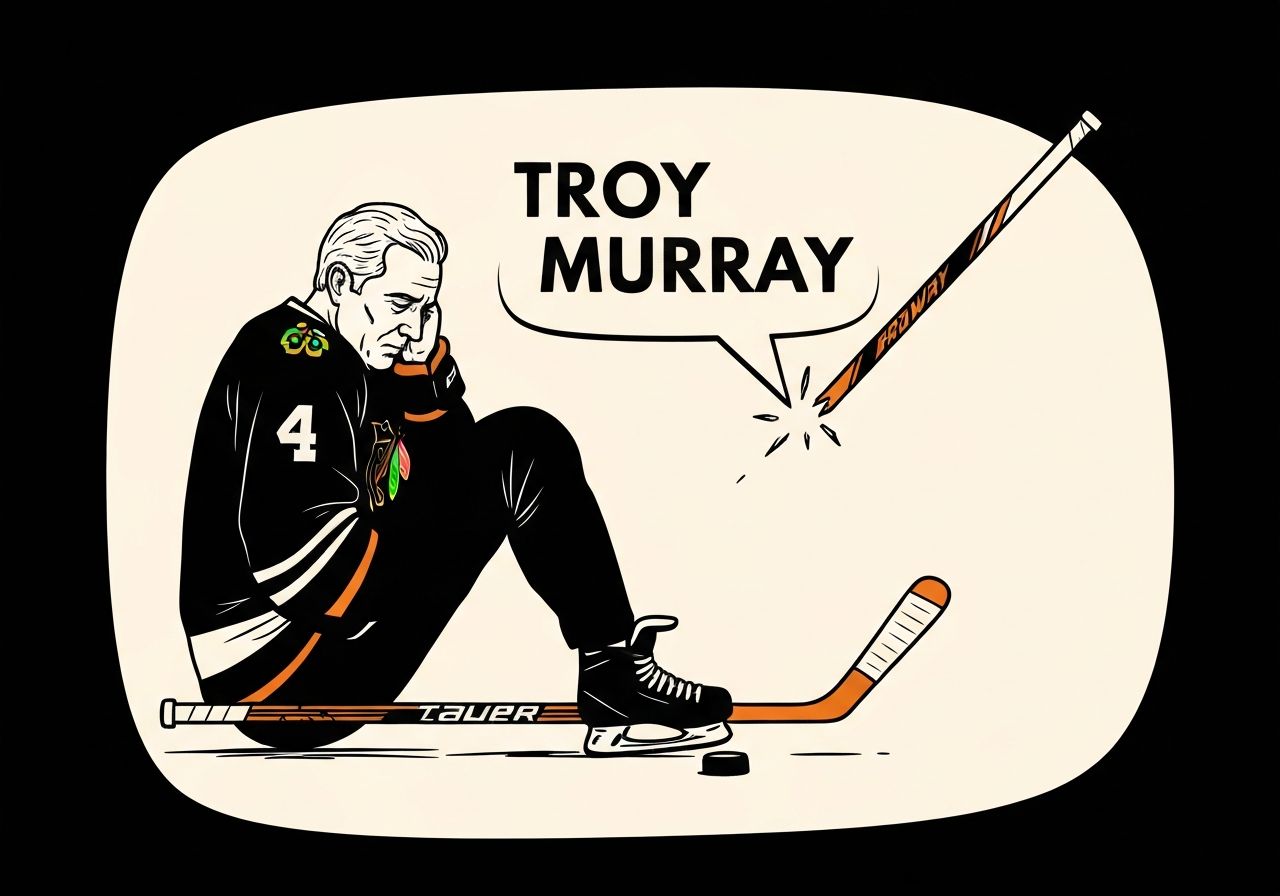
Lead
Former NHL forward and long-serving Chicago Blackhawks broadcaster Troy Murray died on March 7, 2026, at age 63 after a years-long fight with cancer. Murray, a Selke Trophy winner and 1996 Stanley Cup champion with the Colorado Avalanche, had been a visible presence in the Blackhawks organization for more than four decades as a player, alumnus and radio analyst. His illness, first publicly disclosed in August 2021, led to chemotherapy while he continued to broadcast when able. The team and current players issued statements mourning his loss and highlighting his role connecting generations of Blackhawks fans and players.
Key Takeaways
- Troy Murray died March 7, 2026, at 63 after a battle with cancer that was first announced on August 9, 2021.
- Murray played 15 NHL seasons and totaled 584 regular-season points (230 goals, 354 assists) across 915 games for five franchises.
- His best campaign was 1985–86: 45 goals, 54 assists and 99 points in 80 games; he won the Frank J. Selke Trophy that season.
- He finished his playing career as a 1995–96 Stanley Cup winner with the Colorado Avalanche and posted 43 points (17 goals, 26 assists) in 113 playoff games.
- After retiring, Murray joined the Blackhawks broadcast team in 1998 and partnered with John Wiedeman in the radio booth from 2006, calling Chicago’s 2010, 2013 and 2015 Cup-winning seasons.
- Murray returned to the broadcast booth on Dec. 15, 2021 — a 5–4 overtime Blackhawks win over the Washington Capitals — after beginning chemotherapy earlier that year.
- The Blackhawks organization and current players credited Murray with bridging eras of the club and supporting community and alumni initiatives for more than 45 years.
Background
Troy Murray was selected by the Chicago Black Hawks in the third round (No. 57) of the 1980 NHL Draft and spent the first decade of his NHL career primarily in Chicago. Over 15 NHL seasons he also skated for Winnipeg, Pittsburgh, Ottawa and Colorado, building a reputation as a two-way forward whose peak offensive season came in 1985–86. That campaign earned him the Selke Trophy, awarded to the forward judged best in defensive play, while also marking his career highs in goals, assists and points.
After retiring from playing in the mid-1990s, Murray transitioned into broadcasting and organizational roles that kept him close to the club. He joined the Blackhawks broadcast team in 1998, worked as a studio analyst from 1999–2004, had two stints as a television color commentator and moved into radio with John Wiedeman in 2006. In that radio role he was a steady voice during three of the franchise’s modern Stanley Cup championships.
Main Event
The Blackhawks confirmed Murray’s death on March 7, 2026, and issued statements emphasizing his decades-long contribution to the franchise. Team leaders noted Murray’s on-ice accomplishments and his off-ice role with the Blackhawks Alumni Association and charitable work through the Blackhawks Foundation. The organization described him as a connective figure in the press box, alumni events and community outreach.
Murray’s playing résumé includes 584 points (230 goals, 354 assists) in 915 regular-season games and an additional 43 points (17 goals, 26 assists) in 113 playoff contests. He was a member of Colorado’s 1995–96 Stanley Cup team and remained active in club alumni circles and media coverage long after his playing career ended.
Following a public diagnosis of cancer on August 9, 2021, Murray underwent chemotherapy treatments scheduled every other Monday, but he resumed broadcasting later that year. On Dec. 15, 2021, he completed a full radio broadcast alongside Wiedeman during a 5–4 overtime Blackhawks victory over the Washington Capitals, telling listeners the support he and his family had received had been meaningful.
Analysis & Implications
Murray’s death marks the loss of a figure who linked multiple Blackhawks generations: a productive player in the 1980s, a Cup-winning veteran in the mid-1990s and a familiar broadcast voice for the club’s resurgence in the 2010s. For Chicago’s hockey community, that continuity matters; broadcasters who also served as alumni ambassadors often help preserve institutional memory and fan connection.
From a media perspective, Murray exemplified the former-player–turned-analyst model that NHL franchises rely on to translate past success and locker-room perspective into context for contemporary audiences. His on-air return during treatment underscored both the personal bond between team media and fans and the role of broadcasters in club identity.
Organizationally, the Blackhawks face the immediate task of honoring Murray’s legacy while maintaining the alumni and community programs he supported. For younger players and staff who knew Murray chiefly as an alumnus and radio voice, his passing is likely to prompt memorial events and potentially permanent tributes; such commemorations would reaffirm the franchise’s multigenerational ties.
Comparison & Data
| Season/Scope | Games | Goals | Assists | Points |
|---|---|---|---|---|
| 1985–86 (best season) | 80 | 45 | 54 | 99 |
| Career (regular season) | 915 | 230 | 354 | 584 |
| Career (playoffs) | 113 | 17 | 26 | 43 |
The table highlights the contrast between Murray’s standout single-season peak in 1985–86 and his long-term consistency across 915 regular-season games. His Selke-winning season combined high offensive output with defensive recognition, a relatively rare pairing that underlines why he remained valued in later broadcasting and alumni roles.
Reactions & Quotes
“Troy was the epitome of a Blackhawk… admired by teammates and players and proud to connect generations of Blackhawks,” the team said in a statement, stressing his decades-long involvement across the organization.
Chicago Blackhawks (official statement)
“I really appreciate all the support… I’m just glad to be back on the air,” Murray said on Dec. 15, 2021, after returning from cancer treatment for a full radio broadcast.
Troy Murray (on-air, Dec. 15, 2021)
Forward Ryan Donato described Murray as a “tremendous person” who made everyone feel welcome and brought contagious positive energy to the club.
Ryan Donato (Chicago forward)
Unconfirmed
- The specific type of cancer Murray was treated for has not been publicly disclosed; public reports confirm diagnosis and chemotherapy but do not detail disease subtype.
- Formal plans for public memorials, ring retirements or other permanent team honors had not been announced at the time of the team’s initial statement.
Bottom Line
Troy Murray’s death removes a long-standing bridge between eras of Blackhawks hockey: a high-performing two-way forward in the 1980s, a Stanley Cup winner in 1996 and a consistent voice in Chicago’s broadcast booth for more than two decades. His combination of on-ice achievement and off-ice engagement with alumni and community work made him a fixture of the franchise.
In the near term, the Blackhawks and their supporters will be focused on tributes and preserving the memory of a figure who helped define the club’s public identity. Longer term, the franchise will absorb his absence in media and alumni activities, but Murray’s example of continuity between playing, broadcasting and community service will likely shape how the team honors its former players going forward.
Sources
- NHL.com report on Troy Murray’s death — media report with team statements and career summary.