
Lead
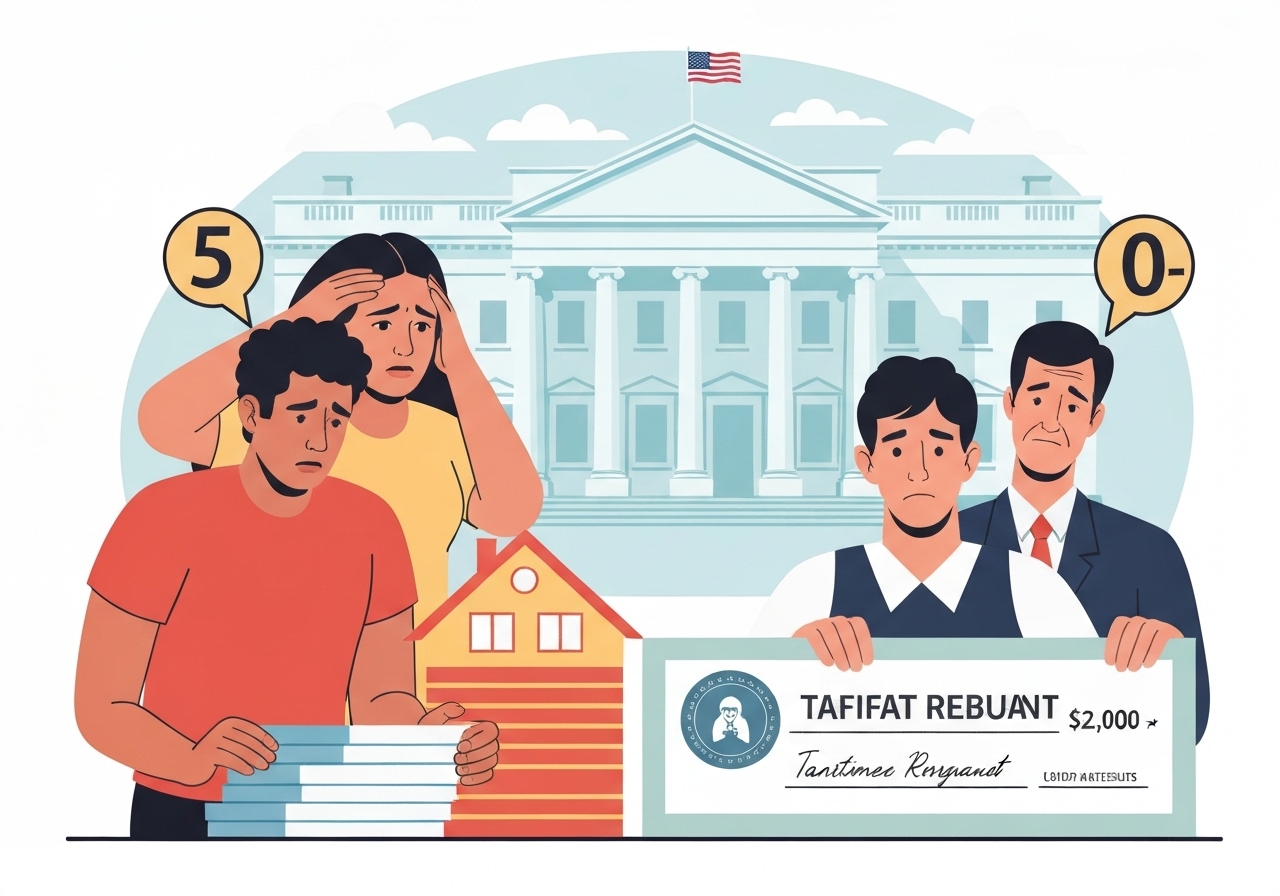
Since Democrats’ Nov. 4 election sweep, President Donald Trump has rolled out a set of high-profile measures aimed at addressing voter concerns about the cost of living: a floated 50-year mortgage, proposals for $2,000-per-person tariff rebate checks, and direct health-care payments to consumers. Each idea is pitched as a way to lower monthly costs or give Americans more cash to spend, but they differ sharply in mechanics, legality and projected fiscal impact. This article breaks down who proposed each idea, when and why it surfaced, how experts assess the claims, and what it would take for any of them to become law.
Key takeaways
- Trump has publicly promoted three affordability ideas since early November: 50-year mortgages, $2,000 tariff dividend checks, and direct payments for health coverage (announced via Truth Social and interviews with media figures).
- A 50-year mortgage would reduce monthly payments but, according to analysts, could roughly double total interest paid versus a 30-year loan and push full homeownership into advanced old age for many borrowers.
- Tariff rebates framed as $2,000 per adult could cost on the order of $300 billion to $600 billion depending on eligibility and whether children are included; projected tariff revenue for 2026 is about $216 billion under current estimates.
- Redirecting ACA-style subsidies into FSAs/HSAs or cash accounts could broaden choice but risks destabilizing Affordable Care Act markets by removing healthier enrollees and weakening risk pools.
- Legal and regulatory barriers exist: Dodd-Frank’s Qualified Mortgage rules complicate a federal 40–50 year mortgage program; congressional action or novel tax-account approaches would likely be required for tariff dividends; subsidy changes require Senate action and face political hurdles.
- Experts generally warn the policies trade short-term affordability for long-term cost or risk shifts—benefiting some households while potentially worsening systemic problems like aggregate debt, insurance market viability, or overall household spending power.
Background
Voter concern about rising costs loomed large after the Nov. 4 elections, where Democrats won several marquee races. The White House has framed new proposals as political and policy responses to that backlash, aiming to show direct action on housing, consumer cash flow and health-care affordability. Tariffs imposed since January have raised the U.S. average effective tariff rate; independent groups report the current average is the highest since the 1930s, and the administration says the new levies have generated substantial federal receipts.
Housing affordability has been deteriorating for years: the National Association of Realtors reports the median age of first-time buyers rose from 28 in 1991 to 40 most recently, and an estimated annual income of about $112,131 is required to buy the median-priced home today. Mortgage rates — having more than doubled since 2020 — have also pushed monthly costs higher, motivating proposals that change loan terms rather than address prices directly.
On health care, the Affordable Care Act’s premium-reduction subsidies are set to expire in January unless Congress acts, creating pressure to find alternatives. Republicans have circulated options that would allocate money into tax-advantaged accounts (FSAs/HSAs) or direct payments, arguing that giving cash to consumers will increase choice and competition; Democrats and many health-policy experts warn such shifts could destabilize ACA markets and raise costs for the sickest enrollees.
Main event
50-year mortgages moved from concept to public pitch after comments and posts by Mr. Trump and his allies in early November. Trump posted a comparison between himself and Franklin D. Roosevelt on Truth Social — highlighting a “30-year mortgage” under FDR and proposing a “50-year mortgage” under his own banner. Administration officials, led in reporting by the Federal Housing Finance Agency director Bill Pulte, reportedly encouraged Trump to float the idea, according to Politico, although some policy staff said they were not fully briefed before the public suggestion.
Proponents argue a longer amortization reduces monthly principal-and-interest payments, potentially allowing buyers who are priced out today to afford monthly housing costs. Critics and independent analysts counter that longer terms increase cumulative interest dramatically and can leave borrowers paying into advanced old age; estimates referenced by multiple outlets indicate a 50-year loan can produce about double the total interest of a 30-year loan.
On tariffs, Trump has repeatedly suggested using revenue from his broad import levies to fund either deficit reduction or a consumer “dividend.” In early November he pledged via Truth Social and interviews that tariff proceeds could pay at least $2,000 per person for low- and middle-income Americans, then be applied to national debt reduction. Administration spokespeople say advisers are exploring legal pathways, but they have not provided a timeline or legislative text.
Analysts note that tariffs are already acting like a regressive tax on U.S. households by raising consumer prices; independent estimates put the annual household cost of Trump’s tariffs in the $1,600–$2,600 range. The arithmetic of distributing large per-person checks out of tariff receipts does not line up with conservative revenue estimates: one calculation that would give $2,000 to roughly 150 million adults earning under $100,000 implies a near-$300 billion price tag, exceeding some official revenue forecasts for 2026.
For health care, Trump has recommended shifting money now sent to insurers into accounts people would use directly to purchase coverage. He and some Senate Republicans have framed the change as improving choice and reducing insurer profits; senators including Bill Cassidy and Rick Scott are drafting competing vehicles (FSA vs HSA-based approaches). The issue became an intense bargaining point during a recent government shutdown fight and is now slated for Senate floor consideration in December.
Analysis & implications
A 50-year mortgage would lower monthly payments for many buyers, but analysts emphasize it does not reduce total housing costs. Longer amortizations front-load interest payments: in the early years, nearly all payment dollars cover interest, and with twice as many payment periods total interest rises substantially. For households near retirement age, the result could be decades of payments that push the point of full ownership into advanced elderly years — changing homeowners’ balance-sheet dynamics and retirement planning.
From a macroprudential perspective, lengthening mortgage terms could expand long-run household debt burdens and raise systemic risk if economic shocks lead to rising delinquencies. Regulators created the Qualified Mortgage standard after 2008 to limit risky lending; moving to government-backed 40–50 year loans would likely require regulatory waivers or legislative changes, and could draw scrutiny from consumer advocates wary of repeating past mortgage excesses.
The $2,000 tariff dividend poses distinct fiscal and distributional questions. Even if tariffs have brought substantial receipts, the regressive price effects—higher consumer prices paid at the point of sale—can outweigh a blunt per-person rebate for many households. Further, absent congressional authorization, the White House lacks clear authority to redirect tariff receipts as universal cash payments; tax-credit or targeted rebate alternatives have been discussed but would change both the cost and timing of any benefit.
Shifting ACA-like subsidies into HSAs or FSAs may increase short-term choice for healthier consumers but risks fragmenting the insurance pool. Health economists warn that if healthier enrollees migrate to cheaper, narrower plans, premiums for remaining ACA enrollees could spike, driving insurers from markets and undermining coverage comprehensiveness. Policymakers must weigh the political appeal of consumer-facing dollars against the long-term viability of risk-pooling mechanisms that protect people with high health needs.
Comparison & data
| Policy | Primary effect | Estimated fiscal/cost magnitude (rounded) |
|---|---|---|
| 50-year mortgage | Lower monthly payments; higher lifetime interest | Total interest ~2x vs 30-year (analysts’ estimate) |
| $2,000 tariff dividend | Cash to households; funded from tariff receipts | ~$300B (150M adults × $2,000) to $600B (including children) |
| Direct health payments / FSAs/HSAs | Consumer-facing funds for insurance or care | Varies by design; could replace expired ACA subsidies (tens to hundreds of billions) |
The table summarizes the immediate mechanics and order-of-magnitude fiscal implications drawn from public estimates: the $2,000 per-adult figure multiplied by roughly 150 million adults yields about $300 billion, exceeding some tariff revenue projections for 2026; Committee for a Responsible Federal Budget estimates scale up to $600 billion if children receive payments. For mortgages, the simple rule-of-thumb from analysts is that doubling amortization length substantially increases cumulative interest costs, often approaching twice the lifetime interest burden of a 30-year loan.
Reactions & quotes
White House spokespeople have affirmed the administration is exploring options while offering limited specifics. Press secretary Karoline Leavitt said advisers are working through legal and technical details and indicated a political commitment to attempt some form of rebate.
“The White House is committed to making that happen… I don’t have a timeline for you or any further details.”
Karoline Leavitt, White House press secretary (press briefing)
Some Republican lawmakers and conservative commentators have pushed back on certain ideas while supporting others in principle, reflecting internal debate about the best way to address affordability without creating long-term fiscal burdens.
“I don’t like 50‑year mortgages as the solution to the housing affordability crisis… It will ultimately reward the banks… while people pay far more in interest over time and die before they ever pay off their home.”
Rep. Marjorie Taylor Greene (post on X)
Health-policy experts have warned that redirecting subsidies from insurers into consumer accounts could destabilize ACA markets by drawing healthier people into cheaper plans and leaving a sicker, more expensive pool behind.
“Healthy people could get much cheaper insurance… but that would leave much sicker people in the ACA pool, and likely send it into a death spiral.”
Larry Levitt, Executive VP for Health Policy, KFF
Unconfirmed
- The administration’s claim that tariff receipts already amount to “trillions” available for dividends lacks publicly verifiable detail; most independent projections put near-term tariff revenue in the low hundreds of billions range, not trillions.
- It is not yet confirmed which statutory or regulatory pathway the White House will use to implement any $2,000 rebate—whether direct appropriations, tax credits, or reallocation of customs receipts has not been finalized.
- Reports that specific FHFA officials “sold” the 50‑year idea to the president reflect unnamed sources; the exact internal chain of communications and briefings has not been independently verified.
Bottom line
All three of the administration’s affordability proposals—50‑year mortgages, $2,000 tariff dividend checks, and direct health‑care payments—address the same political problem (voter anxiety about monthly costs) through very different means. Each has plausible short-term benefits for particular households but carries trade-offs: higher lifetime mortgage costs, fiscal gaps or regressive pricing effects from tariffs, and insurance‑market destabilization if subsidies are fundamentally restructured.
Legally and politically, none of the ideas is plug‑and‑play. A federally backed 50‑year mortgage would require regulatory or statutory changes to current Qualified Mortgage rules; universal tariff rebates would likely need congressional approval or creative tax maneuvers; and ACA subsidy redesigns face active Senate negotiations and clear policy risks. Voters and lawmakers should expect detailed costing, statutory pathways and targeted design choices to shape whether any of these concepts moves from rhetoric to reality.
Sources
- Yahoo News — (news report summarizing proposals and reactions)
- Politico — (news reporting on FHFA, internal discussions)
- ABC News — (interview coverage and Treasury comments)
- Tax Foundation — (analysis of tariff revenue and rebate cost estimates)
- Committee for a Responsible Federal Budget — (analysis on potential fiscal cost scenarios)
- KFF (Kaiser Family Foundation) — (expert commentary on ACA risk pools and coverage implications)
- National Association of Realtors — (data on median buyer age and income needed for median-priced home)
- Yale Budget Lab — (context on tariff rates and historical comparisons)
- PolitiFact — (fact-checks on tariff dividend feasibility and related claims)