
Lead
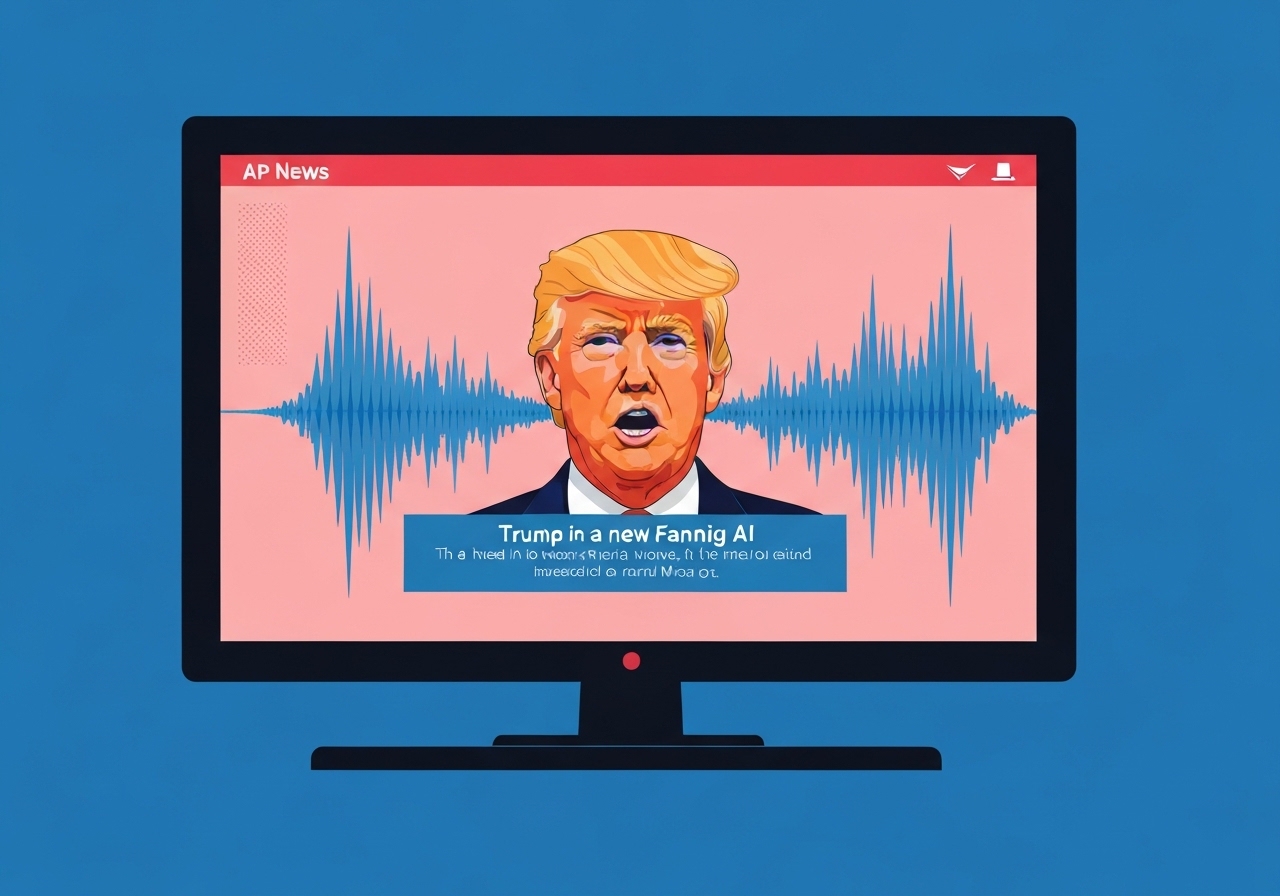
The voice that sounds like President Donald Trump in a recent Fannie Mae advertisement is an AI-generated replica used with the Trump administration’s permission, according to a disclaimer in the video. The one-minute spot, aired Sunday, promotes an “all new Fannie Mae” as the “protector of the American Dream” and ties into the administration’s public push on housing affordability. The ad arrives as Trump prepares to speak on housing at the World Economic Forum in Davos, Switzerland, where global leaders and executives are meeting this week. The producer of the synthetic voice has not been publicly identified.
Key Takeaways
- The ad aired Sunday and features an AI-cloned voice presented with permission from the Trump administration.
- The spot promotes an “all new Fannie Mae” and pledges greater collaboration with banks to expand mortgage approvals.
- Fannie Mae and Freddie Mac together guarantee roughly half of the $13 trillion U.S. mortgage market, underpinning housing liquidity.
- Trump has proposed measures including selling shares of the government-controlled firms and extending 30-year loans to 50 years to lower monthly payments.
- Trump also proposed the federal purchase of $200 billion in mortgage bonds and said Fannie and Freddie hold $200 billion in cash for that purpose.
- It is unclear which firm or vendor cloned the president’s voice; earlier uses of AI by the Trump family include Melania Trump’s audio memoir assistance.
Background
Fannie Mae and Freddie Mac were placed under government conservatorship during the Great Recession and continue to play a central role in the U.S. housing finance system. The two government-sponsored enterprises buy qualifying mortgages from lenders and guarantee a large share of mortgages, which supports secondary-market liquidity and helps keep interest rates and loan availability more stable. Together they touch roughly half of an estimated $13 trillion mortgage market, making any policy shifts involving them of broad economic consequence.
Housing affordability has become a political priority for the administration, which has rolled out several high-profile ideas to lower monthly payments and expand homeownership. Proposals range from changes in the agencies’ ownership structure, including potential share sales, to altering loan terms and direct market interventions such as buying mortgage bonds. Those proposals have provoked debate among economists and housing advocates about long-term effects on equity, price inflation and taxpayer exposure.
Main Event
The Fannie Mae ad uses a synthesized voice that the video identifies as produced with the president’s permission; the commercial’s narration echoes themes of homeownership as stability and a reachable aspiration. In the ad, the digitized voice frames the problem as systemic rather than personal, arguing that the mortgage system has stopped working for many Americans. The video asserts that Fannie Mae will work with banks to expand mortgage approvals for would-be buyers.
The ad’s release coincides with Trump’s planned remarks at the World Economic Forum in Davos, where he is scheduled to address housing among other economic topics. The piece reiterates administration talking points about affordability and signals that housing reform will be a visible part of Trump’s international messaging this week. The production credits in the video include a disclaimer about voice synthesis but do not name the vendor responsible for cloning the president’s voice.
This is not the first time a Trump family member has used AI for voice work: First Lady Melania Trump recently employed the AI firm Eleven Labs to produce the audio edition of her memoir. The administration’s explicit permission for the advertisement’s use of a synthetic presidential voice highlights how political communications are adopting generative tools even as regulators and the public weigh ethical and transparency concerns.
Analysis & Implications
The use of an AI-cloned presidential voice for a high-profile housing ad raises immediate questions about disclosure, authenticity and electoral messaging. Even with a disclaimer, synthetic audio can blur perception lines for viewers who may not notice or fully understand the disclosure; that creates risks for trust in political speech and for regulators considering transparency standards. Platforms and advertising regulators will face pressure to clarify labeling requirements for political content that uses generative AI.
Policy-wise, the ad reiterates initiatives that, if implemented, could reshape housing finance: selling shares of Fannie Mae and Freddie Mac, extending mortgage terms, and large-scale bond purchases. Each proposal carries trade-offs. Selling shares may shrink direct government control but could expose markets to volatility; longer-term loans can reduce monthly payments but slow equity accumulation and alter lenders’ risk calculations.
The $200 billion figure the president cited for mortgage bond purchases—matched in his remarks to assets reportedly held by the firms—would be a significant market intervention if executed. Large public purchases can lower yields in the short run but may distort pricing and raise questions about long-term fiscal exposure. Markets and policy experts will be watching for concrete plans, legal authorities for such purchases, and the potential need for congressional consultation.
Comparison & Data
| Metric | Value |
|---|---|
| Size of U.S. home loan market | $13 trillion (approx.) |
| Share guaranteed by Fannie & Freddie | About 50% |
| Proposed federal mortgage bond purchase | $200 billion (announced by Trump) |
These headline figures show why changes to Fannie Mae and Freddie Mac attract intense scrutiny: the agencies are intertwined with roughly half of a $13 trillion market, so even modest policy shifts can have broad ripple effects. The $200 billion purchase—if it occurred—would represent a meaningful but not market-dominant intervention compared with the aggregate mortgage market. Analysts will compare projected impacts on interest rates, lender behavior and home-price dynamics under each proposed change.
Reactions & Quotes
Officials and observers reacted to both the ad’s substance and the method of production.
“For generations, home ownership meant security, independence, and stability,”
Digitized voice in Fannie Mae ad
The line above, spoken in the synthetic narration, frames the ad’s central appeal to traditional ideals of ownership while arguing that systemic fixes are needed. It was presented alongside visuals and policy claims intended to show responsiveness to affordability concerns.
“We are committed to expanding access to mortgage credit while preserving market stability,”
Fannie Mae (video statement)
Fannie Mae’s messaging in the ad frames any operational or policy shifts as balancing broader access with risk management. The firm has repeatedly emphasized its role in supporting liquidity and managing credit standards.
“AI tools are becoming part of modern communication; transparency about their use is essential,”
Independent communications expert
Experts warned that synthetic media will force clearer disclosure standards for political messaging, and that regulatory bodies may need to update advertising rules to address generative audio and other deepfake technologies.
Unconfirmed
- Which specific company or vendor cloned President Trump’s voice for the ad is not publicly identified and remains unconfirmed.
- Whether an autopen was used to sign any documents related to this administration is separate and, according to a recent House Republican report, lacks concrete evidence of unauthorized use.
- Concrete timetables or formal plans to sell shares of Fannie Mae and Freddie Mac or to execute a $200 billion bond purchase have not been released; proposals remain at the announcement or discussion stage.
Bottom Line
The Fannie Mae advertisement illustrates how generative AI is being incorporated into high-stakes political and policy communications, even when accompanied by a disclaimer and permission. Because Fannie Mae and Freddie Mac touch roughly half of the $13 trillion U.S. mortgage market, any announced reforms or market interventions warrant close scrutiny for their economic and distributional consequences.
For regulators, journalists and the public, the episode highlights two separate but related priorities: clearer disclosure standards for synthetic political content, and demand for detailed policy plans and legal authority before major housing-market interventions are implemented. Observers should watch for vendor disclosure, regulatory guidance on synthetic media, and concrete implementation details for the administration’s housing proposals.