
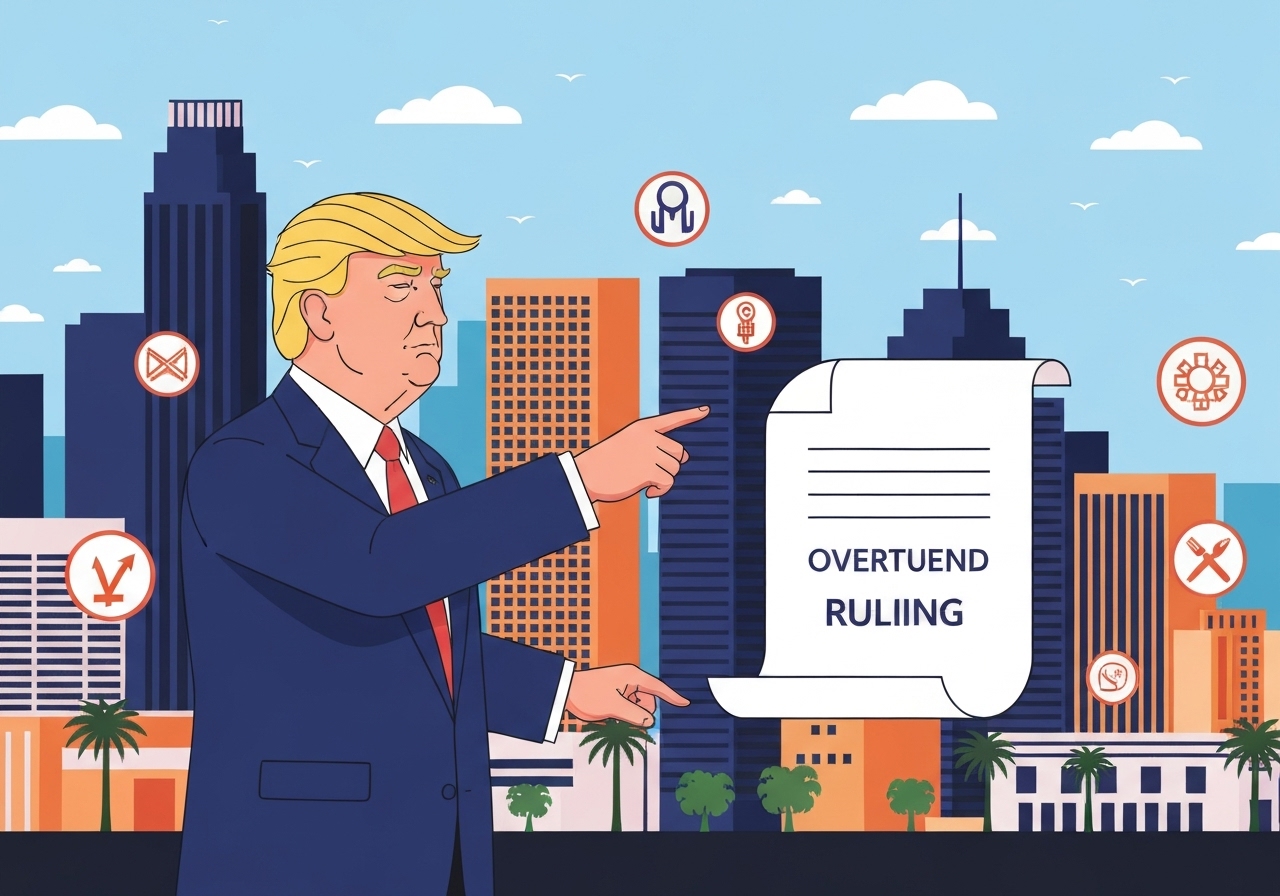
Trump Appeals Ruling That Blocked National Guard Law-Enforcement Actions in Los Angeles
— President Donald Trump appealed a federal judge’s decision that his June deployment of National Guard troops and Marines to Los Angeles, tasked with law-enforcement activities, violated the Posse Comitatus Act. The appeal follows Judge Charles Breyer’s Sept. 2 order barring roughly 300 remaining Guard members in Los Angeles from making arrests, conducting searches, or performing crowd-control duties after California Gov. Gavin Newsom sued over the deployment.
Key Takeaways
- Trump filed an appeal to the 9th U.S. Circuit Court of Appeals on Sept. 3, 2025, challenging a federal judge’s ruling.
- Judge Charles Breyer found the June deployment of thousands of Guard troops and hundreds of Marines violated the Posse Comitatus Act.
- The ruling specifically prevents about 300 Guard troops in Los Angeles from arrests, searches and crowd control while stationed there.
- California Governor Gavin Newsom brought the lawsuit that led to the injunction against the troops’ law-enforcement activities.
- Breyer paused immediate enforcement of parts of his order to allow the administration time to appeal.
- The judge flagged statements by the president about further deployments as a broader legal concern for other California cities.
- The administration has been considering similar deployments to other U.S. cities, including Chicago, according to reporting and court filings.
Verified Facts
On Sept. 2, 2025, U.S. District Judge Charles Breyer issued an order ruling that the June deployment of thousands of National Guard members and several hundred Marines to Los Angeles crossed legal limits by engaging in domestic law-enforcement tasks. The judge cited the Posse Comitatus Act, which generally prohibits active-duty military from performing civilian police functions.
The judge’s order directly restricts roughly 300 Guard troops still stationed in Los Angeles from making arrests, executing searches, or conducting crowd-control operations while present in the city. The ruling also bars similar law-enforcement duties by military or National Guard forces anywhere else in California as part of this case.
California Governor Gavin Newsom filed the lawsuit challenging the federal deployment, arguing the military presence and assigned duties violated federal law and state authority. In response to the ruling, the court temporarily stayed certain enforcement actions to allow the Trump administration to appeal to the 9th U.S. Circuit Court of Appeals.
| Date | Event |
|---|---|
| June 2025 | Thousands of National Guard and hundreds of Marines deployed to Los Angeles for law-enforcement duties |
| Sept. 2, 2025 | Judge Breyer rules the deployment violated the Posse Comitatus Act and issues restrictions |
| Sept. 3, 2025 | Administration files an appeal with the 9th Circuit |
Context & Impact
The Posse Comitatus Act, enacted in 1878, restricts the use of federal military forces in domestic law-enforcement roles to preserve civil authority and limit military involvement in policing. Courts have repeatedly treated deployments that place active-duty forces in traditional policing roles with scrutiny.
Breyer’s decision signals potential limits on the executive branch’s ability to deploy military personnel for domestic crowd control and arrest functions. If the 9th Circuit upholds the ruling, it could set a regional precedent that affects future federal responses to unrest in major cities.
Politically, the case intensifies tensions between the federal government and state leaders who oppose the deployments. It also raises operational questions for local law enforcement and governors about how to manage public safety when federal forces are present but barred from police actions.
Official Statements
“Doing so would create a national police force with the President as its chief.”
Judge Charles Breyer
Unconfirmed
- Whether the administration will next deploy National Guard or active-duty troops to Chicago or other named U.S. cities remains under consideration and is not yet ordered.
- Any future operational plans or orders that would explicitly authorize Guard members to perform law-enforcement actions in other states have not been made public.
Bottom Line
The appeal moves this dispute to the 9th U.S. Circuit Court of Appeals, where judges will decide whether the Posse Comitatus Act blocks the administration’s use of troops for policing tasks. The case could clarify legal limits on federal deployments inside states and shape how future administrations respond to civil unrest.