
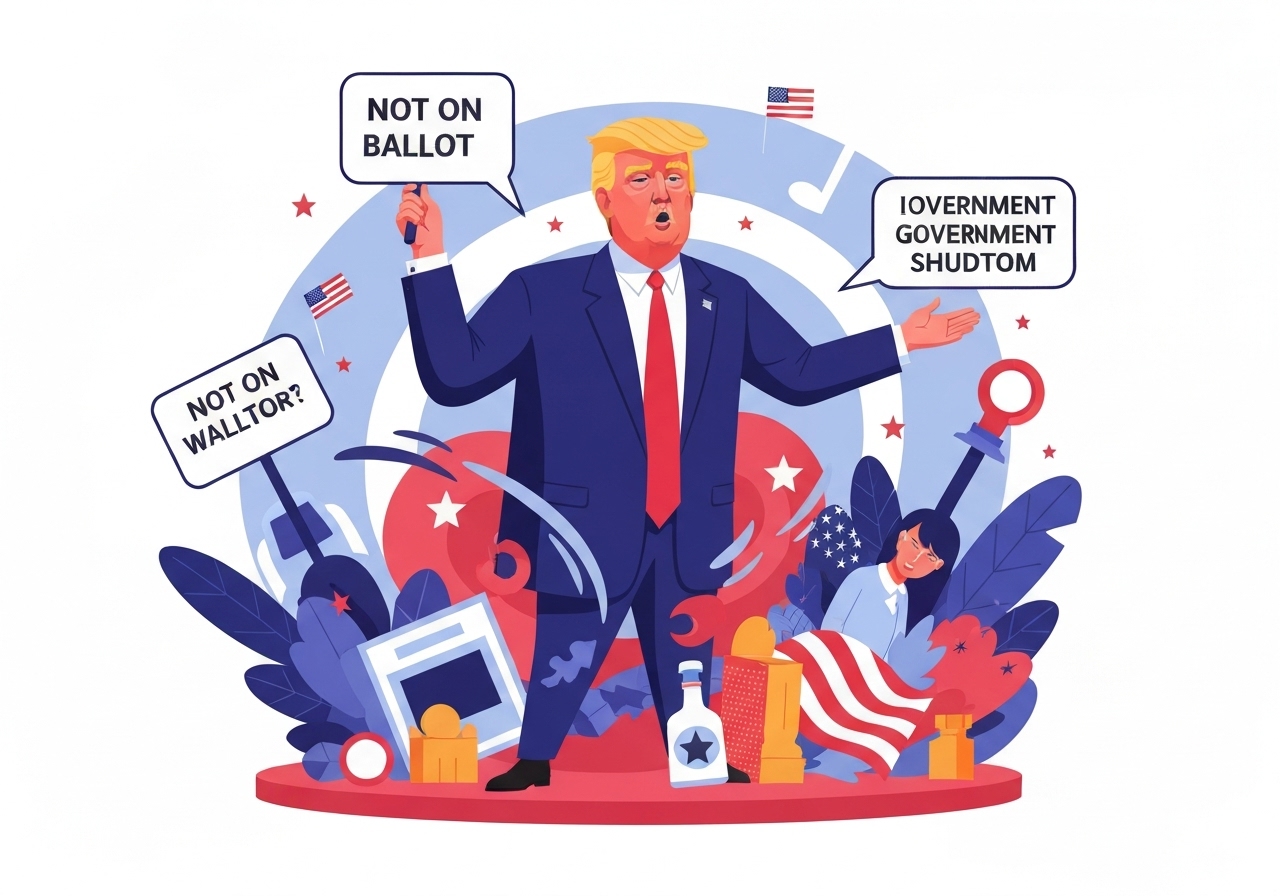
Lead: On Nov. 4, 2025, after a night of disappointing results for Republican candidates in multiple state contests, former President Donald Trump pushed back against the outcomes on his social media platform. He attributed the setbacks to two factors: his absence from ballots in many races and a prolonged federal shutdown. In a string of posts late Tuesday, he cited unnamed “pollsters” and called for policy changes including ending mail-in voting and abolishing the filibuster. The comments came as winners in high-profile contests — notably New York City’s mayoral race — were being celebrated by opponents.
Key Takeaways
- On Nov. 4, 2025, Republicans suffered losses in several state-level contests that were widely viewed as a referendum on Trump and his allies.
- Trump posted that unnamed “pollsters” told him his absence from ballots was a key reason Republicans lost; the pollster attribution was not named or independently verified.
- He explicitly linked the results to a 35-day federal government shutdown, saying that would explain voter backlash in affected areas.
- In subsequent posts he urged eliminating mail-in ballots and called to “terminate the filibuster,” arguing those steps would let Senate Republicans address the shutdown.
- Trump also reacted to Zohran Mamdani being projected winner in the New York City mayoral contest with a post saying, “…AND SO IT BEGINS!” and had earlier threatened to cut federal funding to New York City if Mamdani prevailed.
Background
The Nov. 4 contests were seen by many analysts as a referendum on the standing of former President Trump and the Republican Party ahead of the 2026 cycle. Several state and local races where Trump-endorsed or associated candidates were competitive produced unexpected defeats for the party, prompting immediate public statements from national figures. Historically, losses tied to a polarizing national figure can prompt rapid tactical shifts within a party, including debates over messaging, candidate recruitment, and election administration reforms.
Mail-in voting and the Senate filibuster have been central flashpoints in U.S. political debate for years. Advocates of limiting mail-in ballots argue they preserve ballot security, while opponents view restrictions as voter suppression. The filibuster, a Senate rule requiring 60 votes to advance most legislation, has been targeted by both parties at various times as a procedural barrier or a protection for minority interests. A recent 35-day shutdown — referenced by Trump in his posts — added pressure to federal-local relations and became a mobilizing issue for affected constituencies.
Main Event
Late on Nov. 4, following projections and reporting that several races had gone against Republicans, Trump took to his social media account to characterize the defeats. He wrote that “TRUMP WASN’T ON THE BALLOT, AND SHUTDOWN, WERE THE TWO REASONS THAT REPUBLICANS LOST ELECTIONS TONIGHT,” attributing the assessment to unnamed “pollsters.” The post did not identify the firms or data underpinning the claim. His messaging suggested the losses were structural rather than reflective of broader policy or political missteps by Republican campaigns.
Shortly after, Trump posted directives aimed at changing election rules and Senate procedure: he urged banning mail-in ballots and called for abolishing the filibuster, framing those moves as necessary to allow Senate Republicans to conclude the 35-day shutdown. He used emphatic language, including a separate post shouting, “TERMINATE THE FILIBUSTER!!!” which framed his prescription as urgent and immediate.
Trump also responded to the projection that Zohran Mamdani had won the New York City mayoralty. He posted “…AND SO IT BEGINS!” and earlier had threatened to withhold federal funds from New York City if Mamdani prevailed. Local and national commentators quickly raised questions about the legality and political viability of such federal funding threats.
Analysis & Implications
Trump’s framing seeks to convert electoral setbacks into a narrative about process and blame rather than message or candidate quality. By focusing on ballot mechanics and the shutdown, he shifts attention from policy or campaign strategy to structural reforms he favors. This approach can consolidate his base, but risks alienating moderate voters who saw the election results as repudiation of extreme rhetoric or governance failures.
Calls to eliminate mail-in voting and the filibuster have immediate policy and political consequences. Restricting mail-in voting would likely trigger legal challenges in multiple states and prompt debates in legislatures and courts about equal access and election integrity. Moving to end the filibuster would lower the Senate threshold for legislation but would also escalate partisan polarization and could accelerate substantive changes in federal law — potentially including electoral rules — if Republicans held a Senate majority willing to act.
The invocation of the 35-day shutdown as a cause for voter backlash highlights how federal disruptions can have downstream effects on local elections. If voters punished Republicans because of the shutdown, party leaders may face pressure to prioritize governance stability over partisan brinkmanship. Conversely, if the Republican base accepts the shutdown as a justified tactic, intra-party debates about strategy and leadership could intensify.
Comparison & Data
| Item | Key Figure |
|---|---|
| Election date referenced | Nov. 4, 2025 |
| Length of shutdown cited | 35 days |
The simple comparison above places the timeline Trump emphasized beside the election date. Analysts will examine turnout patterns, demographic shifts, and contest-level margins to assess whether the shutdown or ballot mechanics materially changed outcomes; those detailed data sets were not published alongside the claims he cited.
Reactions & Quotes
“TRUMP WASN’T ON THE BALLOT, AND SHUTDOWN, WERE THE TWO REASONS THAT REPUBLICANS LOST ELECTIONS TONIGHT,”
President Donald Trump — social media post, Nov. 4, 2025
In this post Trump attributed election results to his absence on ballots and the federal shutdown, citing unnamed pollsters as the source of that assessment.
“TERMINATE THE FILIBUSTER!!!”
President Donald Trump — social media post
Here Trump signaled an immediate institutional response he wants from Senate Republicans, linking filibuster elimination to resolving the shutdown.
“…AND SO IT BEGINS!”
President Donald Trump — social media post responding to NYC mayoral projection
The short post followed media projections that Zohran Mamdani had won the New York City mayoral race; Trump previously warned he might cut federal funding to the city if Mamdani prevailed.
Unconfirmed
- The identity and methodology of the unnamed “pollsters” Trump referenced have not been disclosed or independently verified.
- Whether the 35-day shutdown was the decisive factor in specific contested races remains unproven without constituency-level turnout and polling data.
Bottom Line
Trump’s social media response to Nov. 4’s election results reframes Republican setbacks as consequences of structural factors — his absence from ballots in many races and a prolonged federal shutdown — rather than policy or campaign issues. The claims rest partly on unnamed sources and will require more detailed polling and turnout analysis to validate. His prescriptions — limiting mail-in voting and ending the filibuster — are politically charged proposals that would spark immediate legal and legislative battles.
For policymakers and party strategists, the episode underscores a crossroads: whether to pursue procedural rule changes aimed at short-term advantage or to address the substantive concerns that appear to have driven voters in these contests. In the weeks ahead, expect intensified debate within the Republican coalition and continued scrutiny from courts and state election authorities if legislative attempts to change voting rules are pursued.
Sources
- ABC News — news report (Nov. 4, 2025)