
Lead
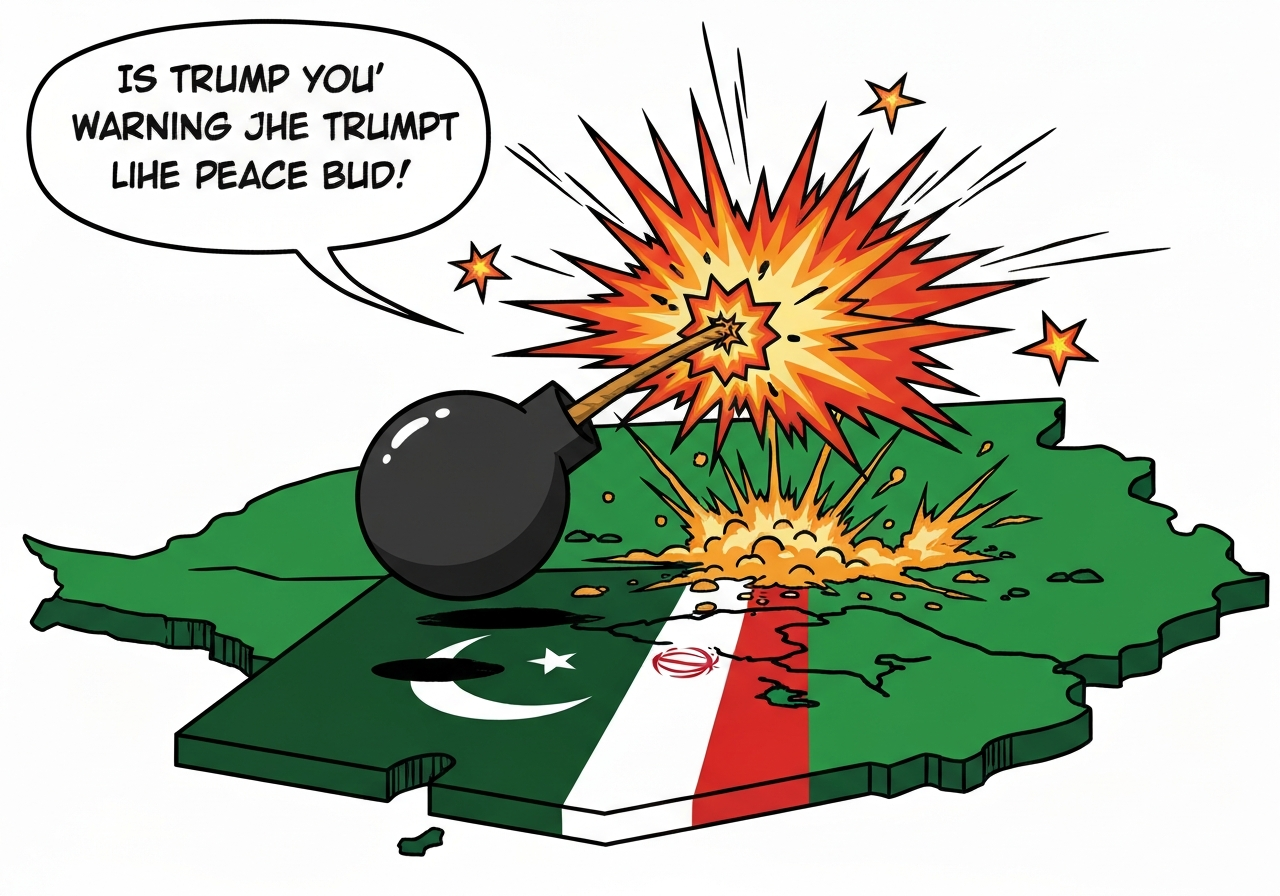
President Trump’s public ultimatum that he might “blow everything up” if Iran does not strike a deal has cast a shadow over a Pakistan-brokered ceasefire proposal being circulated this week. The White House said the president has not signed off on the 45-day framework; Tehran has already rejected a separate U.S. 15-point plan. Meanwhile, a U.S.-led rescue of a downed F-15E crew and fresh U.S.-Israeli strikes have intensified regional tensions as diplomats press for a pause.
Key Takeaways
- An Iranian drone strike on Ali Al Salem Air Base in Kuwait injured 15 U.S. service members; most have since returned to duty.
- U.S. Central Command reports 373 American service members injured in the Iran operation; about 330 have returned to duty and five are listed as seriously wounded.
- Markets ticked up Monday: S&P 500 +0.44%, Dow +0.36%, NASDAQ +0.54%; oil futures also rose (WTI +0.81%, Brent +0.3%).
- Pakistan reportedly presented a 45-day ceasefire plan to Washington and Tehran; the White House said Trump “has not signed off on it.”
- The rescue to recover the F-15E weapons systems officer involved more than 150 aircraft and used over 200 munitions, according to sources.
- Israel and U.S. strikes killed more than 25 people, including IRGC intelligence chief Maj. Gen. Majid Khademi, prompting Iranian vows of retaliation.
- The IAEA warned of a radiological risk after strikes near Iran’s Bushehr nuclear plant, saying impacts occurred as close as about 75 metres from the site perimeter.
Background
Hostilities escalated after a series of U.S.-Israeli strikes on Iranian targets that began in late February; they have targeted senior commanders, military sites and elements of Iran’s industrial base. Tehran has responded with missile and drone attacks on Israel and Gulf states and imposed a de facto blockade of the Strait of Hormuz, a chokepoint for roughly one-fifth of global oil shipments in peacetime. The disruption to shipping and strikes on energy assets have driven oil prices higher and prompted international calls for de-escalation.
Diplomatic channels have been active: Pakistan reportedly drafted a short-term ceasefire framework intended as the first phase of a broader settlement, while Iran and the U.S. have exchanged competing proposals — Tehran rejecting the U.S. 15-point plan and presenting its own demands. At the same time, domestic politics and hardline rhetoric on both sides, plus the recent killing of senior figures such as Maj. Gen. Majid Khademi, complicate negotiated solutions.
Main Event
On Monday President Trump set an 8 p.m. ET Tuesday deadline for Iran to accept terms that include reopening the Strait of Hormuz. He repeated threats to strike civilian infrastructure — naming power plants and bridges — if Iran fails to agree, and said the U.S. might charge fees for shipping through the strait. Trump told reporters the U.S. is intent on preserving “free traffic of oil” and signaled he would only accept a deal “acceptable to me.”
Separately, Pakistan’s ceasefire draft — reported by Reuters and circulated to both capitals — would pause hostilities for roughly 45 days and open a window for broader negotiations. White House officials described the plan as one of many ideas under consideration but said the president had not authorized it. Iranian officials have given mixed signals: Tehran rejected the U.S. 15-point proposal and submitted counter-terms emphasizing reconstruction, sanctions relief and guarantees against future attacks.
The week also saw a high-profile U.S. rescue operation after an F-15E was downed in southwest Iran. U.S. officials and military leaders described a sustained, dangerous recovery that involved upwards of 150 aircraft and numerous special operations teams. Both crew members were ultimately recovered; the pilot suffered serious injuries but is reported to be doing better, and the weapons systems officer was recovered after evading capture in rough terrain.
Concurrently, U.S.-Israeli strikes killed more than two dozen Iranians, including Maj. Gen. Khademi. Tehran announced plans for “Operation Crushing Revenge,” warning of retaliatory strikes. The IAEA flagged a new danger after military impacts occurred close to the Bushehr nuclear facility, urging that attacks near nuclear sites stop immediately to avoid a radiological catastrophe.
Analysis & Implications
Legal and ethical risks: Targeting civilian infrastructure such as power plants and bridges would raise serious questions under international humanitarian law. Legal advisers and EU officials have warned that strikes on energy facilities that sustain civilian life — hospitals, water treatment and sanitation — risk constituting war crimes. That legal risk limits the diplomatic and military room for maneuvers meant to coerce regime behavior without provoking international condemnation.
Strategic trade-offs: Trump’s deadline-driven, maximum-pressure rhetoric is intended to force concessions quickly, but it compresses diplomatic space and increases the chance of miscalculation. Iran’s insistence on guarantees against renewed attacks, demands for reconstruction aid and its own counter-proposals mean any negotiated pause requires credible verification and third-party guarantees — which Pakistan’s short-term framework attempts to provide.
Regional spillovers: Iran’s threats to target Gulf-state infrastructure in retaliation, and Iran-backed militias launching strikes from Iraq and elsewhere, raise the prospect of a widening conflict involving U.S. partners. Gulf air defenses have intercepted hundreds of missiles and drones in recent weeks, and even limited damage has caused civilian casualties and disrupted shipping and energy markets.
Economic impact and markets: Even as equities ticked up on hopes for diplomacy, oil prices remain sensitive to the Strait of Hormuz’s status and operational damage to petrochemical facilities. A prolonged blockade or additional strikes on energy infrastructure could push oil materially higher and strain global supply chains, amplifying economic costs for import-dependent countries.
Comparison & Data
| Item | Most-reported figure |
|---|---|
| Americans injured (current operation) | 373 (about 330 returned to duty; 5 seriously wounded) |
| Injured at Kuwaiti base attack | 15 Americans |
| Aircraft involved in rescue surge | 150+ aircraft; operation initially used 155 aircraft (total surged) |
| Munitions used in rescue effort | 200+ |
| Market moves (Mon) | S&P +0.44%, Dow +0.36%, Nasdaq +0.54%; WTI +0.81% |
These numbers illustrate the scale of kinetic operations and the human cost reported so far. Casualty totals differ across sources; military tallies for the wounded are released by U.S. Central Command while regional governments report civilian tolls for strikes on their territory.
Reactions & Quotes
U.S. defense and diplomatic officials framed the week as both a period of high-risk military operations and active diplomacy:
“We have to have a deal that’s acceptable to me — part of that deal is going to be free traffic of oil and everything else.”
President Donald Trump (White House remarks)
Military leaders emphasized the rescue effort’s danger and the U.S. commitment to recover personnel:
“This was an incredibly dangerous mission…the United States of America will recover our war fighters anywhere in the world under any conditions.”
Gen. Dan Caine, Chairman of the Joint Chiefs of Staff
International bodies and partners urged restraint and international law compliance:
“Any targeting of civilian infrastructure, namely energy facilities, is illegal and unacceptable.”
Antonio Costa, President of the European Council (social media statement)
Unconfirmed
- Whether Pakistan’s 45-day ceasefire proposal will be accepted by either side — both capitals have so far only acknowledged receiving it and are still evaluating.
- Precise long-term damage to Iran’s petrochemical infrastructure and economic cost estimates remain under assessment and are not yet independently verified.
- Claims that the U.S. intends to “take the oil” as a policy outcome remain rhetorical and have not been authorised by formal policy documents or legislation.
Bottom Line
The week has blended urgent diplomacy with high-stakes military pressure: Pakistan’s short-term ceasefire offer offers a possible de-escalation path, but President Trump’s hardline ultimatum and Iran’s countersignal that guarantees are required make a rapid settlement uncertain. The rescue of the downed F-15E crew demonstrated U.S. operational reach but also underscored the human toll and the risks of broader escalation.
What to watch in the next 48–72 hours: whether Tehran and Washington accept or reject the Pakistan framework; whether Trump extends or executes the 8 p.m. ET deadline; independent assessments of damage near the Bushehr nuclear plant; and market reactions if the Strait of Hormuz remains contested. Each outcome carries significant legal, humanitarian and economic consequences for the region and beyond.
Sources
- CBS News (live reporting) — U.S. media report with timelines of the rescue, statements and casualty counts.
- Reuters (news agency) — Reporting on Pakistan’s ceasefire proposal and diplomatic contacts (news agency).
- International Atomic Energy Agency (IAEA) statement — Official nuclear-safety agency alerting to strikes near Bushehr (international organization).