
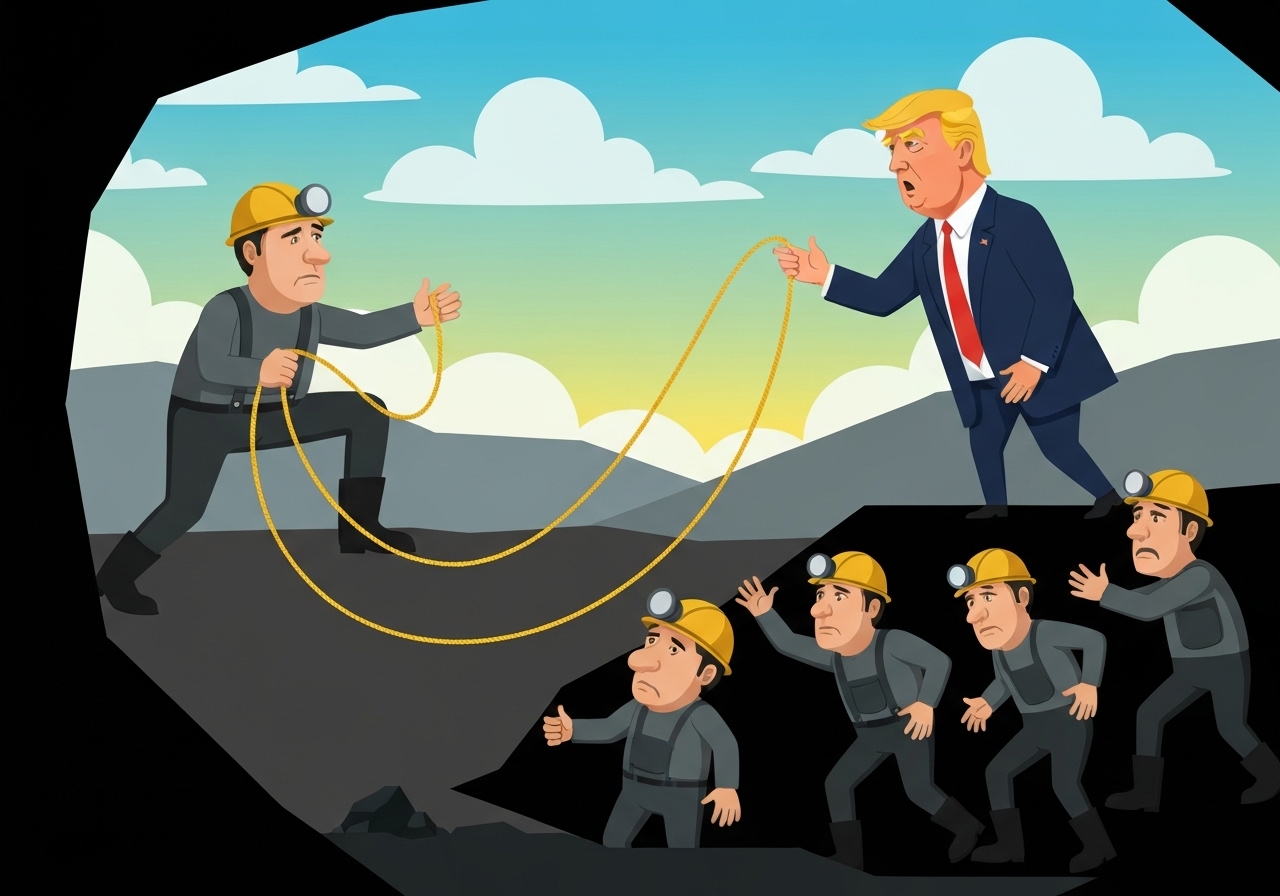
On Dec. 24, 2025, the U.S. government intervened to keep two Indiana coal-fired power plants operating and gave utilities more time to manage toxic coal ash, moves aimed at propping up a faltering coal sector. The Energy Department directed the two Indiana plants — previously scheduled to close — to remain online until early 2026, while the Environmental Protection Agency extended compliance deadlines by five years for many coal plants. The actions follow an administration decision the day before to suspend five offshore wind projects that were expected to serve more than 2.5 million homes and businesses.
Key Takeaways
- The Energy Department ordered two Indiana coal plants to remain in operation past planned closures, delaying shutdowns until early 2026.
- The EPA granted utilities an additional five years to implement measures preventing toxic coal-ash chemicals from leaching into drinking-water sources.
- The administration’s actions came a day after suspending five East Coast offshore wind projects that had been projected to power over 2.5 million homes and businesses.
- Coal remains the largest single source of U.S. power-sector carbon dioxide emissions and emits mercury and other heavy metals that raise public-health concerns.
- Officials framed the moves as steps to protect grid reliability; critics say they prioritize fossil-fuel economics over climate and public-health safeguards.
- The orders affect hundreds of coal facilities nationally by extending timelines for environmental compliance and may delay planned retirements at some sites.
Background
Coal has declined in the U.S. power mix over the past decade as natural gas prices fell, renewables expanded, and many plants aged out or were closed for environmental and economic reasons. The sector faces steep market pressures: cheaper alternatives and tightening regulations have reduced coal’s share of electricity generation year after year. Coal producers and allied political interests have lobbied for federal interventions to slow retirements and preserve jobs in mining and dependent communities.
Administrations historically balance grid reliability, environmental protection, and industry pressures when setting energy policy. Prior presidencies have occasionally delayed or adjusted regulatory timelines citing localized reliability risks, but large-scale, simultaneous moves to extend operational life and relax compliance timelines are notable for their breadth. Stakeholders include plant owners, local utilities, labor unions, downstream communities dependent on coal jobs, and environmental and public-health advocates concerned about air and water pollution.
Main Event
Late on Dec. 24, 2025, the Energy Department issued orders keeping two Indiana coal plants open beyond their announced closing dates until early 2026. The department identified near-term reliability concerns tied to regional capacity, citing the potential for supply gaps should the plants retire immediately. The plants’ owners had planned closures that were set to reduce coal-fired capacity in the Midwest.
Concurrently, the EPA published a regulatory adjustment giving hundreds of coal-fired plants an extra five years to complete measures designed to stop coal ash — a byproduct of burning coal containing heavy metals — from leaching into groundwater and drinking sources. The agency stated the extension was intended to let utilities phase in required systems and maintain operational stability during transitions.
These federal actions followed a Dec. 23 decision to suspend activity on five offshore wind projects being built along the East Coast, projects that developers estimated would supply power to more than 2.5 million homes and businesses. Together, the sequence of decisions signals a coordinated administrative approach favoring near-term fossil-fuel availability over expedited renewable deployment.
Analysis & Implications
In the short term, keeping the Indiana plants operating and delaying coal-ash deadlines reduces the risk of localized supply shortfalls and gives utilities more time to invest in containment or remediation. For communities dependent on coal, the moves may temporarily protect jobs and tax bases. They also reduce immediate compliance costs for utilities, shifting some environmental spending into the future.
From a climate perspective, the measures slow the decline of one of the power sector’s highest-emitting fuels. Burning coal emits more CO2 per unit of energy than gas or wind, and extending operational lives of plants can push back emissions reductions that would have resulted from earlier retirements and replacement by cleaner sources. Environmental-health risks also remain: coal combustion and ash contain mercury and other heavy metals linked to neurological and developmental harms.
Economically, the interventions may provide breathing room to coal-dependent regions, but they do not change underlying market dynamics that favor cheaper natural gas and expanding renewables. If renewables proceed once suspended projects restart, long-term capacity trends may continue away from coal despite temporary federal support. Internationally, the moves could be seen as the U.S. stepping back from rapid decarbonization commitments, affecting diplomatic climate conversations.
Comparison & Data
| Item | Value |
|---|---|
| Indiana plants’ new target closure | Early 2026 |
| E.P.A. compliance extension | +5 years |
| Offshore wind projects suspended | 5 projects; >2.5 million homes served (projected) |
| Primary risks from coal | CO2, mercury, heavy metals |
The table summarizes the immediate regulatory changes and their scope. These numbers reflect the federal orders announced in late December 2025 and the wind-project suspensions reported Dec. 23–24, 2025.
Reactions & Quotes
“Clearly this is a full-throttle attempt to help the fossil fuel industry and to hamper renewable energy.”
Sanya Carley, Kleinman Center for Energy Policy, University of Pennsylvania
“The administration said the measures are intended to preserve reliability while utilities phase in long-term solutions.”
U.S. Department of Energy (official statement reported)
Experts and advocates quickly framed the moves along predictable lines: reliability and jobs versus climate and public health. Labor leaders in coal regions echoed concerns about swift closures harming communities, while environmental groups called the steps a rollback of progress toward cleaner power.
Unconfirmed
- Whether the Indiana plants will run beyond early 2026 if market conditions or regulatory reviews change remains unclear and unconfirmed.
- The long-term fate of the five suspended offshore wind projects — whether they will restart, be reconfigured, or be canceled — is not yet confirmed.
- The degree to which the EPA extensions will be applied uniformly across all affected facilities or tailored case by case has not been fully detailed.
Bottom Line
The late-December 2025 federal actions temporarily buttress coal-fired generation and relax near-term environmental timelines, prioritizing grid stability and local economic concerns in the near term. While those decisions may avert immediate capacity gaps and relieve some utilities’ compliance burdens, they do not resolve the structural market forces — lower-cost gas and expanding renewables — that have reduced coal’s role over the past decade.
For policymakers and communities, the critical questions now are how long these interventions will persist, whether they meaningfully change regional emissions trajectories, and how funds and planning will be directed to support workers and public health during any future transitions. Observers should watch for agency guidance, legal challenges, and utility filings that will clarify implementation over the coming months.
Sources
- The New York Times — U.S. national newspaper (news report summarizing federal actions)