
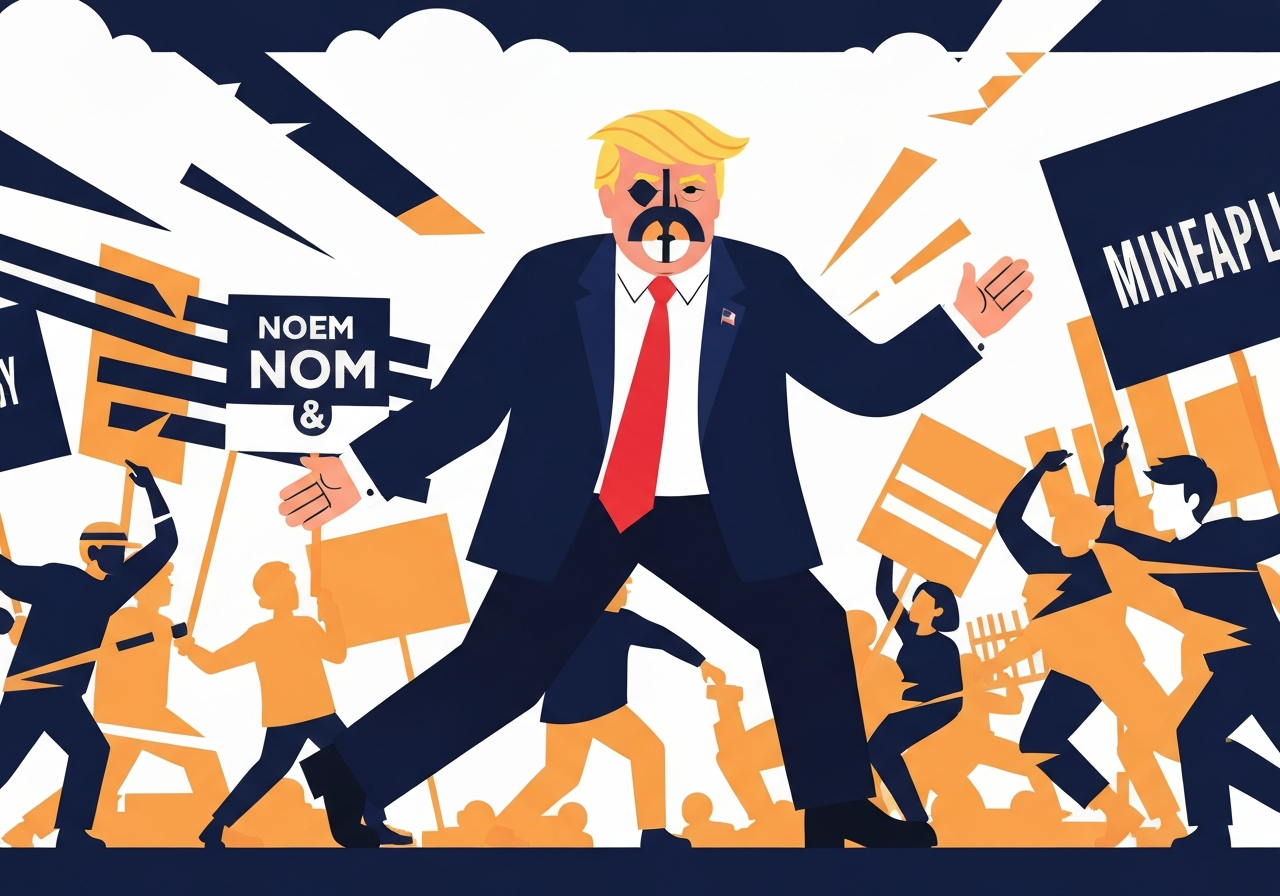
On January 31, 2026, President Donald Trump publicly defended two senior administration figures — Homeland Security Secretary Kristi Noem and Border Czar Tom Homan — as criticism intensified after two recent fatal encounters between federal agents and Minneapolis residents. The administration dispatched Homan to Minneapolis this week amid protests and ordered a Border Patrol commander to return to California. The deaths of Alex Pretti (Jan. 24) and Renee Good (Jan. 7) have prompted federal probes, heated local pushback and questions about federal immigration enforcement tactics.
Key Takeaways
- President Trump posted support for Secretary Kristi Noem and Border Czar Tom Homan on social media on Jan. 31, 2026, defending their handling of recent incidents in Minneapolis.
- Alex Pretti, 37, was shot on Jan. 24; multiple civilian videos show he was unarmed at the moment agents fired, and Noem initially said he had brandished a weapon without presenting evidence.
- Renee Good was shot on Jan. 7; the FBI is leading the investigation and DHS has said an ICE agent fired after alleging she tried to run over officers — a claim disputed by local officials and Good’s family.
- Tom Homan was sent to Minneapolis to de-escalate tensions; he later announced a drawdown of federal agents and criticized sanctuary policies while urging local cooperation with federal immigration enforcement.
- The administration ordered Border Patrol Commander Greg Bovino to return to California; officials described Homan’s talks with state and city leaders as “productive.”
- Both the Pretti and Good cases remain under federal review, with evidence and eyewitness accounts producing conflicting public narratives.
Background
The incidents in Minneapolis come amid a broader national debate over federal immigration enforcement and the use of armed federal agents in local communities. Cities that adopt so-called sanctuary policies have long been flashpoints in clashes between local authorities and federal immigration agencies. Federal deployments or high-profile enforcement actions often escalate tensions, particularly where previous uses of force have drawn scrutiny.
In Minneapolis this month, two separate deadly encounters involving federal agents triggered public outcry and political interventions. Local leaders, residents and families of the deceased have pressed for transparent, independent inquiries while federal officials have defended agent actions and framed them as part of immigration enforcement operations. The contrast between eyewitness video and initial agency statements has further complicated the public record.
Main Event
On Jan. 24, federal agents engaged with Alex Pretti, 37, in a confrontation that culminated in Pretti’s death. Several civilian-shot videos circulating online show Pretti without a firearm at the moment shots were fired; other footage indicates an officer disarmed him just before the first shot. Secretary Noem initially suggested Pretti had brandished a weapon and that officers had been attacked, but she later modified her remarks as more video evidence surfaced.
Renee Good was shot on Jan. 7 in a separate encounter that DHS has characterized as involving an alleged attempt to strike officers with a vehicle. Local officials and Good’s family dispute that account. The FBI has taken the lead on investigating Good’s case, and DHS has said it will coordinate while federal reviews proceed.
Facing rising protests and criticism, the White House sent Tom Homan to Minneapolis to meet state and city officials and to try to calm tensions. Administration sources told reporters that Border Patrol Commander Greg Bovino was ordered back to California as part of a personnel reshuffle tied to the response. Homan subsequently announced a drawdown of federal agents in the city later in the week.
Analysis & Implications
The incidents underscore a widening credibility gap between federal agency accounts and independent video and witness evidence. When initial official statements conflict with widely viewed recordings, public trust erodes quickly and political pressure intensifies for independent, transparent investigations. That dynamic has immediate implications for how the administration manages similar operations nationwide.
Politically, President Trump’s vocal backing of Noem and Homan signals a defensive posture that frames criticism as partisan attack rather than as calls for accountability. That approach may rally supporters who prioritize strict immigration enforcement, but it risks inflaming local leaders and communities demanding independent review and reform of federal tactics.
Operationally, the episode may prompt review of protocols for federal agent deployments, use-of-force reporting, and on-scene communications. Agencies may face renewed demands for body-camera footage releases, clearer chains of custody for evidence, and standardized disclosure practices to reduce discrepancies between initial statements and later corroborating materials.
Internationally and across U.S. jurisdictions, the controversy could affect cooperation between local law enforcement and federal immigration authorities. Cities with sanctuary policies may be less willing to coordinate, while federal authorities might push for more aggressive enforcement in other jurisdictions — a pattern that could deepen national fragmentation on immigration enforcement strategy.
Comparison & Data
| Incident | Date | Lead Investigator | Key Public Detail |
|---|---|---|---|
| Alex Pretti | Jan. 24, 2026 | State/Federal reviews (video evidence public) | Multiple civilian videos show Pretti unarmed when shots fired |
| Renee Good | Jan. 7, 2026 | FBI | DHS alleges attempted vehicle attack; family and local leaders dispute |
The table highlights the two separate fatal encounters and their investigative leads. While both cases involve federal actors and raised local alarm, they differ in timing, available public evidence and which federal office is leading the probe. That divergence affects the pace and transparency of investigative updates.
Reactions & Quotes
White House supporters praised the president’s defense and framed the matters as law-enforcement issues; critics called for independent oversight and clarity. Local officials expressed concern about federal tactics and the conflicting narratives emerging from agency statements and civilian videos.
He is “doing a FANTASTIC JOB,” the president wrote in praise of Tom Homan.
President Donald Trump, social media post
This brief quote reflects the president’s public posture in defending Homan as the administration managed the response in Minneapolis.
Homan described his discussions with state and city leaders as “productive,” while urging more local cooperation with federal immigration enforcement.
Tom Homan, Border Czar
Homan’s use of “productive” framed the meetings as constructive despite public tensions; his public comments also criticized sanctuary policies and signaled federal expectations of local assistance.
Noem said the department was relying on “what we knew to be true on the ground” as it issued initial statements about the Pretti incident.
Secretary Kristi Noem, DHS remarks
Noem later adjusted her public characterization as additional video evidence became known, a sequence that has raised questions about information flows inside DHS during active incidents.
Unconfirmed
- Noem’s initial claim that Alex Pretti brandished a weapon has not been substantiated by released agency evidence; video footage circulated by civilians appears to contradict that claim.
- DHS’s description that Renee Good attempted to run over officers remains disputed by local officials and family members and awaits full FBI investigative findings.
- Any internal disciplinary conclusions or chain-of-command directives inside DHS or ICE linked to these incidents have not been publicly released and remain pending.
Bottom Line
The administration’s public defense of Kristi Noem and Tom Homan on Jan. 31, 2026, reflects a broader strategic decision to stand by senior enforcement officials amid controversy. That stance may reassure supporters who favor robust immigration enforcement but is likely to deepen distrust among local leaders and families seeking independent accountability.
Both the Pretti and Good investigations remain active. Expect continued public scrutiny, calls for transparency, and potential policy and procedural reviews within DHS and related agencies. How quickly agencies release corroborating evidence and how independent investigators evaluate the incidents will shape public confidence and future federal-local cooperation.
Sources
- ABC News (national news report)
- U.S. Department of Homeland Security (official agency)
- Federal Bureau of Investigation (official investigator)