
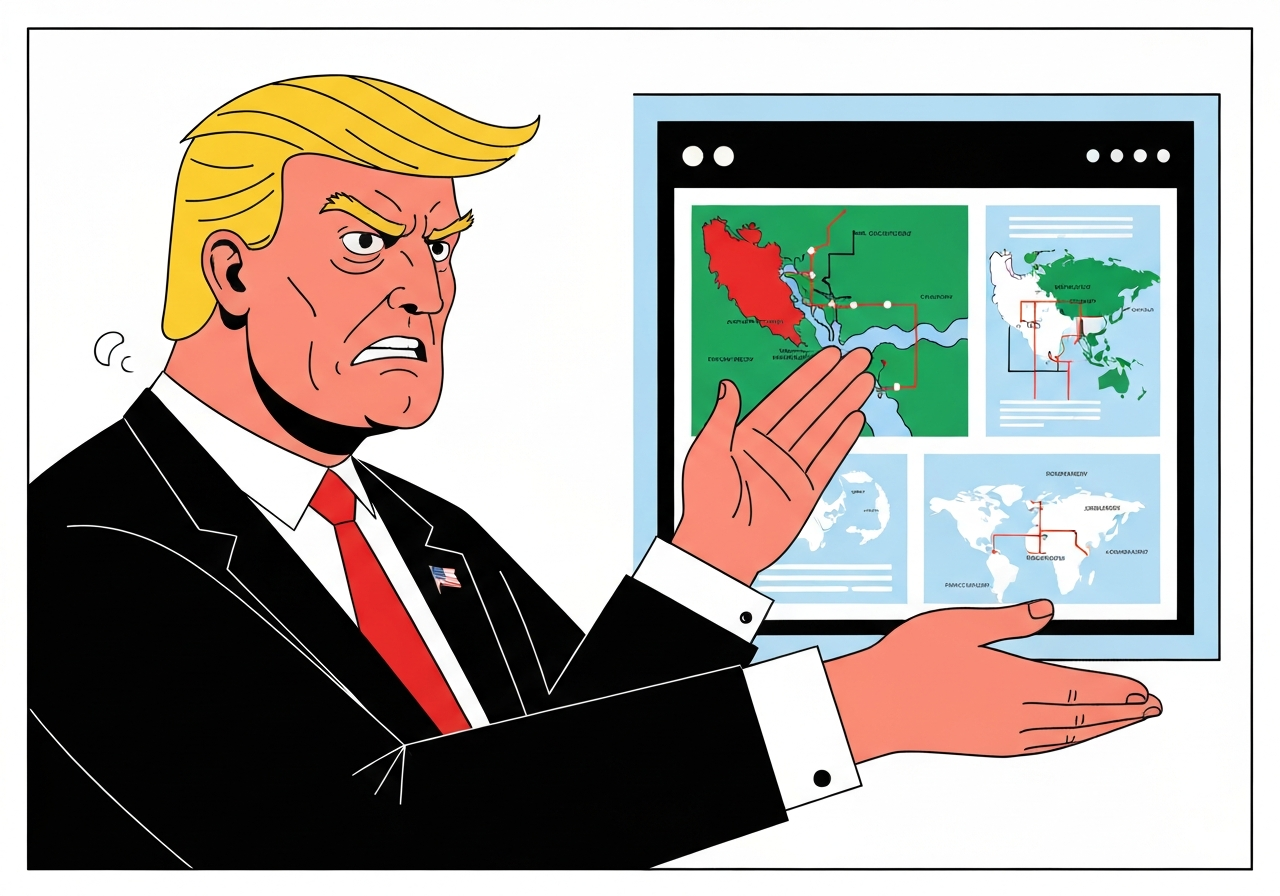
Lead: President Donald Trump announced a 10-day pause on planned strikes against Iranian energy infrastructure on March 27, saying negotiations with Tehran are ongoing. The delay, which moves a self-imposed deadline to April 6, comes as the US and Israel sustain a month-long joint assault that has closed the Strait of Hormuz and roiled global markets. Iranian authorities report nearly 1,900 people killed and 20,000 injured since the campaign began; the conflict has also produced mounting humanitarian and logistical crises across the region. International partners, including G7 foreign ministers, urged immediate de-escalation and restoration of safe navigation through key waterways.
Key Takeaways
- Trump announced a 10-day hold on strikes against Iranian energy sites, citing ongoing talks with Tehran and moving his prior deadline to April 6.
- The Iranian Red Crescent reports roughly 1,900 killed and 20,000 injured in Iran since the start of the US-Israeli assault nearly four weeks ago.
- US military casualties have risen to 303 wounded and 13 killed; more than 75% of reported US injuries are linked to traumatic brain injury.
- The Strait of Hormuz remains effectively closed, affecting about 20% of global oil and gas transit; the IRGC turned away at least three ships on the morning of March 27.
- Lebanon faces a mass displacement crisis with over 1 million people uprooted and critical damage to infrastructure after intensified Israeli strikes.
- Humanitarian agencies warn that rising fuel, fertilizer and food costs could push an additional 45 million people toward acute hunger without rapid aid response.
Background
The present conflict began with a coordinated US-Israeli campaign that has expanded over almost four weeks, targeting Iranian military and strategic infrastructure. Tehran’s counterstrikes — including ballistic missiles and drone attacks — have prompted retaliatory operations and a cycle of escalation that has spread across the eastern Mediterranean and Gulf. The Strait of Hormuz, a chokepoint for roughly one-fifth of the world’s oil and gas flows, has been intermittently closed by Iranian actions and enforcement by the Islamic Revolutionary Guard Corps (IRGC), disrupting global energy markets and shipping routes.
Historic concerns about Iran’s nuclear-related facilities remain part of the strategic calculus: the Arak heavy-water reactor, long viewed with suspicion by Israel and Western capitals because of a plutonium pathway, was reported struck on March 27 by Iranian state media, which attributed the attack to US and Israeli forces. International agencies previously noted Arak was still under construction and not operational. Meanwhile, regional proxies and nonstate actors — including Yemen’s Houthi movement — have signaled they could widen the theater of conflict, threatening maritime chokepoints like Bab al-Mandab.
Main Event
On March 27, President Trump told reporters the United States would refrain from attacking Iranian energy infrastructure for 10 days while diplomacy continues. The move extends his earlier public timeline and appears intended to preserve space for negotiations even as military preparations continue in parallel. US officials have publicly emphasized readiness for further action, and Pentagon planning reportedly includes contingency options for more forceful operations if diplomacy fails.
Concurrently, the G7 foreign ministers issued a joint statement stressing the “absolute necessity” of restoring safe, toll-free navigation in the Strait of Hormuz and calling for an immediate end to attacks on civilians and civilian infrastructure. Allies indicated willingness to assist in keeping shipping lanes open but said de-escalation must precede cooperative security operations. Iran has floated proposals to levy tolls on vessels transiting the strait, a change that would raise significant legal and commercial concerns.
On the ground and at sea, the situation remains volatile. Iran reported overnight strikes in multiple cities including Qom and Urmia, with state media and local officials citing dozens of fatalities and widespread building damage. The IRGC turned away at least three vessels from the Strait of Hormuz on the morning of March 27, according to semi-official reporting, while humanitarian groups continue to document severe damage to hospitals, schools and other civilian infrastructure across Iran and Lebanon.
Analysis & Implications
Diplomatic pauses like the president’s 10-day hold can lower immediate kinetic risk but do not remove underlying drivers of escalation. Both sides retain incentives to press advantages: the US and Israel aim to degrade Iran’s strike capacity, while Iran and its proxies can leverage chokepoints and asymmetric attacks to impose economic and political pain. That dynamic makes any ceasefire fragile and reliant on rapid, verifiable confidence-building steps.
Energy markets are highly sensitive to these developments. The effective closure of the Strait of Hormuz affects crude and liquefied natural gas flows that account for about 20% of global oil and gas transit; insurers, shippers and national purchasers have begun rerouting cargoes, raising costs and adding weeks to delivery timelines. Short-term price spikes and longer-term supply-chain stress for fertilizer and food production are credible risks, especially for import-dependent economies in Africa and parts of Asia.
Humanitarian consequences are mounting. Lebanon’s UNHCR representative described more than 1 million internally displaced people and severe cuts to access following bridge and infrastructure damage, while WHO reporting highlights dwindling medical supplies and increasing mental health needs. Prolonged disruption would amplify displacement, food insecurity and secondary public-health crises across multiple states.
Comparison & Data
| Metric | Reported Figure | Source |
|---|---|---|
| Civilians killed in Iran | ~1,900 | Iranian Red Crescent |
| Civilians injured in Iran | ~20,000 | Iranian Red Crescent |
| US service members wounded | 303 (273 returned to duty) | US defense official / Pentagon |
| US service members killed | 13 | Pentagon reporting |
| Population displaced in Lebanon | >1,000,000 | UNHCR |
These figures, collected from official and semi-official sources, illustrate the asymmetric toll: far higher civilian casualties and infrastructure damage inside Iran and Lebanon, combined with significant but smaller US military casualties. All numbers remain subject to revision as battlefield reporting and humanitarian access evolve.
Reactions & Quotes
International and regional actors reacted quickly. G7 ministers emphasized navigation and civilian protection, while Israeli officials warned of stepped-up operations if Iranian attacks continue. Below are representative statements and surrounding context.
“We will continue to hunt down the leaders and commanders of the terror regime and destroy its strategic capabilities.”
Israel Defense Minister
Israel’s defense minister framed the country’s approach as targeted degradation of Iran’s command and capability, signaling that any expanded campaign would aim at military leadership and strategic infrastructure. The statement did not specify new target sets or timelines.
“How can the US, which can’t even protect its own soldiers at its bases in the region…protect them on our soil?”
Mohammad Bagher Ghalibaf, Speaker, Iranian Parliament
Ghalibaf’s comment underscored Tehran’s domestic political posture and skepticism toward US deterrence claims. Iranian leaders have used such rhetoric to rally internal support while also engaging in selective diplomatic channels, according to regional analysts.
“Lebanon is facing a humanitarian catastrophe…people simply want to go home.”
Karolina Lindholm Billing, UNHCR Representative in Lebanon
UNHCR’s representative described the scale of displacement and damage to essential services, emphasizing that repeated population movements are stretching shelters and degrading access to sanitation and healthcare.
Unconfirmed
- Attribution of the March 27 reported strike on the Arak nuclear facility to US and Israeli forces remains claimed by Iranian authorities but independently unverified.
- Reports that Moscow is directly providing real-time targeting intelligence to Iran have appeared in media accounts based on unnamed US sources; full corroboration has not been publicly disclosed.
- Casualty tallies and damage assessments continue to be revised; some municipal and health figures have limited independent verification due to access constraints.
Bottom Line
The 10-day pause announced by President Trump reduces immediate pressure on Tehran and creates a narrow window for diplomatic engagement, but it does not eliminate the risk of renewed strikes. Both military options and political incentives for escalation remain in play across multiple actors and theaters, from naval harassment in the Gulf to proxy actions elsewhere in the region.
For markets and humanitarian responders, the conflict’s near-term trajectory matters more than statements: reopening the Strait of Hormuz, ensuring safe humanitarian access in Lebanon and Iran, and stabilizing energy and food supply chains will determine whether economic and human costs spread much further. Independent verification of battlefield claims and transparent investigation of incidents that affected civilians will be essential to any durable de-escalation.
Sources
- CNN live coverage – (news outlet)
- Iranian Red Crescent / IFRC reports – (humanitarian organization reporting)
- UNHCR briefings on Lebanon – (UN agency)
- World Health Organization statements – (UN health agency)
- International Atomic Energy Agency guidance on Arak – (international regulator/technical)