
Lead
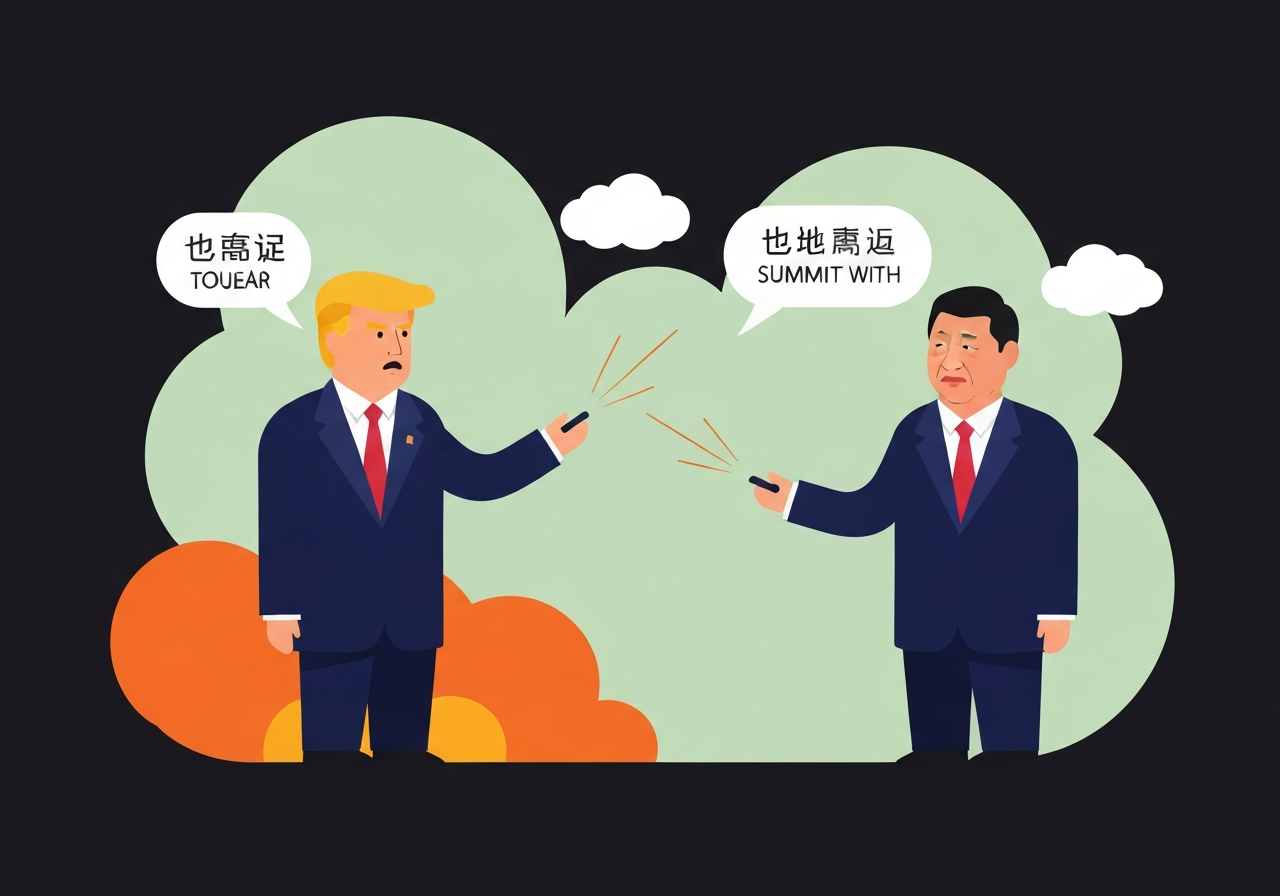
President Donald Trump on March 16, 2026 warned he could postpone a Beijing summit scheduled to begin on March 31 if China does not agree within two weeks to assist in reopening the Strait of Hormuz. The demand — that China dispatch naval forces to help keep a major oil transit lane open — has heightened tensions between the world’s two largest economies amid a wider Middle East war. U.S. and Chinese officials say planning continues, but Washington’s public timetable adds pressure to already fraught diplomacy. Markets and regional partners are watching closely as oil prices sit above $100 a barrel and shipping risks grow.
Key Takeaways
- Trump told the Financial Times on March 16 he “may delay” the summit set to start March 31 in Beijing if China does not commit to helping reopen the Strait of Hormuz within two weeks.
- The Strait of Hormuz is a transit route for about 20% of global oil; since late February oil prices have risen above $100 per barrel amid the Iran–Israel–U.S. exchanges.
- China, the largest buyer of Iranian oil, has not publicly agreed to send warships; Beijing has emphasized that direct leader-to-leader dialogue is essential.
- Treasury Secretary Scott Bessent met Chinese official He Lifeng in Paris to finalize summit preparations; Bessent told reporters a delay would stem from the president’s travel decision, not a breakdown in U.S.–China ties.
- Iran has been targeted at oil facilities and the United States has struck military sites on Kharg Island, which processes about 90% of Iran’s oil exports, prompting Tehran to curtail traffic through the strait.
- All sides describe negotiations as ongoing; any decision to deploy foreign naval forces to the Gulf would mark a significant shift in regional security arrangements.
Background
The March meeting in Beijing followed an invitation extended by President Xi Jinping during talks with Mr. Trump in Busan, South Korea, last October. Head-of-state summits have been a preferred channel for managing the complex economic and security ties between Washington and Beijing, where personal diplomacy often sets strategic direction. Planning for the March 31 meeting accelerated even as the Middle East conflict intensified in late February and March, spiking energy market volatility and raising the stakes for security cooperation.
Historically, China has been cautious about direct military involvement in Persian Gulf security, balancing energy needs, relations with Iran, and its broader strategic rivalry with the United States. Beijing is the largest buyer of Iranian oil and has repeatedly called for de-escalation and the cessation of hostilities. Any Chinese naval deployment to protect commercial traffic would represent an atypical and consequential change in Beijing’s posture toward Gulf security operations.
Main Event
On March 16, speaking to the Financial Times, Mr. Trump tied the fate of the Beijing summit to whether China would help reopen the Strait of Hormuz, an assertion that put public pressure on Beijing to respond within a two-week window. U.S. officials have said the strait’s effective closure — driven by Iranian missile and drone attacks on Gulf shipping and energy infrastructure — is disrupting global oil flows and necessitating a coordinated response. The president portrayed the request as urgent and time-sensitive; Chinese officials, for their part, reiterated the need for direct leader-level diplomacy.
A Chinese foreign ministry spokesman, Lin Jian, told reporters that officials from both capitals were discussing summit logistics and stressed the strategic role of face-to-face exchanges between heads of state. In Paris, Treasury Secretary Scott Bessent held follow-up talks with He Lifeng to finalize arrangements for the March summit and briefed reporters on continuing preparations. Mr. Bessent told CNBC that if the summit is delayed it would be because Mr. Trump chose not to travel during the war, not because of a rupture in relations.
On the ground in the Gulf, the United States has struck military targets on Kharg Island, a key node processing roughly 90% of Iran’s oil exports, while Israel has also targeted Iranian energy infrastructure. Iran’s reciprocal strikes and tactics have effectively reduced commercial passage through the Strait of Hormuz, through which about one-fifth of the world’s oil moves. That disruption explains the rapid rise in oil prices above $100 a barrel and is driving urgent diplomatic outreach to regional and global powers.
Analysis & Implications
If China were to accede to a U.S. request for naval assistance in the Strait of Hormuz, it would mark a substantive departure from Beijing’s recent policy of cautious engagement in the Persian Gulf. Such a move could ease immediate shipping risks and relieve upward pressure on energy markets, but it would also expose China to direct operational and diplomatic entanglement in a conflict where it has economic ties to Iran. The decision would be read globally as a recalibration of Beijing’s strategic priorities.
For the United States, publicly tying the summit’s timing to Beijing’s response is both leverage and a risk. It signals Washington’s urgency to allies and adversaries, yet it may constrain back-channel diplomacy by setting hard public deadlines. A delayed summit would reduce an opportunity for top-level risk management between the two powers at a delicate moment for markets and regional security.
Economically, prolonged disruptions in the Strait of Hormuz would have immediate effects on oil markets, insurance premiums for shipping, and global supply chains. Firms dependent on steady energy supplies may accelerate contingency planning, and allied navies could feel increased pressure to curry public and parliamentary support for extended deployments. Politically, any Chinese cooperation with U.S.-led operations could complicate Beijing’s ties with Tehran and alter calculations in other theaters where U.S.–China competition plays out.
Comparison & Data
| Item | Metric / Date |
|---|---|
| Summit start date | March 31, 2026 |
| Strait of Hormuz share of global oil transit | About 20% |
| Kharg Island role | Processes ~90% of Iran’s oil exports |
| Oil price (since war onset) | Above $100 per barrel (March 2026) |
The table above summarizes core figures driving diplomatic urgency. The Strait of Hormuz’s roughly 20% share of seaborne oil exports means sustained closures can quickly transmit to global markets. Kharg Island’s central processing role explains why strikes there have outsized supply effects. Policymakers in Washington, Beijing and allied capitals are weighing how operational risks map onto political constraints and energy market exposure.
Reactions & Quotes
“We’d like to know before that,” Mr. Trump said when asked whether he might delay the Beijing meeting.
President Donald Trump (interview with Financial Times)
“Head‑of‑state diplomacy plays an irreplaceable, strategic guiding role in China‑U.S. relations,” a Foreign Ministry spokesman said, emphasizing ongoing discussion of summit plans.
Lin Jian, Spokesman, Chinese Foreign Ministry (official briefing)
Mr. Bessent told reporters any decision to postpone would be driven by the president’s travel choice during the war, not a breakdown in bilateral ties.
Scott Bessent, U.S. Treasury Secretary (press remarks)
Unconfirmed
- It is unconfirmed whether Beijing will agree to dispatch warships to the Strait of Hormuz within the two-week window specified by the U.S. request.
- Reports that China has offered an alternative, non‑combat assistance package to help reopen shipping lanes remain unverified by official statements.
- Any internal U.S. deliberations about linking the president’s travel schedule directly to operational military decisions in the Gulf have not been publicly confirmed.
Bottom Line
President Trump’s public linkage of summit timing to China’s response on Gulf security raises immediate diplomatic stakes ahead of a high-profile March 31 meeting in Beijing. The move seeks to turn a bilateral summit into leverage for a multilateral security outcome, but it risks narrowing the margin for private negotiation between senior officials. How Beijing responds — whether with diplomatic assurances, noncombat support, or outright refusal — will shape near-term market volatility and the broader trajectory of China–U.S. relations.
For businesses and allied governments, the priority is contingency planning: insurance and routing for maritime trade, energy supply buffers, and calibrated political signaling to avoid further escalation. Observers should expect intensive diplomacy in the coming days, with progress hinging on whether China opts to shift its longstanding posture toward direct involvement in Persian Gulf security.
Sources
- The New York Times — (U.S. news outlet; reporting on Trump remarks, summit planning, and regional events)
- Financial Times — (International business press; source of the president’s interview)
- Ministry of Foreign Affairs of the People’s Republic of China — (Official government briefings)
- CNBC — (Business news; reporting on statements by U.S. officials)