
Lead
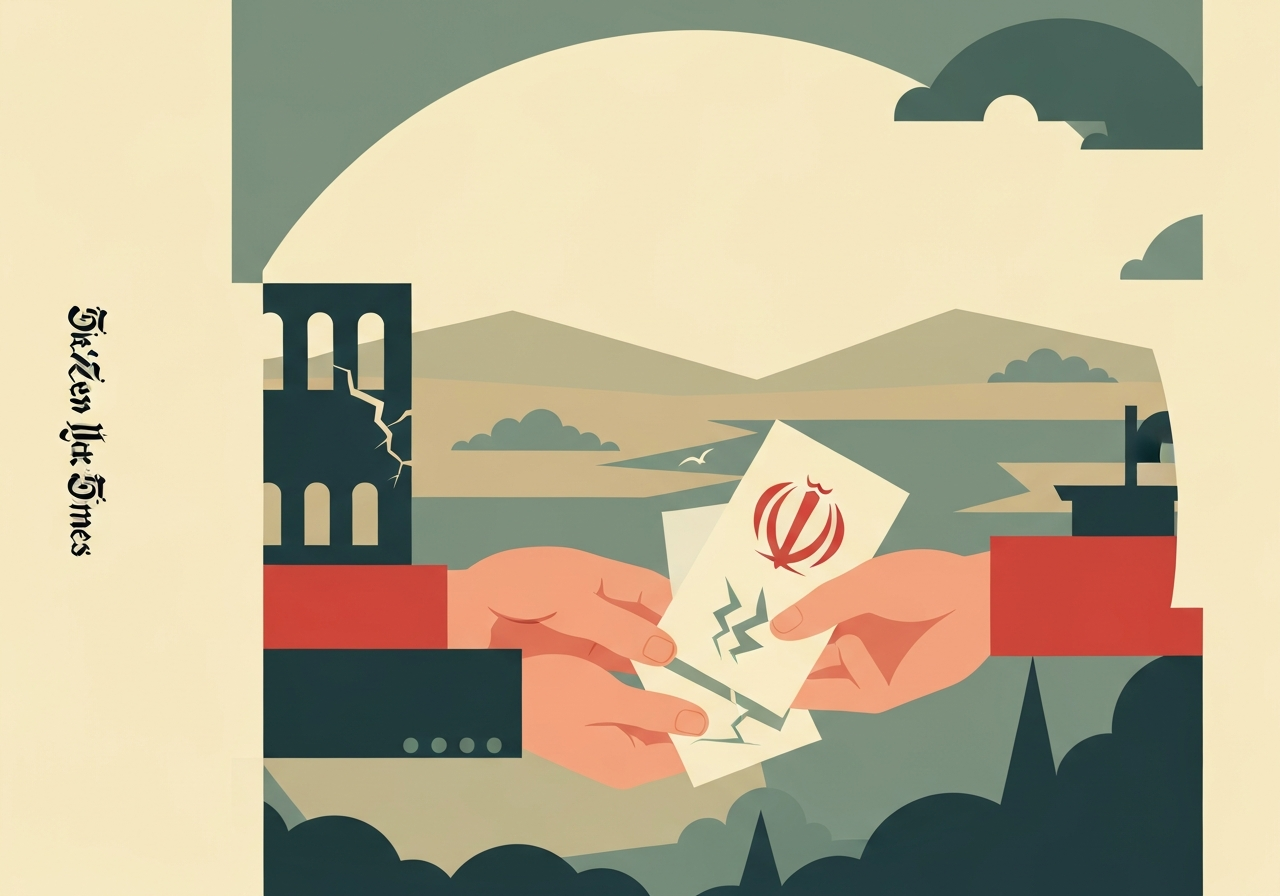
On March 6, 2026, President Donald J. Trump publicly demanded “unconditional surrender” from Iran, setting the broadest U.S. objective since the start of the recent conflict. The declaration came six days into a U.S.- and Israel-led bombing campaign and followed reported strikes and drone attacks by Iran against Arab states hosting American forces. In a social media post the president said the United States and its partners would then assist in selecting a “GREAT & ACCEPTABLE Leader(s).” The statement signals a shift in stated goals that could lengthen and broaden the war if pursued.
Key Takeaways
- On March 6, 2026, President Trump demanded Iran’s “unconditional surrender” in a public social media post, expanding stated U.S. aims beyond earlier, more limited objectives.
- The demand arrived on day six of a combined U.S.-Israel bombing campaign; Iran has retaliated with missiles and drones aimed at Arab states hosting U.S. bases, though reports say such strikes have declined in frequency in recent days.
- The president’s post included the phrase “selection of a GREAT & ACCEPTABLE Leader(s),” indicating an intention—at least rhetorically—to reshape Iran’s leadership after any capitulation.
- Within hours, the White House press secretary attempted to temper the wording, saying surrender would “essentially” be considered achieved when the president judged his goals met, highlighting internal ambiguity in official messaging.
- Analysts warn that demanding unconditional surrender and promising leadership selection elevates the risk of a prolonged regional conflict and complicates coalition management.
- Domestic political dynamics appear intertwined with strategic choices: the president’s rhetoric merges long-standing advocacy for decisive U.S. action with an assertive view of regime change and leader replacement.
Background
The confrontation escalated after a series of strikes and counterstrikes in the region that brought U.S. forces and allies into heavier kinetic operations. Iran has publicly rejected calls to capitulate and has expanded strikes beyond its borders, targeting states that host American bases. Historically, U.S. administrations have varied in their stated aims—from limited deterrence objectives to explicit regime-change goals—creating a precedent for rapid shifts in public messaging and policy.
President Trump’s statements reflect a longer-running posture that favors robust, often unilateral use of military power to achieve political ends. That posture contrasts with diplomatic approaches pursued by other actors, including multilateral restraint or sanctions-first strategies. Washington’s coalition partners and congressional backers have at times offered different interpretations of acceptable aims, producing operational and political friction.
Main Event
On March 6, the president used a social media platform to demand Iran’s unconditional surrender, writing that once Iran capitulated the United States and its allies would assist in choosing a new leader. The language marks a marked expansion from previously stated objectives focused on degrading Iranian capabilities or retaliating for specific attacks. The statement was widely circulated and immediately drew attention from allies, adversaries, and domestic political allies and critics.
Iran, for its part, has not signaled any willingness to surrender. Instead, state forces and allied militias have struck back at targets in neighboring Arab states that host U.S. bases, using missiles and unmanned aerial systems. Observers reported a decline in the tempo of such attacks in the days immediately before and after the president’s post, but Iranian leaders have continued to cast resistance as an appropriate response to foreign strikes.
The White House press secretary later sought to narrow the implication of “unconditional surrender,” saying the president’s objectives would be met when he decided they had been achieved. That partial clarification underscored a broader problem: senior aides and congressional allies have struggled to present a single, consistent account of U.S. goals, and in some cases publicly contradicted one another.
Analysis & Implications
Demanding unconditional surrender is a qualitative shift in aims that can alter adversary incentives and the operational calculus of both allies and opponents. A demand for capitulation elevates expectations for tangible regime change and may harden Iran’s resolve to resist, reducing room for negotiated de-escalation. It also increases pressure on the United States to produce definitive outcomes rather than manage damage and deter further attacks.
Regionally, such rhetoric risks drawing more states into the conflict or incentivizing proxy escalations. Arab governments hosting U.S. forces face a dilemma: publicly aligning with an expanded U.S. objective may provoke more Iranian strikes, while distancing themselves could fracture tactical cooperation. International partners that prefer limited objectives or emphasize humanitarian protections may balk at being associated with a campaign framed as seeking unconditional surrender.
Domestically, the president’s language ties military strategy to a personal vision of leadership selection abroad, which complicates civilian-military relations and congressional oversight. Military planners must now reconcile orders with political expectations that may outpace achievable battlefield results, increasing the likelihood of mission creep. Absent clear, measurable objectives and timelines, the risk of a protracted engagement with rising costs—political, economic and human—increases substantially.
Comparison & Data
| Conflict | Stated Initial Objective | Notable Outcome |
|---|---|---|
| Iraq (2003) | Remove Saddam Hussein’s regime | Regime change followed by prolonged instability |
| Afghanistan (2001) | Disrupt al-Qaida and remove Taliban protection | Long-term counterinsurgency and eventual political transition |
| Current Iran campaign (2026) | Initially punitive strikes; now public demand for unconditional surrender | Uncertain—risk of extended regional conflict |
The table emphasizes how ambitious opening objectives—especially those aimed at leadership removal—have historically correlated with extended military commitments and complex post-conflict governance challenges. Past U.S. interventions show that early, maximalist aims can be difficult to translate into sustainable political outcomes without a comprehensive plan for occupation, stabilization and reconstruction.
Reactions & Quotes
“We will settle for nothing short of unconditional surrender,”
President Donald J. Trump, March 6, 2026 social media post
The president’s direct phrasing drew immediate attention for its finality and for the follow-up promise to assist in leadership selection. The post was amplified across conservative and international platforms and prompted rapid commentary within Washington.
“The surrender would ‘essentially’ occur when the president concludes his war objectives have been met,”
White House Press Secretary (statement reported March 6, 2026)
The press secretary’s attempt to qualify the president’s language suggested internal efforts to present a more limited, administrable standard. Nonetheless, aides acknowledged that messaging remains unsettled across different channels.
“This marks the broadest public articulation of U.S. aims since the campaign began and raises the stakes for regional partners and military planners,”
David E. Sanger, reporting and analysis
Analysts cited in reporting warned that rhetorical escalation without a clear operational roadmap increases the risk of a longer war and complicates coalition politics.
Unconfirmed
- Reports and imagery describing the killing of Supreme Leader Ayatollah Ali Khamenei need independent confirmation from multiple, verifiable official sources before being treated as proven fact.
- The precise timeline and mechanism by which U.S. or allied forces would participate in selecting a new Iranian leader have not been publicly detailed and remain unconfirmed.
- Public reporting that Iranian attacks have definitively decreased in scale or intent in the days following March 6 is based on limited open-source signals and requires further verification.
Bottom Line
President Trump’s call for Iran’s “unconditional surrender” on March 6, 2026 represents a decisive rhetorical escalation that broadens stated U.S. objectives and raises the possibility of a longer, more complex regional conflict. The administration’s subsequent, partial attempt to qualify that language highlights internal inconsistencies that matter operationally and politically.
Policymakers, allies and analysts should watch for three indicators that will shape the conflict’s trajectory: whether Iran escalates or seeks negotiated de-escalation; how regional host states respond to the U.S. framing of objectives; and whether the U.S. government articulates a coherent, measurable plan for post-conflict governance. Absent clearer aims and feasible implementation strategies, the risk of extended hostilities and broader regional spillover will remain high.
Sources
- The New York Times — news report and analysis (primary reporting)