
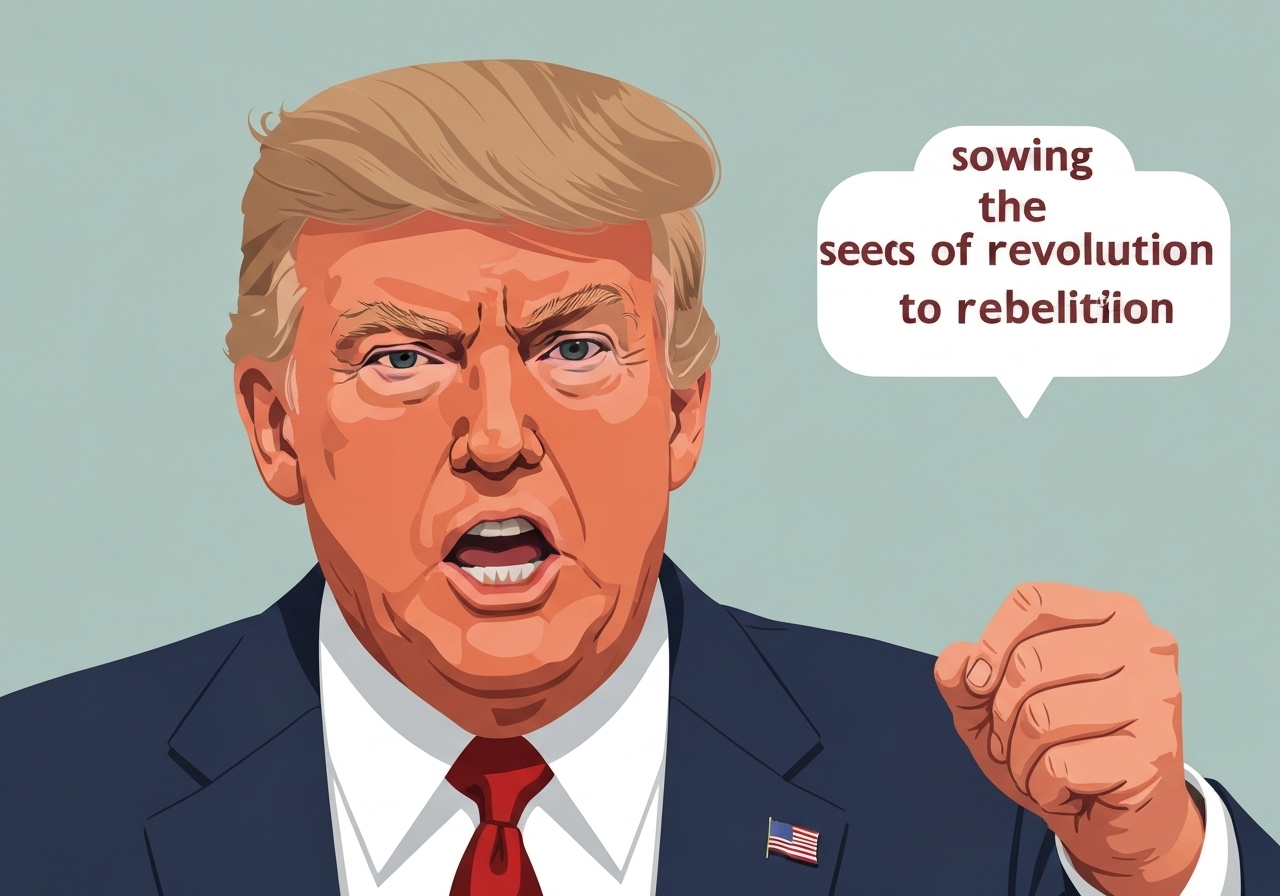
President Donald Trump on Thursday publicly accused several Democratic lawmakers of “seditious behavior” and said they should be “arrested and put on trial,” adding in social posts that the conduct could be “punishable by death.” The comments followed a Tuesday video, posted by Sen. Elissa Slotkin, in which multiple veterans and former intelligence officials urged service members to refuse unlawful orders. Trump reposted and amplified criticism on his Truth Social account while the White House and congressional leaders responded with mixed legal and political arguments. The episode sparked fresh concerns about threats to lawmakers and political violence, and prompted inquiries from the Department of Justice and the Pentagon.
Key Takeaways
- On Tuesday, Michigan Sen. Elissa Slotkin posted a video with several Democratic lawmakers, many veterans, urging military and intelligence personnel to refuse illegal orders.
- On Thursday, President Trump posted multiple messages on Truth Social calling the lawmakers “seditious” and saying they should be arrested, tried and could face death — language that Democratic leaders called a death threat.
- The lawmakers named in the video include Sen. Mark Kelly (D-Ariz.) and Reps. Chris Deluzio (D-Pa.), Maggie Hassan? (note: user’s list included Maggie Goodlander—this article preserves Slotkin, Kelly, Deluzio, Houlahan and Crow as reported), Chrissy Houlahan (D-Pa.) and Jason Crow (D-Colo.); all were described as veterans or former intelligence officers in the video.
- White House press secretary Karoline Leavitt said Trump did not want members of Congress executed when asked directly at a White House briefing; she also characterized the lawmakers’ message as potentially unlawful and said agencies should review it.
- Democratic leaders including House Minority Leader Hakeem Jeffries and Senate Minority Leader Chuck Schumer denounced Trump’s posts and reported coordinating with Capitol security as threats to members increased.
- Rep. Chris Deluzio reported receiving threats after the posts and said he is coordinating with Capitol Police for safety precautions.
- The episode came amid broader worries about political violence after recent attacks and assassination attempts, and follows a climate of intensified rhetoric from multiple political actors.
Background
In recent months, tensions between the White House and Democratic lawmakers have escalated around questions of the administration’s legal authority and national security decisions. Reports and public debate about whether certain orders or directives could be unlawful have prompted legal experts, veterans, and some members of Congress to emphasize the long-standing principle that service members must refuse illegal orders. That norm is grounded in the Uniform Code of Military Justice and in longstanding legal and constitutional doctrine dating to the Founders.
Political rhetoric has grown more heated around episodes of violence and threats directed at public figures. Officials have cited arson, targeted attacks on officials’ homes, and reported assassination attempts as reasons security protocols have been tightened. At the same time, platforms such as Truth Social and X have amplified rapid circulation of incendiary statements, complicating how officials assess danger and respond to calls for accountability.
Main Event
On Tuesday, Sen. Elissa Slotkin posted a short video featuring several Democratic lawmakers who are veterans or former intelligence personnel; in it they reminded uniformed service members and intelligence professionals that they have a duty to refuse unlawful commands. The lawmakers did not direct listeners to disobey any identified specific order, instead reiterating a general legal principle: personnel may not follow orders that violate the law or the Constitution.
On Thursday morning, President Trump used his Truth Social account to denounce the lawmakers, calling their conduct “seditious behavior” and urging that they be arrested and tried. In one post he wrote that the acts were “punishable by death,” and he reshared other users’ messages that escalated rhetoric further. The posts were posted publicly and widely circulated by the president’s followers.
At a White House briefing later that day, press secretary Karoline Leavitt answered “no” when asked whether the president wanted members of Congress executed, while she also criticized the lawmakers’ video and suggested legal review by the Department of Justice and the Pentagon. Democratic lawmakers pushed back, saying the video restated legal obligations for service members rather than encouraging insubordination.
Members targeted by the posts reported heightened security concerns and an increase in threats. Rep. Chris Deluzio said he has coordinated safety measures with Capitol Police and declined to provide further details publicly. Senate Minority Leader Chuck Schumer said he asked the U.S. Capitol Police to extend special protections to specific senators involved in the video.
Analysis & Implications
The president’s statements raise immediate legal and political questions. Legally, labeling elected officials as “seditious” and suggesting they deserve execution intersects with federal statutes on incitement, threats, and sedition; whether prosecutable conduct exists depends on evidence of intent, imminence of violence, and direct calls for lawless action. The Department of Justice and the Pentagon’s stated reviews will be pivotal in clarifying whether any statutes were violated.
Politically, the episode risks further eroding norms that have historically constrained violence and threats in U.S. politics. When the nation’s highest office amplifies language that many interpret as violent or punitive, it can embolden fringe actors and complicate security assessments for threatened officials. Congressional leaders from both parties must weigh protections for free speech against the need to prevent incitement and ensure the safety of public servants.
For the military and intelligence communities, reminders about refusing illegal orders touch on deep institutional responsibilities. Senior commanders and legal advisers typically emphasize adherence to lawful orders and the chain of command; public instruction from lawmakers to consider the legality of orders places an additional spotlight on how those communities communicate and train regarding lawful compliance and dissent.
Comparison & Data
| When | Event | Immediate Response |
|---|---|---|
| Tuesday | Video posted by Sen. Elissa Slotkin urging refusal of illegal orders | Public attention; media coverage |
| Thursday | President Trump posts calling the lawmakers “seditious” and saying punishable by death | White House briefing; congressional condemnations; security alerts |
The simple timeline above situates the rapid turn from a legally framed reminder about unlawful orders to a president’s forceful public condemnation. That compressed sequence — two to three days — magnified both political and security consequences and prompted official reviews.
Reactions & Quotes
“No”
Karoline Leavitt, White House press secretary (response to whether the president wants members of Congress executed)
Leavitt also characterized the lawmakers’ video as potentially unlawful and said agencies should evaluate it; she declined to offer legal conclusions herself.
“The president of the United States is calling for the execution of elected officials. This is an outright threat, and it’s deadly serious.”
Sen. Chuck Schumer (D-N.Y.)
Sen. Schumer urged enhanced protection for senators named in the video and warned that inflammatory presidential rhetoric could provoke violence from extremist actors.
“We said that people cannot — literally cannot — obey unlawful orders. That’s what we said.”
Rep. Chrissy Houlahan (D-Pa.)
Houlahan said White House commentary mischaracterized the lawmakers’ message, framing their remarks as a legal reminder rather than a call to disobey lawful direction.
Unconfirmed
- Specific reports in some accounts alleging recent “murders of conservative activist Charlie Kirk and a Minnesota lawmaker” are not corroborated in primary reporting and should be treated as unverified.
- Details about the exact number and origin of threats received by each lawmaker after the posts remain sensitive and partly withheld; law enforcement disclosures are incomplete.
Bottom Line
The exchange crystallizes a fraught moment: lawmakers reiterated a settled legal principle about refusing unlawful orders, and the president responded with incendiary language that many colleagues and security officials described as a death threat. That rhetorical escalation has tangible consequences — immediate security concerns for targeted members, potential investigations by the Justice Department and the Pentagon, and deepened partisan polarization.
Short-term outcomes will hinge on official reviews and on whether influential actors deescalate rhetoric. Longer term, the incident underscores the fragile balance between robust political speech and public safety, and it will likely prompt renewed discussion about platform amplification, legal thresholds for incitement, and how elected leaders publicly address questions of loyalty, lawfulness and military obligation.
Sources
- NBC News — News report summarizing the posts, video and reactions (media)
- Washington Examiner — Article referenced by the president’s post (media)
- Sen. Elissa Slotkin (X account) — Original video post cited by lawmakers (official/social post)