
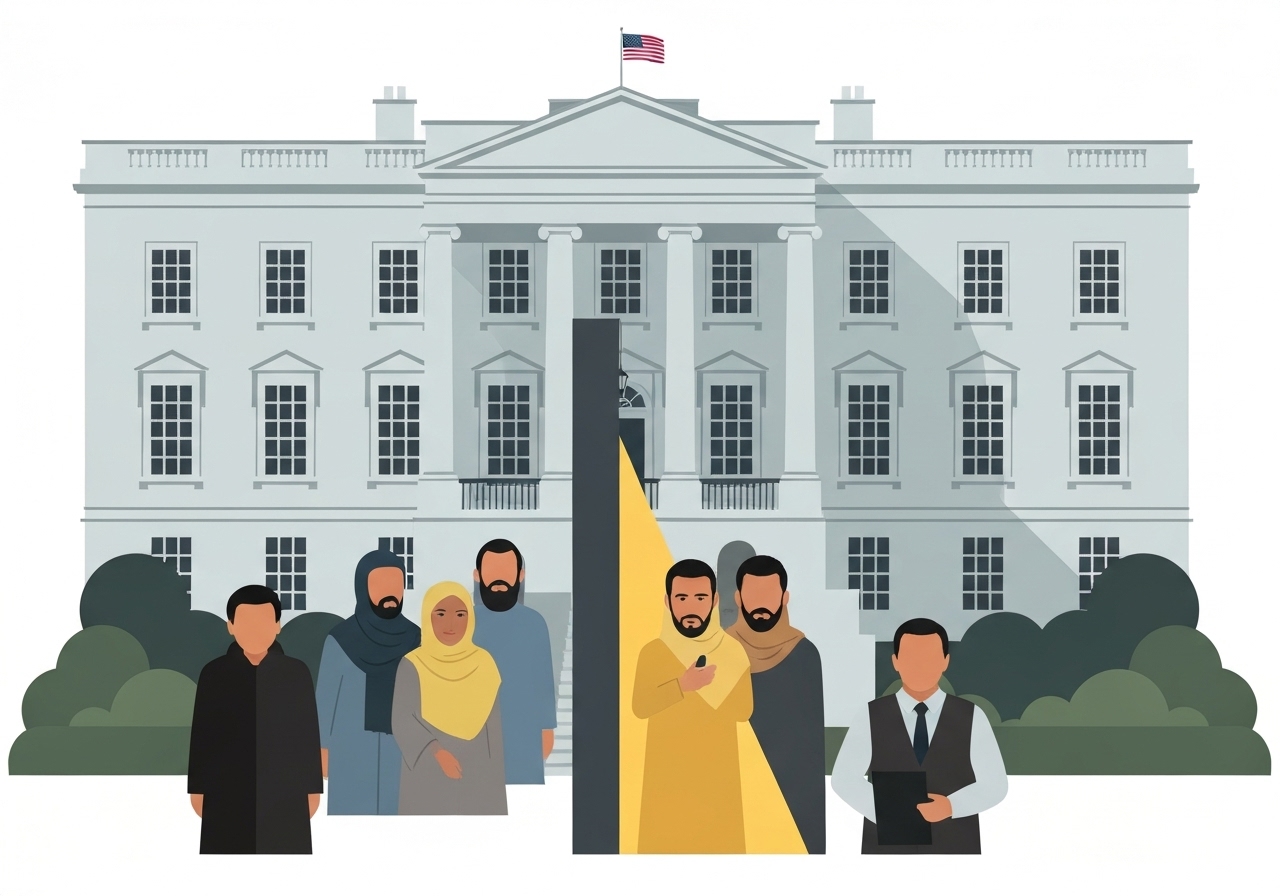
Trump moves to end temporary protections for Somalis in Minnesota
Lead: On Friday night President Donald Trump announced he was immediately terminating Temporary Protected Status (TPS) for Somali nationals living in Minnesota, the U.S. state with the largest Somali community. The announcement, posted on his social media account, called for deportations and accused local actors of large-scale fraud and criminality. A congressional report earlier this year estimated roughly 705 Somalis nationwide are covered by the designation, suggesting the number directly affected is small but politically and legally consequential. The move adds to a broader push by the administration to rescind immigration protections that were extended or preserved in recent years.
Key takeaways
- President Trump announced an immediate end to TPS for Somalis in Minnesota via social media on the evening of 21 November 2025.
- A congressional report in August 2025 estimated about 705 Somali nationals across the United States were covered by TPS tied to Somalia.
- TPS was established by Congress in 1990 to shield people from deportation when return to their home country would pose danger due to disaster, conflict or instability.
- The homeland security secretary typically grants TPS in 18-month increments; the change will require formal administrative action to implement.
- Previous administration actions under Trump targeted protections for larger groups, including moves that affected roughly 600,000 Venezuelans and 500,000 Haitians.
- Minnesota hosts the country’s largest Somali diaspora, concentrated in the Minneapolis–Saint Paul area and reliant on long-standing community and social-service networks.
- Administration statements framed the action as a law-and-order measure; civil-rights groups and local leaders warn of fear, disruption and legal challenges.
Background
The Temporary Protected Status mechanism was created by Congress in 1990 to prevent deportation to countries experiencing ongoing armed conflict, environmental catastrophe or other extraordinary and temporary conditions. The designation is administratively assigned by the homeland security secretary and typically renewed in 18-month increments after reviews of country conditions. Over the decades TPS has been used for nationals from countries including El Salvador, Haiti, Syria and others; numbers of beneficiaries and policy choices have varied with events and administrations.
Minnesota became a primary destination for Somali refugees and migrants following the collapse of the Somali state in the early 1990s and the prolonged civil conflict that followed. Refugees and family-based arrivals settled in the Twin Cities area drawn by resettlement programs, existing community ties and state social services. That concentration has produced a robust set of community organizations, faith institutions and businesses that support newly arrived people as well as multi-generational Somali American families.
Main event
Late on 21 November 2025 President Trump posted that he would immediately terminate protections for Somalis living in Minnesota, characterizing the state as a center of criminal and financial misconduct. The administration framed the action as part of a broader hardline immigration agenda that has previously sought to rescind or curtail TPS for other nationalities. The president’s post invoked allegations of organized criminality and large-scale financial loss in the state, and called for deportation of those covered by the program.
Legally, a presidential announcement does not by itself eliminate TPS for a designated group. The policy change requires administrative steps — typically a notice from the Department of Homeland Security — and can be challenged in federal court. Advocates note that ending a designation can trigger litigation on procedural and substantive grounds, and courts have intervened in past TPS decisions when procedural rules or record evaluations were contested.
Local Somali community organizations and Minnesota officials have responded with alarm, stressing potential humanitarian and community impacts even if the directly affected population is relatively small. Nonprofits and service providers warn that rescinding TPS could disrupt housing, employment authorizations and access to benefits for people who have lived in the U.S. for years. The announcement also immediately sparked statements from civil-rights groups promising legal review and from political allies and opponents who framed the step through partisan lenses.
Analysis & implications
Practically, the number of people covered by Somalia-related TPS appears limited by the August 2025 congressional estimate of 705 beneficiaries nationwide, so immediate removals are likely to be numerically small compared with other immigration cohorts. However, the policy’s symbolic weight is substantial: rescinding protection sends a signal to broader immigrant communities about shifting enforcement priorities and can increase fear, reduce civic participation and complicate local workforce planning, especially in cities with concentrated immigrant populations.
Legally, the pathway to termination typically proceeds through the Department of Homeland Security, which must support its decision with evidence about country conditions and comply with administrative procedures. Past terminations or proposed terminations have prompted litigation; courts have enjoined rollbacks when agencies failed to follow required rulemaking or to adequately document country conditions. Expect similar litigation here, which could temporarily block or delay enforcement while judicial review proceeds.
Politically, the move aligns with campaign-era promises by the president to adopt stricter immigration measures and to pursue deportations more broadly. It may consolidate support among voters who favor tougher immigration enforcement, but it also risks backlash in states and districts where affected communities are politically influential or where local leaders emphasize integration and public-safety partnerships. For Minnesota specifically, the decision could expand state-national tensions and consume political energy during an already competitive electoral period.
Internationally, removing TPS for nationals from a country still experiencing instability could draw criticism from human-rights groups and foreign governments. It may also complicate bilateral discussions about migration management and humanitarian assistance, particularly if return conditions remain unsafe or if receiving states are unwilling to accept returnees.
Comparison & data
| Group | Estimated TPS beneficiaries |
|---|---|
| Somalia (Minnesota-centered) | ~705 nationwide (Aug 2025 congressional estimate) |
| Venezuela | ~600,000 (administration actions referenced) |
| Haiti | ~500,000 (administration actions referenced) |
The table above shows rough orders of magnitude cited in recent policy discussions: the Somali TPS cohort is small compared with the larger Venezuelan and Haitian populations previously targeted by administration actions. While numbers matter for deportation logistics, smaller cohorts can still attract outsized legal, social and political consequences when concentrated in particular communities.
Reactions & quotes
The president warned that Somali beneficiaries should be returned and framed the step as decisive enforcement: “It’s OVER!”
Donald Trump (social post)
Local leaders and advocacy groups expressed deep concern about community fear and the practical disruptions that loss of status would cause; they emphasized plans to pursue legal remedies and to support affected families.
Local community organizations / advocates (summarized reaction)
Legal experts noted that administrative process and likely litigation will determine whether the announced termination takes effect and how quickly any enforcement could proceed.
Immigration law analysts (summary)
Unconfirmed
- Allegations that Minnesota is a “hub of fraudulent money laundering activity” tied to Somali residents are reported in the president’s post but remain unverified in public records cited by mainstream reporting.
- Claims that Somali gangs are broadly “terrorizing” the state and that “billions of dollars are missing” have not been substantiated with public law-enforcement or prosecutorial data available at the time of publication.
- The exact timetable and administrative steps the Department of Homeland Security will take to implement any termination were not detailed in the president’s announcement and remain uncertain.
Bottom line
The president’s announcement to end TPS for Somalis in Minnesota is likely to affect a numerically small group (an estimated 705 people nationwide) but carries outsized legal, political and social implications. Termination will require formal administrative action and is likely to trigger litigation that could delay or block implementation. Even if removals are limited, the decision can increase fear within immigrant communities, disrupt essential services and heighten tensions between federal and local authorities.
Observers should watch for an official DHS determination, subsequent legal filings, and responses from Minnesota officials and advocacy groups. Those developments will determine whether the announcement becomes policy and how quickly any enforcement steps might be carried out.
Sources
- The Guardian — Media report on the announcement and immediate reactions (journalism)
- U.S. Citizenship and Immigration Services (USCIS) — Temporary Protected Status — Official program overview (government)