
Lead
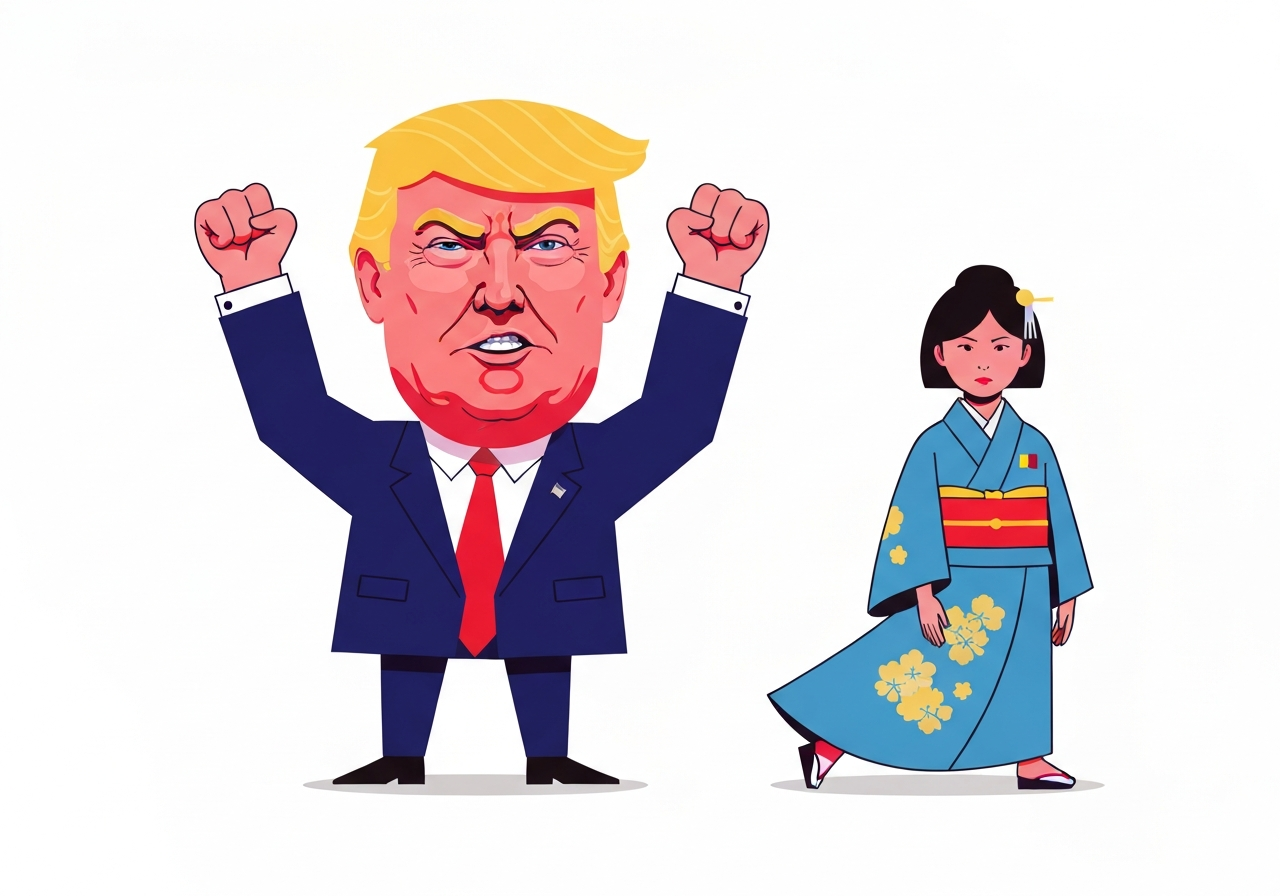
Former U.S. President Donald Trump publicly endorsed Japan’s Prime Minister Sanae Takaichi on Thursday ahead of a snap national election scheduled for Sunday. In a Truth Social post he called Takaichi “a strong, powerful, and wise leader” and said she “will not let the people of Japan down.” The endorsement follows high-profile visits and recent economic agreements between Tokyo and Washington, and comes amid rising tensions with China. Tokyo faces immediate tests on defence spending, economic stagnation and managing relations with both the U.S. and Beijing.
Key Takeaways
- Donald Trump endorsed PM Sanae Takaichi on Truth Social two days before Japan’s snap election, signalling U.S. political backing.
- Takaichi became prime minister in October and is 64 years old; she called the snap election to seek a public mandate.
- Tokyo and Washington struck a July deal to secure $550 billion in Japanese investment in the U.S.; import levies were reduced from a threatened 25% to 15% in that context.
- Takaichi and Trump publicly committed to deeper security cooperation, including pressure for higher Japanese defence spending.
- Public optics included Takaichi aboard the USS George Washington and a state welcome at Akasaka Palace soon after she took office.
- Polls cited by media predict a large victory for Takaichi, but election day is only one step before governing challenges on the economy and diplomacy.
Background
Sanae Takaichi rose to Japan’s premiership after winning her party’s leadership contest and securing parliamentary support in October. Her brief tenure to date has centred on strengthening ties with the United States, courting investment and emphasising a tougher defence posture amid regional security concerns. Relations with China have deteriorated, especially after Takaichi suggested Japan could deploy self-defence measures if China attacked Taiwan—comments that provoked Beijing’s ire.
Donald Trump has in recent years broken with diplomatic norms by publicly endorsing foreign politicians, including Javier Milei in Argentina and Viktor Orbán in Hungary. Tokyo’s outreach to Trump is partly tactical: the July investment-for-tariff understanding—$550 billion in investment and a rollback of a threatened 25% tariff to 15%—was aimed at stabilising economic ties after tariff threats. Domestic politics in Japan combine economic stagnation, an ageing population and a growing debate over military spending, which shape voter calculations ahead of the snap vote.
Main Event
On Thursday Trump posted a public endorsement of Takaichi on Truth Social, praising her leadership and saying she “truly loves her country.” The message signals an open preference from a major U.S. political figure at a sensitive moment in Japanese domestic politics. While U.S. presidents typically avoid direct involvement in allied elections, Trump’s prior foreign endorsements set a precedent and underscore his interest in shaping international alignments.
The endorsement comes after a high-profile run of diplomatic interactions: Takaichi welcomed Trump to Japan with full ceremonial honours at the Akasaka Palace and visited the aircraft carrier USS George Washington where the two leaders exchanged public commendations. Photographs and footage of those events have been widely circulated, reinforcing the image of a strong personal rapport between the two leaders.
Policy ties have also tightened in recent months. The two governments signed agreements on rare earths and described a new “golden age” for U.S.-Japan relations, while both leaders emphasised Japan raising defence spending. Trump said he will welcome Takaichi to the White House on 19 March, a scheduling claim that further highlights close bilateral coordination if it proceeds as stated.
Analysis & Implications
Trump’s endorsement is both symbolic and strategic. Symbolically, it gives Takaichi access to a large, international media platform and may bolster her appeal among voters who prioritise close U.S. ties and stronger defence. Strategically, the message is aimed beyond Japan’s electorate: it signals to regional actors, particularly China, that Tokyo can expect explicit support from a faction of U.S. politics that favours transactional security and reciprocal defence investment.
Domestically, the endorsement could cut two ways for Takaichi. It may attract voters concerned about national security and economic ties with the U.S., but it could also energise critics who view foreign endorsements as interference or who worry about aligning too closely with a polarising foreign leader. How much the endorsement shifts undecided voters will depend on campaign dynamics in the final days and local issues such as cost of living and wage growth.
Economically, the July agreement—$550 billion in Japanese investment with import levies reduced to 15%—is a touchstone. If implemented, it can cushion trade frictions and bolster investor confidence, but long-term economic recovery in Japan will still require domestic reforms to productivity, labour participation and fiscal management. On security, closer U.S.-Japan cooperation could accelerate Japanese defence procurement and regional posture changes, which in turn may prompt sharper responses from Beijing.
Comparison & Data
| Item | Before | After / Deal |
|---|---|---|
| U.S. proposed tariff | 25% (threatened) | 15% (reduced levy) |
| Japanese investment pledge | — | $550 billion (July agreement) |
The table summarises the immediate economic terms discussed publicly: a threatened 25% tariff that was later scaled back to a 15% levy in the framework of a $550 billion investment pledge. These headline figures matter politically because they balance short-term protectionist rhetoric against a negotiated inflow of capital that can be presented domestically as job-creating and stabilising.
Reactions & Quotes
“She will not let the people of Japan down!”
Donald Trump (Truth Social)
Trump’s short, emphatic endorsement seeks to portray Takaichi as a reliable partner for his policy preferences and underscores the personal chemistry the two leaders displayed during recent visits.
“My goal is to become the Iron Lady.”
Sanae Takaichi (public remarks)
Takaichi’s self-description frames her campaign as firmly pro-defence and resolute on national sovereignty—an appeal to voters prioritising security and leadership clarity.
“Taiwan is the most important issue”
Xi Jinping (reported by Chinese state media)
Chinese responses to rhetoric on Taiwan remain a central geopolitical variable; Beijing has urged Washington to be cautious over arms and rhetoric concerning the self-governed island.
Unconfirmed
- Magnitude of the predicted landslide: media cite polls showing a likely large win for Takaichi, but exact poll breakdowns and margins vary and are not detailed in available reports.
- Formal White House scheduling: Trump announced a planned 19 March White House visit; an official White House itinerary or readout was not provided in the cited reporting at the time of publication.
- Long-term tariff policy: whether the 15% levy will be permanent or subject to further negotiation remains unspecified and contingent on future diplomatic and commercial talks.
Bottom Line
Trump’s endorsement of Sanae Takaichi ahead of Japan’s snap election is a high-profile intervention that amplifies the bilateral narrative of close U.S.-Japan cooperation on defence and economic matters. It strengthens Takaichi’s image as a leader aligned with a faction of U.S. politics that prizes assertive security posture and reciprocal economic commitments, but it also raises questions about foreign influence in a domestic vote.
Winning Sunday’s vote would give Takaichi a public mandate, but governing challenges will remain: reviving a stagnant economy, managing an increasingly fraught relationship with China, and translating short-term economic deals into sustained domestic benefits. Observers should watch post-election confirmations—such as the White House visit, the legal implementation of investment pledges, and concrete defence procurement decisions—to judge whether the endorsement yields substantive policy shifts or primarily symbolic alignment.