
Lead
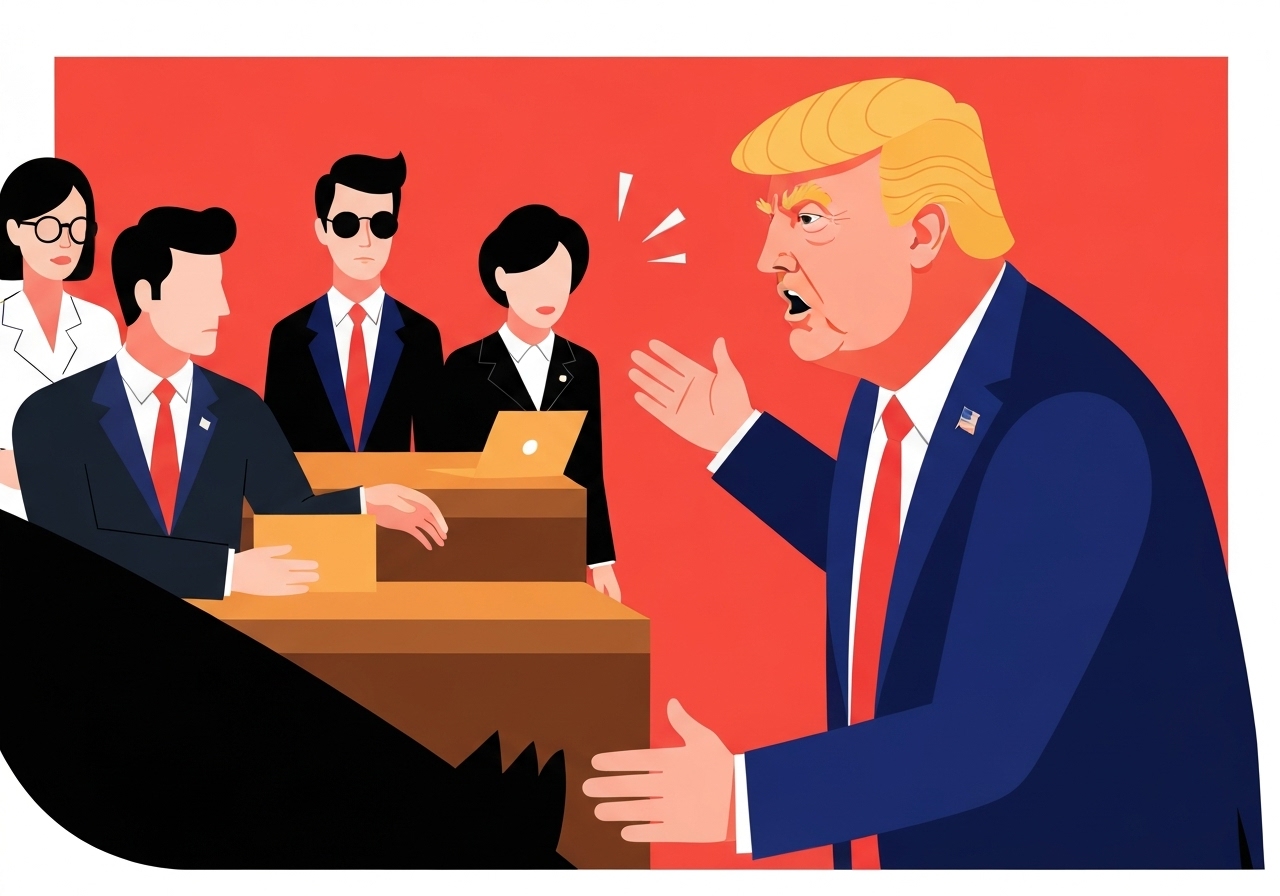
President Donald Trump is confronting the prospect of a politically perilous House vote after efforts to persuade two Republican members to withdraw support for a discharge petition reportedly failed. The move would force a floor vote on releasing records tied to Jeffrey Epstein, after Democrats on the House oversight committee disclosed a tranche of emails on 12 November. Reports say Representatives Lauren Boebert and Nancy Mace refused to remove their names, leaving the White House vulnerable to criticisms that could split parts of Trump’s MAGA base. The development follows reporting that one Epstein email states that Trump ‘knew about the girls’, an assertion now in public committee files.
Key Takeaways
- The House oversight committee released emails on 12 November that are part of the Epstein probe; one email attributed to Epstein includes the line that Trump “knew about the girls.”
- Republican Representatives Lauren Boebert (CO) and Nancy Mace (SC) reportedly declined to rescind signatures on a discharge petition that would force a vote to release additional documents.
- The New York Times reported the White House sought to persuade Boebert at a White House meeting and reportedly enlisted Pam Bondi and Kash Patel in the effort.
- If the petition succeeds, the House could hold a public vote to make a wider set of Epstein-related records available to lawmakers and the public.
- Separately reported developments include DOJ intervention in a California redistricting suit, BBC apology to Trump, a planned legal challenge by Comey and Letitia James, an FBI probe into Eric Swalwell, Trump Organization visa requests for 184 foreign workers in 2025, and a planned pardon for Joe Lewis.
- Observers say the episode has the potential to alienate some Trump supporters while energizing critics concerned about transparency and accountability.
Background
The release of documents tied to Jeffrey Epstein has been the subject of multiple investigations and court fights since his 2019 death by suicide in a federal jail while awaiting trial. Congressional oversight took renewed focus this month after committee staff compiled and released a set of emails and other records on 12 November that committee Democrats say shed new light on Epstein’s network and contacts.
Discharge petitions are a procedural mechanism in the House that can force a bill or resolution out of committee and onto the floor for a vote if enough members sign. In this case, a petition would compel a vote on making additional Epstein-related materials public. Historically, such petitions are rare and politically fraught, because they can require members to take an explicit public position on contentious material.
Main Event
According to reporting by the New York Times, the White House reportedly reached out directly to Representative Lauren Boebert and to Representative Nancy Mace to ask them to withdraw their signatures from the discharge petition. Boebert is said to have visited the White House and resisted the request. That refusal, if accurate, would keep the petition’s momentum intact and increase the chances of a forced House vote.
Sources quoted by the Times say the White House also enlisted former Florida attorney general Pam Bondi and Kash Patel, a senior White House official, in outreach to Boebert. When those efforts did not succeed, the paper reported that the White House issued what it described as vague warnings about consequences, a claim disputed by some participants. The outreach and its tone have become part of the controversy around the petition.
Democratic members of the House oversight committee released an array of emails on 12 November that the panel says are relevant to Epstein’s activities and social circle. One message attributed to Epstein includes an allegation that Trump “knew about the girls”, a phrase that has been widely cited in coverage. Committee members argue that wider release of files would clarify unanswered questions about Epstein’s network and who knew what, when.
The unfolding standoff places Trump in an unusual position: trying to limit additional public disclosures while confronting a procedural vote that could make more material public regardless of executive objections. Political strategists say the outcome could matter to voter perceptions in upcoming contests and to intra-party alignments among House Republicans.
Analysis & Implications
The immediate political risk for Trump is twofold. First, a forced House vote would put rank-and-file Republicans on record about whether they support fuller public disclosure, potentially creating fractures in a party that trades on loyalty to the former president. Second, the resentful reaction among voters who prioritize transparency could widen fissures within the MAGA coalition, especially among suburban or independent voters sensitive to allegations of misconduct.
Legally, the release of more documents could prompt further inquiries or litigation but would not by itself produce prosecutions. The emails and records are evidence that could inform civil or criminal probes, journalistic investigations, and public understanding. Committee releases also increase the archive available to journalists and researchers, which could lead to additional lines of inquiry and corroboration of existing allegations.
Strategically, the White House’s reported effort to persuade lawmakers to withdraw support highlights the limits of influence once documents are in congressional hands. Using senior surrogates to press members can backfire politically, as some Republicans perceive such tactics as coercive. That dynamic may strengthen the argument of those who view committee transparency as necessary oversight rather than partisan theater.
Comparison & Data
| Item | Datum |
|---|---|
| Committee email release | 12 November 2025 |
| Trump Organization visa requests (reported) | 184 foreign workers sought for 2025 |
The numbers above capture two distinct strands of reporting this week: congressional oversight activity tied to Epstein, and a separate labor-data analysis of the Trump Organization’s visa requests for 2025. The 184 figure comes from a Forbes analysis of Department of Labor data and highlights a contrast between public immigration policy stances and private hiring choices.
Reactions & Quotes
House Democrats framed the committee release as a transparency milestone and argued that the public has a right to see the records the committee obtained. Republicans who oppose the release warned that committee materials can be selectively presented.
“The American people deserve to know what’s in these files.”
House oversight Democrat (statement)
“We should be cautious about weaponizing committee materials for political gain.”
House Republican (statement)
“I declined to remove my name from the petition.”
Representative Lauren Boebert (reported comment)
Unconfirmed
- Reports that the White House issued direct threats to members if they did not withdraw signatures are based on anonymous sources and have not been independently corroborated.
- The motive ascribed to Representative Boebert — that she perceived a broader concealment effort — is reported by people familiar with her thinking and is not directly verified by public records.
- Any claim that the emails prove criminal knowledge by a specific individual remains an allegation; the emails themselves reflect statements and correspondence that require additional corroboration.
Bottom Line
The immediate consequence of the episode is heightened political exposure for President Trump: a successful discharge petition could force a public House vote and broaden access to materials that have already raised difficult questions. For Republican leaders, the moment tests internal discipline, balancing loyalty to Trump against the risk of embarrassment or electoral damage from contested disclosures.
Longer term, the release and the fight over it may feed further investigations and reporting, and it underscores how committee disclosures can reshape political narratives quickly. Observers should watch whether the petition reaches the signature threshold and how swing Republican districts respond, because those outcomes will shape whether this episode is a short-term political skirmish or a more consequential turning point.
Sources
- The Guardian (news outlet reporting)
- The New York Times (news outlet; reporting on White House outreach and committee releases)
- Forbes (news outlet; analysis of Department of Labor visa data)
- NBC News (news outlet; reporting on reported federal inquiry)
- U.S. Department of Justice (official statements and filings)