
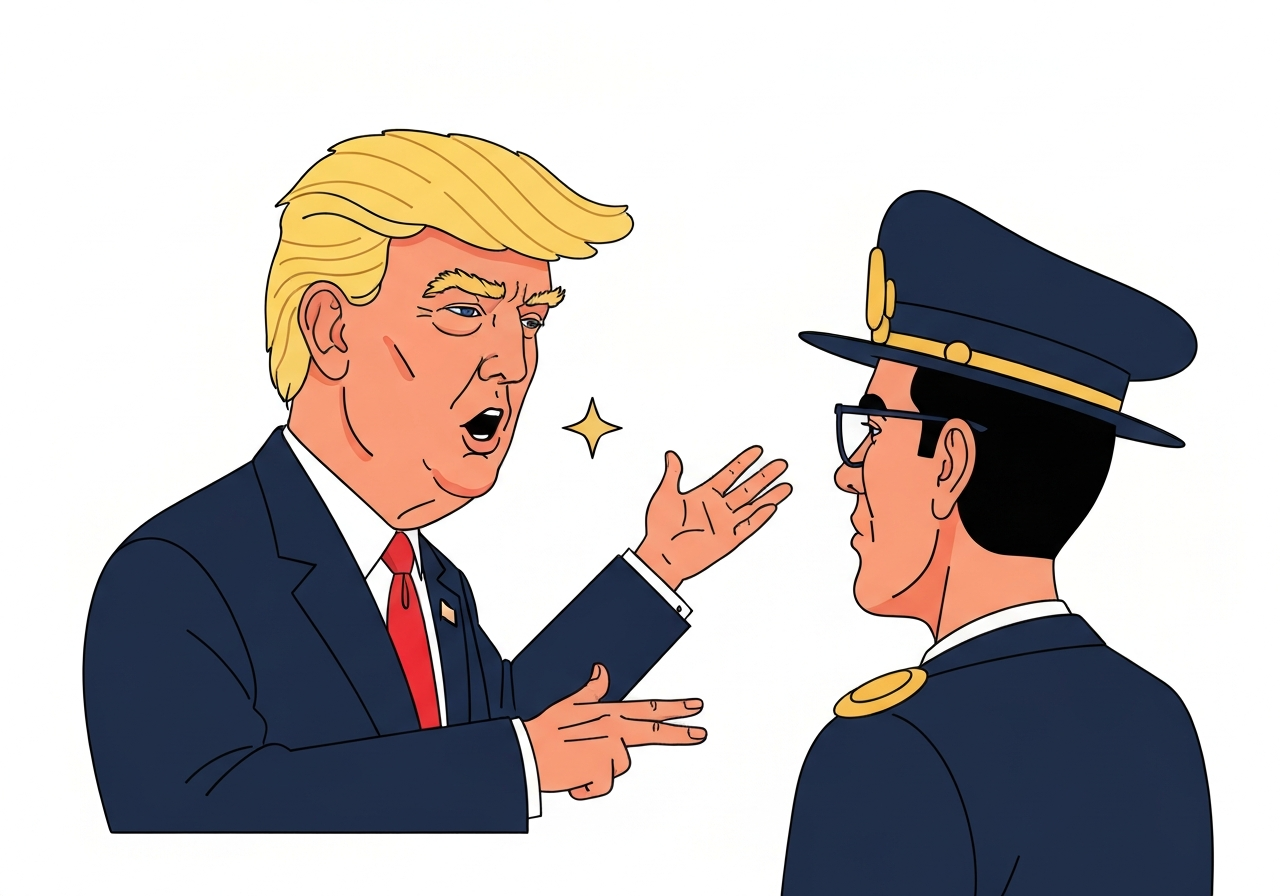
In a newly released Justice Department file, former Palm Beach police chief Michael Reiter told the F.B.I. that Donald J. Trump called the department in July 2006 and expressed relief that investigators were probing Jeffrey Epstein. Reiter said Mr. Trump told him “thank goodness you’re stopping him, everyone has known he’s been doing this,” and urged attention to Epstein’s associate Ghislaine Maxwell, whom Mr. Trump reportedly called “evil.” The exchange, recounted to federal agents in October 2019, adds to a series of public statements and denials from Mr. Trump about what he knew of Epstein’s activities.
Key Takeaways
- Michael Reiter, then Palm Beach police chief, said Donald Trump phoned in July 2006 after investigators learned Epstein was under scrutiny; Reiter gave this account to the F.B.I. in October 2019.
- According to Reiter’s recounting in the Justice Department file, Mr. Trump told him “everyone has known he’s been doing this,” indicating alleged public awareness within elite circles.
- Reiter reported that Mr. Trump described seeing Epstein with teenagers once and that Mr. Trump “got the hell out of there.”
- Mr. Trump also allegedly urged investigators to look at Ghislaine Maxwell, calling her “evil,” per the memo released by the Justice Department.
- The memo became public as part of a tranche of Epstein-related documents made available by federal authorities in 2026.
- Public statements from Mr. Trump since then have been inconsistent: he has denied knowledge of underage abuse while also saying Epstein “stole” young women from Mar-a-Lago and that Epstein was barred from the club for “being a creep.”
Background
Jeffrey Epstein, a financier with deep social and political ties, drew local and federal scrutiny in the mid-2000s amid allegations of sexual misconduct involving underage girls. Palm Beach police were among the first agencies to investigate, and the case later attracted national attention as more victims and associates surfaced. Ghislaine Maxwell, a close associate of Epstein, was subsequently prosecuted and convicted on charges related to recruiting and facilitating abuse, drawing renewed focus to accounts of who in Epstein’s circles knew or suspected illegal conduct.
Donald Trump and Epstein had overlapping social networks in Florida and New York during the 1990s and 2000s; their public descriptions of the relationship have varied. Prosecutors, victims’ lawsuits and investigative reporting have over time produced a patchwork of statements, witness accounts and documents. That mosaic prompted federal releases of records in 2026 intended to shed light on the network around Epstein and the responses of officials and private individuals.
Main Event
The central document in this report is a memo summarizing Michael Reiter’s interview with F.B.I. agents in October 2019. Reiter, who led the Palm Beach Police Department when Epstein was first investigated locally, told agents that Mr. Trump phoned the department in July 2006 after word reached police that Epstein was under investigation. The memo records Mr. Trump’s alleged line that “everyone has known he’s been doing this,” a phrase Reiter said indicated broad awareness among some circles.
Reiter’s account also records two specific characterizations attributed to Mr. Trump: that he observed Epstein in the presence of teenagers once and quickly left, and that Ghislaine Maxwell should be a focus of investigators because she was, in Mr. Trump’s words reported in the memo, “evil.” Those details were included in the Justice Department’s release and cited in contemporaneous media reports on the files.
The release of the memo came as part of a wider DOJ disclosure of materials tied to Epstein-related investigations. Reiter’s statements to the F.B.I. were gathered years after Epstein’s arrest and death; agents interviewed numerous witnesses in the aftermath to assemble a fuller record. The timing and content of Reiter’s account prompted renewed scrutiny of public and private statements from people who knew Epstein.
Analysis & Implications
If accurately reported, Reiter’s memo suggests that at least some informal networks recognized troubling rumors about Epstein as early as the mid-2000s. A remark that “everyone has known” would imply a level of public chatter or awareness among social circles in Palm Beach and New York that merits investigation into why allegations did not prompt broader action earlier. That question intersects with long-standing critiques about how wealth and access can shape law enforcement and media responses.
For the Trump presidency and any related legal or political scrutiny, the memo complicates narratives that portray him as unaware of Epstein’s alleged crimes. Reiter’s description does not itself prove knowledge of criminal activity on Mr. Trump’s part, but it does document a contemporaneous interaction in which Mr. Trump is reported to assess Epstein negatively and direct attention to Maxwell. Legal standards for culpability differ from public perceptions of awareness; the memo is a fact to be weighed, not a legal finding.
Politically, the memo could intensify scrutiny of discrepancies between public statements made by Mr. Trump over time. Opponents may use the account to argue inconsistency; allies may emphasize the lack of direct evidence that Mr. Trump participated in wrongdoing. For investigators and journalists, the document underscores the value of contemporaneous records and witness interviews in reconstructing what elites knew and when they knew it.
Comparison & Data
| Year | Event | Documented Source |
|---|---|---|
| 2006 | Phone call to Palm Beach police, per Reiter | Reiter memo (released 2026) |
| 2019 | Reiter interviewed by F.B.I. (memo dated Oct 2019) | Justice Department file |
| 2026 | Memo publicly released in DOJ tranche | DOJ public release |
The simple timeline above shows three anchor points: the original phone call (July 2006, per Reiter’s description), the F.B.I. interview in October 2019, and the public release of the memo in 2026. The gap between the 2006 call and the 2019 interview is notable: memories and records can change in that interval, which is why contemporaneous documentation and corroboration are critical.
Reactions & Quotes
Officials and commentators reacted quickly after the memo was disclosed. The exchange has been cited in media coverage as evidence of conflicting public explanations about Mr. Trump’s relationship with Epstein and Maxwell.
“Thank goodness you’re stopping him, everyone has known he’s been doing this.”
Donald J. Trump (reported in Reiter’s memo)
This line appears in the Justice Department memo as a direct recounting of what Mr. Trump allegedly told Chief Reiter in 2006. It has been used to illustrate assertions that Epstein’s behavior was an open secret in certain circles.
“She is evil.”
Donald J. Trump (reported in Reiter’s memo)
This short appraisal of Ghislaine Maxwell, attributed to Mr. Trump by Reiter, was recorded in the same memo and has been cited in subsequent reporting about Maxwell’s role in Epstein’s network.
Unconfirmed
- Exact wording and tone of the 2006 phone call: the account comes from Reiter’s later interview and is summarized in a memo but lacks an original contemporaneous transcript publicly released.
- Whether Mr. Trump personally observed minors in Epstein’s presence on the specific occasion Reiter references: Reiter reported Mr. Trump saying he saw teenagers, but that detail has not been independently corroborated in the public record.
Bottom Line
The newly released memo adds a contemporaneous-police-contact dimension to the long-running public record about Jeffrey Epstein and those in his social orbit. It records a July 2006 phone call that, if the memo accurately captures it, shows Mr. Trump alerting local police to Epstein and urging scrutiny of Ghislaine Maxwell while describing Epstein as widely known to be problematic.
That record does not, on its own, adjudicate legal responsibility or resolve competing public statements made over the years. Instead, it becomes another primary document for journalists, investigators and the public to weigh alongside phone logs, witness testimony and prior reporting. The memo highlights how piecing together what elites knew and when they knew it depends on aggregating and corroborating disparate sources.
Sources
- The New York Times (major news outlet; article summarizing DOJ-released memo)
- The Miami Herald (regional news outlet; original reporting cited regarding Reiter’s statements)
- U.S. Department of Justice (official; repository for released Epstein-related files)