
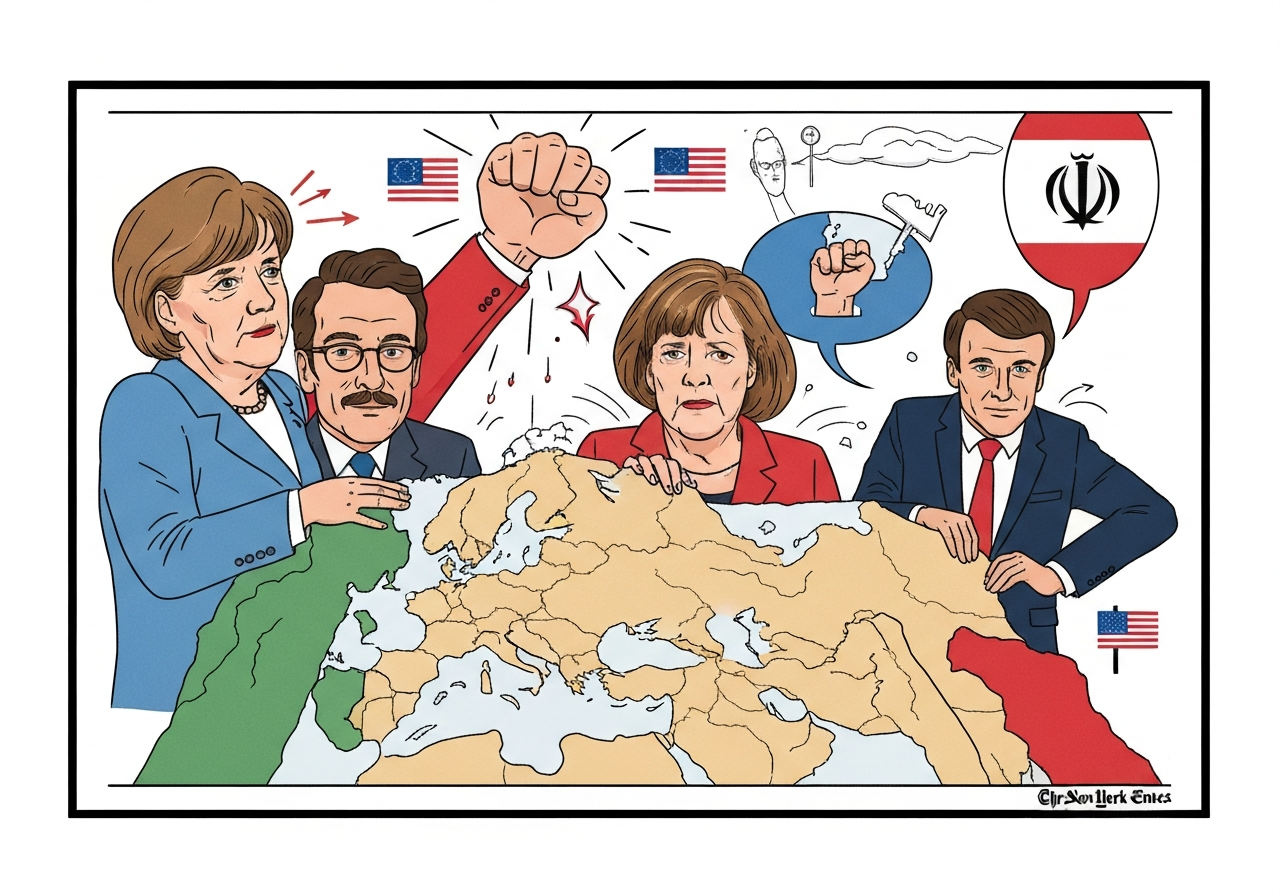
President Donald Trump’s public rebukes of European governments on March 26, 2026 have exposed a sharp dilemma: Iran’s effective blockade of the Strait of Hormuz has sent oil and gas prices higher across the Continent, pressing leaders to act to reopen shipping lanes, while strong popular opposition to war makes military involvement politically perilous. European capitals now face conflicting pressures from voters worried about energy costs and from parties and movements that oppose escalation. The result is a fraught decision space where any visible alignment with U.S.-led military measures risks domestic backlash, yet inaction could deepen the economic strain.
Key Takeaways
- On March 26, 2026 President Trump publicly criticized European leaders for declining to assist in keeping the Strait of Hormuz open, intensifying transatlantic tensions.
- Iran’s de facto closure of the Hormuz shipping route has triggered an energy crunch across Europe, contributing to higher fuel prices and inflationary pressure.
- European public opinion has shifted markedly against military intervention, complicating decisions for center-right and center-left governments alike.
- The political fallout is already visible: Italian Prime Minister Giorgia Meloni suffered a defeat in a referendum to reform the judiciary, weakening her domestic standing amid perceptions of closeness to Mr. Trump.
- Historical memory—especially of the 2003 Iraq War—makes many European leaders wary of joining a campaign that could be seen as gratuitous or illegal by large segments of their electorates.
- Policy options under consideration include naval escorts, intensified diplomacy, and measures to alleviate energy supply risks, each with distinct political and operational costs.
- The episode has raised questions about NATO cohesion and Europe’s ability to act autonomously on security and energy resilience.
Background
The Strait of Hormuz is a chokepoint for global oil shipments; disruptions there reverberate quickly through international markets. In recent weeks Iran’s actions have effectively limited commercial passage, prompting alarm among energy-importing countries in Europe. The interruption has compounded a fragile European economy already coping with post-pandemic inflation and uneven growth.
European governments must weigh several competing forces: the immediate economic pain of constrained energy supplies, widespread public skepticism about new military campaigns, and institutional commitments to transatlantic security. Memories of past interventions—most notably the 2003 Iraq War, which left long political scars in the United Kingdom and beyond—have made leaders cautious about repeating what many voters view as costly foreign entanglements.
Major stakeholders include the United States, which has urged allied support for measures to reopen the strait; Iran, whose maritime actions are central to the crisis; EU institutions seeking a negotiated solution; and national governments juggling domestic stability and international obligations.
Main Event
On March 26, 2026 Mr. Trump used social media and public remarks to chastise European leaders for declining to participate in efforts to keep the Strait of Hormuz navigable. He framed the dispute as a direct cause of higher energy prices and urged partners to undertake a military maneuver he described as simple. That intervention has intensified scrutiny of European decision-making and placed additional pressure on already strained political coalitions.
European responses have been uneven. Some capitals have signaled willingness to increase naval presence in the region short of combat operations; others have emphasized diplomacy and sanctions enforcement. Domestic political calculus varies by country: governments with fragile parliamentary coalitions or significant anti-war constituencies face greater constraints on taking visible part in military action.
The situation has had immediate political consequences at home. In Italy, Prime Minister Giorgia Meloni lost a referendum intended to alter the judicial system, an outcome that commentators linked in part to perceptions of her alignment with Washington. Officials in several countries have also reported surging constituent complaints about energy costs, turning routine policy issues into potential electoral liabilities.
Analysis & Implications
The political cost-benefit calculation for European leaders is complex. Supporting U.S.-led military steps risks alienating voters who oppose new wars and could energize parties on the left and right that campaign against foreign interventions. Conversely, failing to act to unblock shipping routes could prolong high energy prices, deepen inflationary pressures and threaten fragile economic recoveries.
From a security perspective, the episode tests NATO solidarity. If European states decline to participate in measures the United States deems necessary, transatlantic coordination may fray, prompting Washington to reassess reliance on European operational support in future crises. That possibility raises longer-term strategic questions about burden-sharing and alliance credibility.
Economically, sustained disruption at Hormuz would push governments to accelerate medium-term adjustments: diversifying energy suppliers, increasing LNG purchases from alternative producers, and investing in renewable capacity and strategic reserves. Those shifts will take time and require public investment, complicating near-term political messaging.
Politically, domestic fallout could reshape party dynamics in 2026–27 elections across Europe. Leaders perceived as too close to Washington may face backlash from voters who view the crisis as externally driven; leaders who refuse cooperation risk criticism for failing to protect household pocketbooks. The balancing act could encourage pragmatic, low-profile measures—such as convoy escorts or EU-led diplomatic initiatives—over overt combat commitments.
Comparison & Data
| Crisis | Primary Political Effect in Europe |
|---|---|
| 2003 Iraq War | Long-term distrust of intervention; electoral costs for supporters |
| 2011 Regional Shipping Disruptions | Short-term price spikes, limited sustained military commitments |
| 2026 Hormuz Closure | Ongoing energy shock; immediate domestic political strain |
The table above places the current Strait of Hormuz disruption in recent context. Unlike episodic shipping interruptions, the present situation combines sustained economic impact with acute political sensitivity, increasing the likelihood of policy innovations that prioritize economic relief and diplomatic containment over large-scale combat deployments.
Reactions & Quotes
European governments are split and show signs of being overwhelmed by the unfolding conditions.
Gérard Araud, former French ambassador
Leaders face intense voter pressure over rising fuel and utility costs, which complicates any decision to join military measures abroad.
Senior EU official (summarized)
Washington has publicly urged partners to take more active steps to secure maritime routes, framing nonparticipation as a contributor to higher energy prices.
U.S. administration statement (paraphrased)
Unconfirmed
- Reports of a coordinated European plan for direct military intervention have not been publicly confirmed by national governments.
- Details of private communications between President Trump and certain European leaders—beyond public statements—remain undisclosed.
- The duration and intent behind Iran’s maritime restrictions are not fully confirmed; assessments differ among intelligence services.
Bottom Line
The immediate consequence of Iran’s actions at the Strait of Hormuz is an energy shock that has placed European leaders in a political vise: acting militarily risks domestic upheaval, while inaction risks prolonged economic damage. This dynamic will shape policy choices in the weeks and months ahead, as governments weigh limited military options against a suite of diplomatic and economic tools.
Watch for three developments: whether European states opt for limited naval escorts or a primarily diplomatic track; decisions to bolster energy diversification and aid to households; and the electoral effects in countries with fragile governing coalitions. Each outcome will influence Europe’s security posture and transatlantic relations beyond the immediate crisis.
Sources
- The New York Times (news coverage and reporting)