
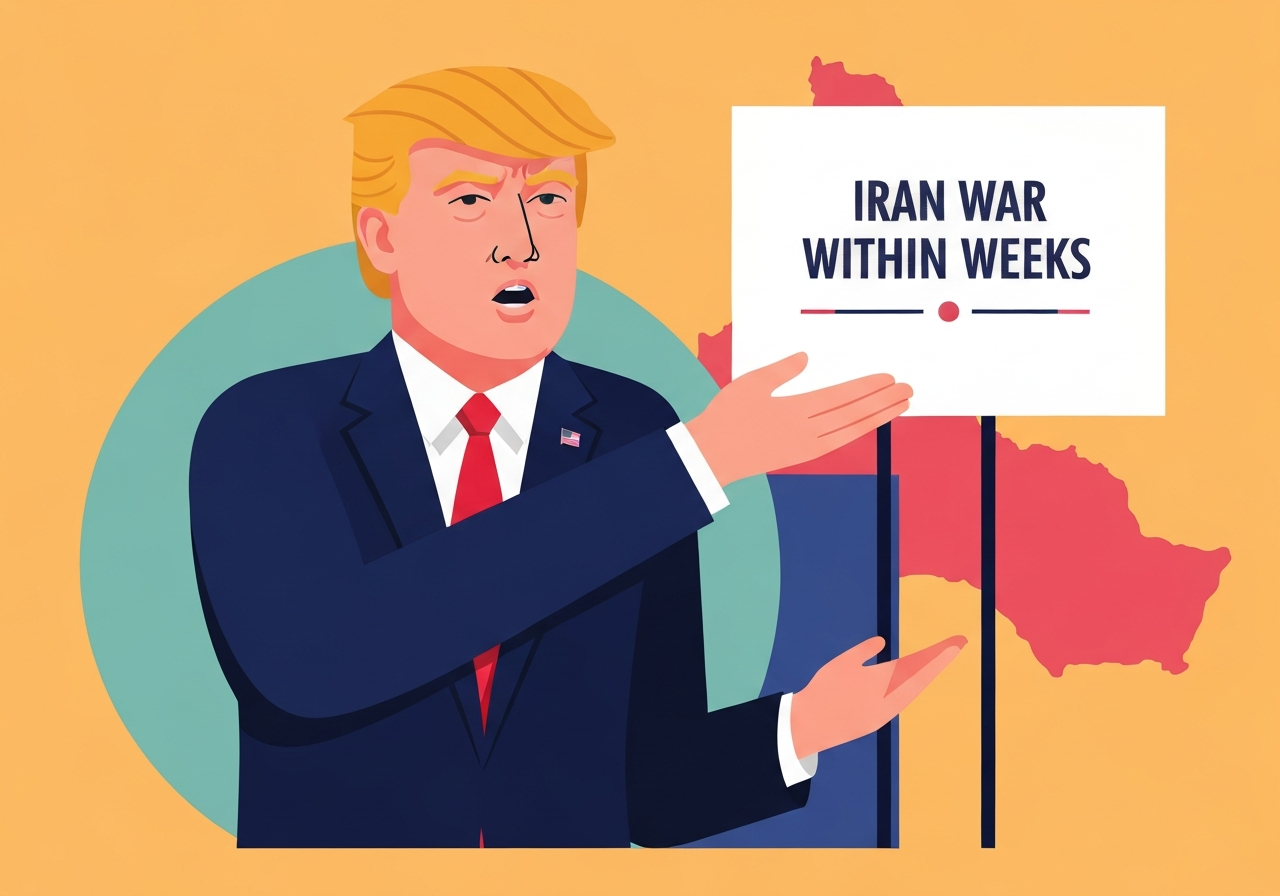
President Donald Trump will speak to the nation at 9 p.m. Eastern on Wednesday with what the White House called “an important update” on the month‑long war between the U.S., Israel and Iran and their proxy partners. On Tuesday Mr. Trump said he expected the conflict to end in “two to three weeks” and suggested U.S. forces would be leaving “very soon,” while signaling willingness to step back from responsibilities in the Strait of Hormuz. The remarks came as fighting expanded in Lebanon and Beirut suffered deadly strikes and as humanitarian and commercial shipping disruptions worsened. Officials and relief agencies warn that the military and economic fallout is already producing wider shortages and higher costs worldwide.
Key Takeaways
- President Trump is scheduled to give an address at 9 p.m. ET Wednesday, after saying on Tuesday he expected the war to be over in two to three weeks and that U.S. forces would be leaving soon.
- At least seven people were killed in an Israeli airstrike on Beirut’s Jnah neighborhood, while Lebanon’s health ministry reports more than 1,300 deaths across the country in roughly four weeks of fighting.
- Since the conflict began, U.S. officials report 13 U.S. service members killed; Iranian officials say more than 1,700 Iranians have died.
- Israel reported hitting 230 targets in Iran and expanded ground operations into southern Lebanon; Hezbollah and other Iran‑aligned groups continue rocket and missile fire.
- Strait of Hormuz disruptions have trapped roughly 20,000 seafarers aboard vessels in the war zone and complicated global shipments; the World Food Programme warns of 45 million additional people falling into acute hunger by June if conditions persist.
- An American freelance reporter, Shelly Kittleson, was kidnapped in Baghdad; Iraqi authorities have arrested at least one suspect and U.S. officials say they are working toward her release.
- European governments called for de‑escalation and urged Israel to avoid widening the conflict, while Pakistan and China issued a joint call for talks and a wider peace plan.
Background
The fighting entered its 33rd day as of April 1, 2026, after a cycle of strikes beginning in early March when the U.S. and Israel launched operations against targets in Iran and Iran‑backed groups retaliated across the region. The campaign has drawn in multiple theaters: direct strikes between Israel and Iranian sites, cross‑border exchanges with Lebanon where Hezbollah is active, missile and drone attacks on Gulf states, and maritime hazards in the Strait of Hormuz, a waterway that normally carries about one‑fifth of global oil supplies.
International responses have been mixed. European nations pushed for political negotiations and urged restraint, while some regional actors have deepened support for their proxies. At the same time, mediators such as Pakistan have engaged in shuttle diplomacy, and China—an important buyer of Iranian oil—has publicly supported talks. The shifting alliances and economic interdependence have complicated a rapid military resolution and heightened fears of a protracted regional war.
Main Event
President Trump’s public comments this week signaled a potential U.S. posture change: he told reporters he expected the fighting to end within weeks and that American forces would be leaving soon, and in an interview published Wednesday he said he was considering withdrawing the United States from NATO. White House press secretary Karoline Leavitt confirmed an evening national address but gave few details about policy moves that might be announced.
The ground and air campaign widened in Lebanon, where an Israeli airstrike on the Jnah neighborhood near Beirut’s airport killed at least seven people, according to Lebanon’s Health Ministry. Video shared on social media showed fires in residential areas. Lebanon’s ministry says total fatalities across the country now exceed 1,300 in roughly four weeks of strikes and ground operations.
Beyond Lebanon, Iran and its allies continued strikes on Gulf neighbors and infrastructure. Kuwaiti airport fuel depots were struck by Iranian drones, causing a large fire, and an Iranian missile hit a tanker leased to QatarEnergy without reported injuries. Houthi rebels in Yemen, aligned with Iran, claimed missile attacks on Israel that Israel said were intercepted.
Meanwhile, Iraqi authorities said they intercepted a vehicle linked to the kidnapping of U.S. freelance journalist Shelly Kittleson in Baghdad and detained a suspect they associate with the Iran‑backed militia Kataib Hezbollah. U.S. State Department officials said they were coordinating with Iraqi and U.S. security services and the FBI to secure her release.
Analysis & Implications
If the United States withdraws forces or reduces its role in operations linked to Iran, the immediate military balance in the region would shift and leave allies such as Israel to pursue broader objectives independently. Trump’s public suggestion that the U.S. will disengage from hotspots like the Strait of Hormuz—where an estimated one‑fifth of global oil passes—raises the prospect that other states or regional coalitions would need to assume security responsibilities, increasing geopolitical risks and potential for miscalculation at sea.
Economic consequences are already manifest. Fuel price spikes and longer shipping routes—partly from carriers avoiding the Strait and Suez for safety—are increasing logistics costs and transport times. The World Food Programme attributes an extra month to shipments and warns of sharply higher costs that could push 45 million more people into acute hunger by June if disruptions continue, adding to a projected 363 million facing acute food insecurity.
Politically, the U.S. signaling a pullback could strain alliances. European leaders publicly urged de‑escalation and condemned Hezbollah’s strikes while also pressing Israel to limit ground operations into Lebanon. Donald Trump’s comment about renegotiating or exiting NATO, if pursued, would reverberate through transatlantic security arrangements and complicate coalition building for maritime or regional stabilization efforts.
Comparison & Data
| Category | Reported Figure |
|---|---|
| Days of conflict | 33 days (as of April 1, 2026) |
| U.S. service members killed | 13 |
| Reported Iranian deaths | 1,700+ |
| Lebanon fatalities | 1,300+ |
| Seafarers trapped near Hormuz | ~20,000 |
| Projected added acute hunger if disruption persists | 45 million (to 363 million total) |
The table compiles casualty counts, duration and key logistics impacts reported by national health ministries, militaries and international aid agencies. Numbers are drawn from official ministry tallies and aid organization estimates; casualty reporting in conflict zones can lag and is frequently revised. The seafarer figure reflects estimates of crews aboard vessels transiting the Strait of Hormuz and adjacent waters as shipping routes were constrained.
Reactions & Quotes
Western leaders emphasized de‑escalation and protective economic measures. Britain and Australia delivered national addresses emphasizing defensive postures and domestic measures to blunt economic pain, such as temporary fuel tax relief in Australia and a planned international summit on the Strait of Hormuz from the U.K.
“We’ll be leaving very soon…we’re not going to have anything to do with it,”
President Donald Trump (remarks to reporters)
Trump framed a U.S. exit as imminent and downplayed the immediate consequences for global shipping, saying other states could manage the Strait of Hormuz. European and regional leaders rejected a simple handoff, urging negotiated de‑escalation and coordinated security solutions.
“This is a whole disruption of the global supply chain,”
Corinne Fleischer, World Food Programme director of supply chain
Fleischer warned of longer shipping times and higher costs, linking maritime insecurity directly to rising hunger risk globally. Aid agencies say carriers are avoiding the Strait of Hormuz and, out of caution, some also avoid the Suez route, lengthening deliveries and increasing expense.
“We call on Israel to avoid a further widening of the conflict including through a ground operation on Lebanese territory,”
European Union and 10 countries (joint statement)
European governments simultaneously condemned Hezbollah attacks and urged restraint by Israel, illustrating a diplomatic push to prevent regional escalation even as military operations continue.
Unconfirmed
- Reports that the U.S. has agreed a formal timetable for full military withdrawal are unconfirmed and have not been corroborated by a formal Pentagon or White House policy release.
- Attribution of Shelly Kittleson’s kidnapping to specific militia factions is under investigation; Iraqi authorities have arrested a suspect but full responsibility has not been independently verified.
- Claims that maritime insurance markets have frozen all Gulf transits are not yet substantiated by industry regulators; carriers report heightened premiums and route adjustments but continued sailings in some cases.
Bottom Line
The coming hours and days will be decisive for understanding whether U.S. posture shifts announced rhetorically translate into a concrete withdrawal or a redistribution of duties across allies and regional partners. A U.S. pullback could leave a security vacuum in high‑traffic maritime corridors and complicate humanitarian logistics, while an American retrenchment might ease certain domestic political pressures but raise global economic costs.
For civilians in Lebanon, Iran and other affected areas, the immediate humanitarian toll is already severe; for international consumers, disruptions to shipping and energy supply chains signal months of elevated prices and longer lead times. Observers should watch the White House address for specifics on force posture, coordination with allies, and any diplomatic initiatives tied to the Pakistan‑China statement and European de‑escalation calls.
Sources
- NPR — U.S. public radio reporting (original article)
- World Food Programme — U.N. aid agency (supply chain and hunger projections)
- Reuters — International news agency (conflict updates)
- The Associated Press — International news agency (on‑the‑ground reporting and photo coverage)
- Committee to Protect Journalists — Press freedom NGO (statement on kidnapped journalist)
- Reporters Without Borders — Press freedom NGO (comment on journalist safety)