
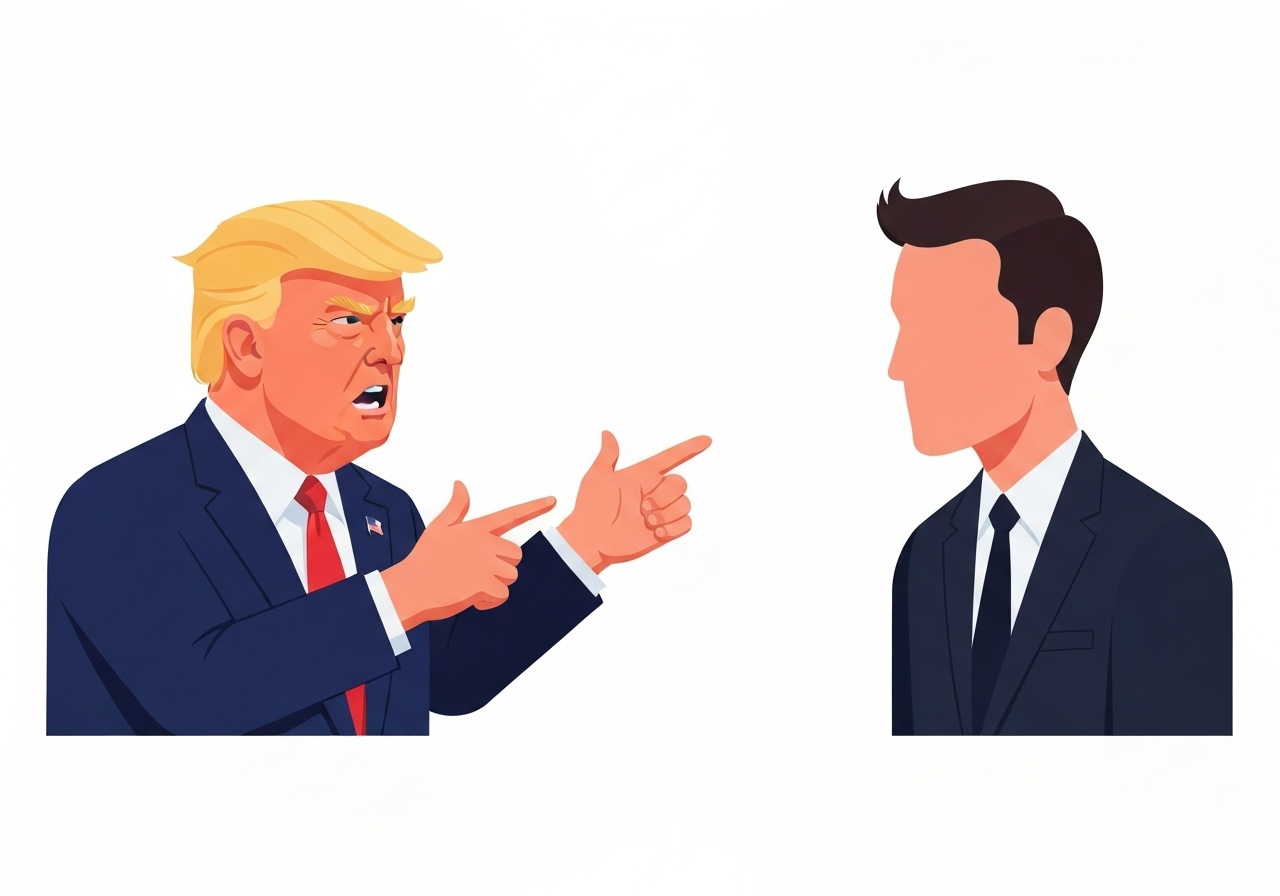
President Donald Trump told the Wall Street Journal on Friday that the Federal Reserve should pay attention to his views as he narrows candidates to replace Jerome Powell, with former Fed governor Kevin Warsh now at the top of his list. Powell, whose eight-year tenure as chair ends next May, has resisted the president’s repeated calls for deep rate cuts. The administration has mounted an unusually public campaign to influence Fed policy, and Trump said he expects a new chair who will be more receptive—while adding that he does not expect the Fed to simply follow orders. The comments come after the Fed cut the federal funds rate by 0.25 percentage points earlier this week, the third cut this year.
Key takeaways
- Trump identified former Fed governor Kevin Warsh as his leading candidate to chair the Fed and is also considering Kevin Hassett, his National Economic Council director.
- Jerome Powell’s eight-year term as Fed chair concludes in May next year; the White House will nominate a successor before then.
- The Fed reduced rates by 25 basis points earlier this week, marking the third cut in 2025.
- Trump has publicly attacked Fed policymakers for not cutting rates faster and has attempted to remove a Fed policymaker from a rate-setting committee.
- Trump said he is “a smart voice” who should be listened to, but added he does not expect the next chair to mechanically obey the White House.
- Fed officials signaled they expect at most one additional cut next year, citing economic uncertainty and inflation pressures.
Background
The U.S. central bank is structured to be independent of the executive branch, with the Fed chair appointed by the president and confirmed by the Senate for a four-year term. Powell has led the Fed through a turbulent period of post-pandemic recovery, inflationary episodes, and geopolitical shocks, and his decisions have often diverged from the White House’s public preferences. Presidents frequently seek chairs who share their views on rate policy, but overt pressure on the Fed remains politically sensitive because markets value central bank credibility. In recent months the White House has intensified public criticism of Fed policy, reflecting frustration with perceived caution on rate cuts even as the president advocates easier policy to support growth and financial markets.
Kevin Warsh served as a governor of the Federal Reserve from 2006 to 2011 and is known for a more market-friendly, rate-cut–oriented stance in public comments quoted by the president. Kevin Hassett, a close economic adviser to Trump and head of the National Economic Council, has often supported lower rates to bolster the expansion and market sentiment. The Fed’s internal policy deliberations take place at the Federal Open Market Committee (FOMC), where independent voting members shape the path of interest rates; president-led attempts to influence that body are rare but not unprecedented. Legal and political norms protect Fed independence, but appointments to the chairship are a primary lever for any administration seeking to shift monetary direction.
Main event
On Friday the president told the Wall Street Journal that Warsh is currently “top” of his list for Fed chair and praised both Kevins—Warsh and Hassett—as strong choices. Trump framed his remarks around the idea that the Fed should be more responsive to his assessments of the economy, saying that while the Fed need not follow the White House word-for-word, his voice should carry weight. The interview followed a week in which the Fed lowered the policy rate by 25 basis points but signaled caution about further easing next year amid mixed economic data.
Administration officials have privately and publicly urged a quicker path to rate reductions, arguing easier policy would support growth and markets. The president has repeatedly criticized Jerome Powell for not moving faster to cut rates since returning to office in January, and those critiques have escalated into public pressure on Fed officials. According to the reporting, Trump has also explored options for reshaping the Fed’s decision-making teams and briefly sought to remove a policymaker from a rate-setting committee—moves that drew pushback from governance experts and market participants.
Federal Reserve Chair Jerome Powell, speaking at a press conference earlier this week, emphasized the Fed’s task of balancing downside risks to employment with inflation pressures tied in part to tariffs. Fed officials framed recent cuts as a response to heightened uncertainty rather than a signal of a sustained easing path, and they left open only a limited chance of additional cuts next year. Markets reacted to the president’s comments and to the Fed’s post-meeting guidance with heightened volatility in Treasury yields and equity futures, reflecting investor sensitivity to both leadership uncertainty and policy direction.
Analysis & implications
A change in the Fed chair could shift the central bank’s policy tilt if the successor favors looser monetary policy. Kevin Warsh’s past statements and private reputation suggest he would be more willing to lower rates than Powell, according to the president’s portrayal; if confirmed, that could lower the near-term path of the federal funds rate and influence global borrowing costs. However, the FOMC is composed of multiple independent voices, and a single chair—while influential—cannot unilaterally set policy without securing support from fellow governors and regional Fed presidents.
Direct presidential pressure on the Fed carries reputational risks. Markets prize predictable, rules-based central banking; sustained interference could increase term premia and risk compensation, pushing borrowing costs higher in the long run. Conversely, a chair who aligns with the administration could produce immediate market relief—lower yields and stronger equity prices—but might also prompt concerns about inflation credibility if the Fed appears to prioritize political goals over its dual mandate of price stability and full employment.
Politically, the nomination will test Senate willingness to defend Fed independence. Confirmation hearings will be an opportunity for senators to probe candidates’ views on inflation, employment, and the Fed’s role. A nominee perceived as overtly politicized could face resistance from both parties, complicating the White House’s timeline. Internationally, a looser U.S. monetary stance could pressure currency markets and affect capital flows, with spillovers to emerging markets that are sensitive to U.S. rate differentials.
Comparison & data
| Person | Role | Public stance on rates | Notes |
|---|---|---|---|
| Jerome Powell | Fed Chair (term ends May) | Cautious; recent cuts but signaled limited further easing | Led three 25-basis-point cuts in 2025 |
| Kevin Warsh | Former Fed governor | Portrayed by Trump as pro-lower rates | Named by president as leading candidate |
| Kevin Hassett | NEC Chair (adviser) | Favours lower rates to support markets | Close White House adviser under consideration |
The table summarizes roles and the public stances reported this week; it does not substitute for candidates’ full policy records. The Fed’s three 25-basis-point cuts this year total 75 basis points of easing, while officials signaled restraint on further cuts in light of inflation metrics and trade-related price pressures.
Reactions & quotes
A range of responses to the president’s remarks and the Fed’s decision emerged quickly from markets, lawmakers and economists.
“The central bank must weigh inflation risks and employment data independently of short-term political considerations.”
Senate Banking Committee member (lawmaker)
The lawmaker’s comment underscores congressional concern about preserving institutional independence ahead of confirmation hearings. Senators are likely to press nominees on their commitment to the Fed’s dual mandate and to probe past comments that might indicate policymaking bias.
“We are trying to balance significant downside risks in the jobs market with inflationary pressures tied to trade policy that are pretty clear to see.”
Jerome Powell (Fed chair, press conference)
Powell’s statement, made at the post-meeting press conference earlier this week, framed the recent 25-basis-point cut as a cautious response to uncertainty rather than a blanket move to easier policy. That language shaped market expectations that future easing will be limited.
“I’m a smart voice and should be listened to.”
Donald Trump (president, interview)
The president’s self-characterization signals his intent to be politically and publicly influential in the run-up to the chair nomination, a stance likely to draw scrutiny about appropriate executive influence over monetary policy.
Unconfirmed
- Reports that Warsh would immediately pursue a series of rapid cuts are unconfirmed; the president’s characterization reflects his view, not an explicit Warsh policy plan.
- Timing of a formal nomination remains uncertain; the White House has not announced an official nomination date at the time of reporting.
- Claims that “everybody else” the president consulted agrees on specific rate moves are unverified and lack named corroborating sources.
Bottom line
The coming months will center on the White House’s selection for Fed chair and the Senate’s response, with significant implications for U.S. monetary policy and market expectations. While a chair aligned with the president could tilt near-term rate expectations toward easing, the Fed’s institutional checks and the collective FOMC decision-making process limit any single actor’s unilateral power.
Markets, lawmakers and international partners will watch confirmation hearings closely for signs the Fed can maintain its independence while navigating the trade-offs between employment and inflation. For investors and policymakers, the key questions are how a new chair would influence the Fed’s policy horizon and whether political pressure alters the central bank’s commitment to long-term price stability.
Sources
- The Guardian (media report)
- The Wall Street Journal (media — interview report)
- Board of Governors of the Federal Reserve System (official statements/press conference)