
Lead
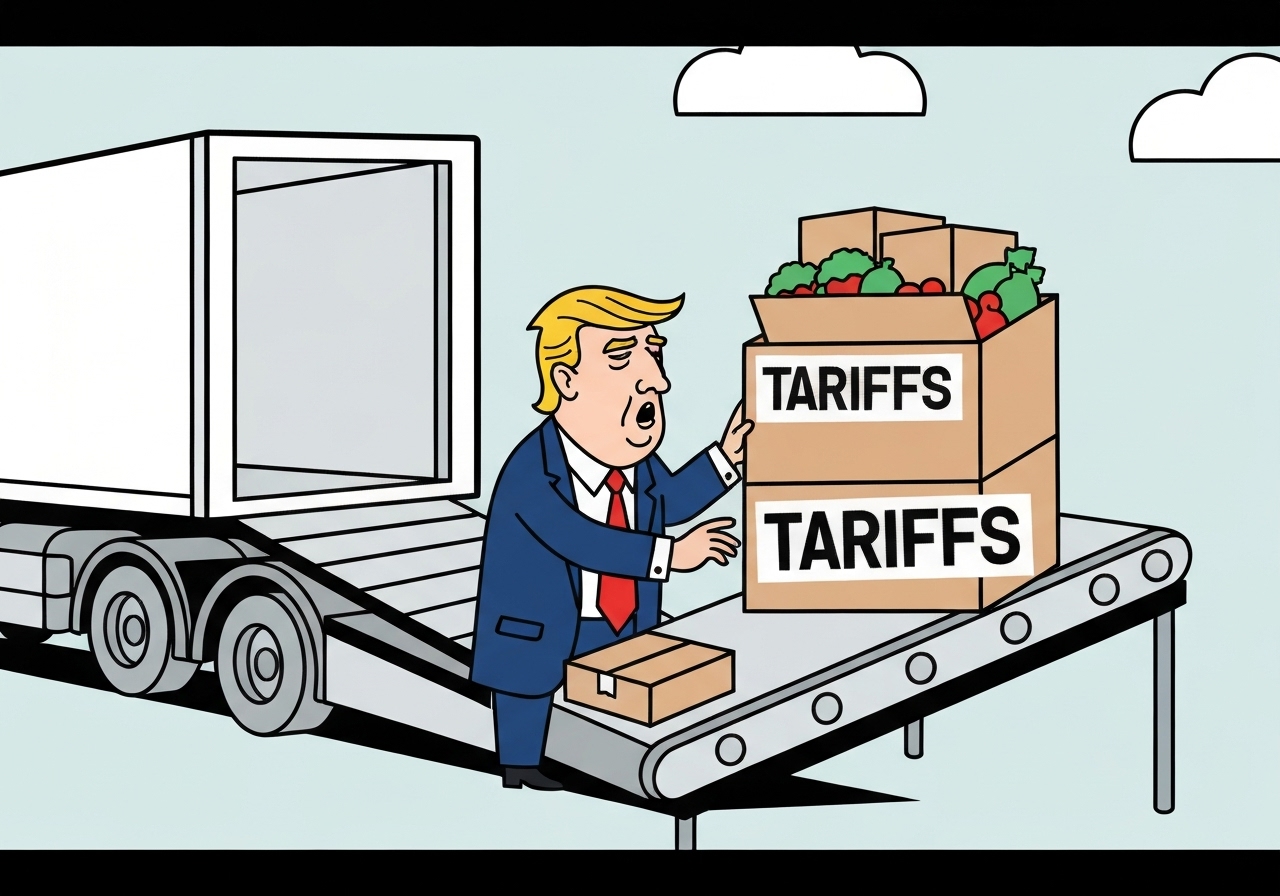
US President Donald Trump on Friday signed an executive order exempting dozens of food items — from coffee and bananas to beef and spices — from his administration’s sweeping import tariffs, a move aimed at easing grocery bills ahead of economic and political pressure. The White House said the measures apply to goods that cannot be produced in sufficient quantities domestically and take effect retroactively at midnight on Thursday, 13 November. The step marks a partial reversal of the administration’s baseline 10% tariff policy and comes as grocery prices have risen, with official data showing groceries up 2.7% year-on-year. Officials said the change is intended to lower consumer costs quickly while preserving the broader tariff framework.
Key Takeaways
- The White House exempted more than 100 food items from tariffs, including coffee, bananas, beef cuts and a wide range of spices and fruits.
- The administration’s baseline tariff on imports remains 10%, but the exemptions are applied retroactively from 00:00 on 13 November.
- Groceries rose 2.7% year-on-year in the Department of Labor inflation report, a key driver of the policy shift.
- The White House expects coffee and bananas to see lower retail prices, and officials pledged a 20% reduction in US coffee prices this year.
- Mr. Trump said the exempted goods “cannot be produced in sufficient quantities domestically,” framing the move as limited relief rather than a wholesale rollback.
- The administration also announced lowered import taxes on coffee and bananas under trade deals with four Latin American countries.
- The president has previously offered $2,000 tariff rebate checks and remains engaged in legal battles: the US Supreme Court is weighing the tariffs’ legality.
Background
The tariffs were introduced as part of a broader strategy to shrink the US trade deficit and encourage domestic production by taxing certain imports. The policy imposed a baseline 10% levy on imports from all countries, with additional targeted surcharges on numerous trading partners. President Trump has long framed tariffs as a tool to punish what he describes as unfair trading practices and to drive Americans toward US-made goods.
Domestic inflation and rising grocery costs have turned food prices into a political liability for the administration. Last week’s poor Republican performance in elections intensified pressure on the White House to act on cost-of-living concerns. The move to exempt specific food items reflects a balancing act between preserving protectionist objectives and addressing immediate voter anxieties about household budgets.
Separately, Mr. Trump asked for an investigation into the meat-packing industry amid sharply rising beef prices, accusing some firms of illicit conduct. At the same time, the administration has used a mix of trade adjustments and direct financial incentives — such as proposed tariff rebate checks — to try to blunt domestic discontent over prices.
Main Event
On Friday, the administration published a White House list of more than 100 food products to be removed from the tariff schedule. The list spans staples and specialty goods: coffee, cocoa, multiple teas, vanilla beans, numerous beef product categories, a wide array of fruits and peppers, and dozens of spices, nuts, grains and roots. Officials said the exempted items are largely those that the US cannot supply domestically at scale.
President Trump briefed reporters, stressing that the exemptions do not undermine the broader protection of US industry because the goods in question are not produced in sufficient domestic quantity. “So there’s no protection of our industries, or our food products,” he said, arguing the change is narrowly targeted. He described the action as “a little bit of a rollback” focused on items where prices had risen and said he did not expect widespread further rollbacks.
The White House also announced related trade adjustments: import taxes on coffee and bananas will be lowered under trade agreements with four Latin American partners. Treasury Secretary Scott Bessent joined the public pledge to bring down coffee prices by 20% in the US this year, a politically salient promise aimed at demonstrating rapid consumer relief.
The exemptions will be applied retroactively to 13 November, meaning importers may see immediate accounting and pricing effects. Industry groups and retailers will now assess whether savings are passed down to consumers or absorbed along distribution chains, a crucial determinant of the real-world impact.
Analysis & Implications
In the short term, removing tariffs on widely consumed imports could ease some upward pressure on retail prices for the affected items, particularly for commodity-linked goods such as coffee and certain fruit. If importers and retailers pass savings through, consumers may see quicker price relief than supply-side reforms alone would achieve. Officials’ promise of a 20% coffee price drop sets a concrete benchmark, but delivery will depend on wholesale price movements and retailer margins.
However, economists warn that tariff savings are often partially or fully absorbed by firms rather than translated into lower shelf prices. Pass-through rates vary by sector, market concentration and supply-chain structure; concentrated industries, such as meat packing, can limit consumer benefits if competition remains weak. The administration’s simultaneous call for an investigation into meat-packing suggests policymakers are aware of these distributional frictions.
Politically, the exemptions signal responsiveness to immediate voter concerns without abandoning the broader protectionist agenda. By carving out goods that cannot be produced domestically, the White House can portray itself as both tough on trade and pragmatic on prices. Legally, the measure faces uncertainty: the US Supreme Court is considering whether the president had statutory authority for the tariff program, and any adverse ruling could complicate future tariff policy.
Internationally, the trade-deal adjustments with Latin American partners aim to stabilize supply chains and reassure exporters that the US market remains accessible. Exporting countries and agricultural suppliers will watch whether tariff reductions are durable or reversible, influencing planting, harvesting and investment decisions in the coming months.
Comparison & Data
| Item | Baseline Tariff | Noted Price/Change |
|---|---|---|
| Coffee | 10% (baseline) | Administration vows 20% retail price reduction |
| Beef (various cuts) | 10% (baseline) | Retail prices have climbed sharply; meat sector under investigation |
| Groceries (aggregate) | Subject to tariffs on many imports | Up 2.7% year-on-year (Department of Labor) |
The table highlights the administration’s targeted approach: tariffs remain as policy, but exemptions and trade adjustments are used selectively to address high-profile price spikes. Analysts will track wholesale price movements, retail margins and timing to assess whether the stated percentage reductions materialize for consumers.
Reactions & Quotes
White House officials framed the change as limited relief for items the US cannot reliably produce. Their briefing emphasized the retroactive effective date and the goal of lowering household grocery costs without abandoning tariff objectives.
“So there’s no protection of our industries, or our food products.”
Donald Trump
Mr. Trump’s remark accompanied a broader explanation that the exemptions target imports that do not compete with domestic production. He additionally characterized the rollback as small and unlikely to presage a larger policy reversal.
“I don’t think it’ll be necessary.”
Donald Trump
That comment was made when asked whether further rollbacks were anticipated. Administration officials said this action is a narrow, tactical adjustment rather than a change in strategic posture on tariffs.
“Companies often pass tariff costs onto consumers,”
Economists (summary)
Economists caution that the ultimate consumer price effects depend on industry competition, supply-chain dynamics and retailer behavior. Financial markets and consumer groups will monitor whether promised savings reach shoppers.
Unconfirmed
- Whether the pledged 20% reduction in US coffee retail prices will be achieved within the calendar year remains uncertain and depends on wholesale markets and retailer pass-through.
- It is unclear how quickly exemptions will translate into lower shelf prices for all listed items, as distribution-chain adjustments and existing contracts may delay effects.
- The long-term permanence of exemptions and trade-deal adjustments is unconfirmed; future policy changes or court rulings could reverse them.
Bottom Line
The White House’s exemptions represent a tactical retreat from a one-size-fits-all tariff approach, targeting foods that the US cannot supply domestically to offer near-term relief to households. The move is politically calculated: it addresses consumer pain points revealed in recent elections while retaining the broader tariff framework aimed at reducing the trade deficit.
Whether ordinary shoppers see the promised price cuts will hinge on how much of the tariff savings importers and retailers pass through and on legal outcomes regarding the tariffs’ authority. Observers should watch retail price indices for coffee, beef and fruit categories, any findings from the meat-packing inquiry, and developments in the Supreme Court docket for clues about the policy’s durability.
Sources
- BBC — news media (primary report of White House announcement)