
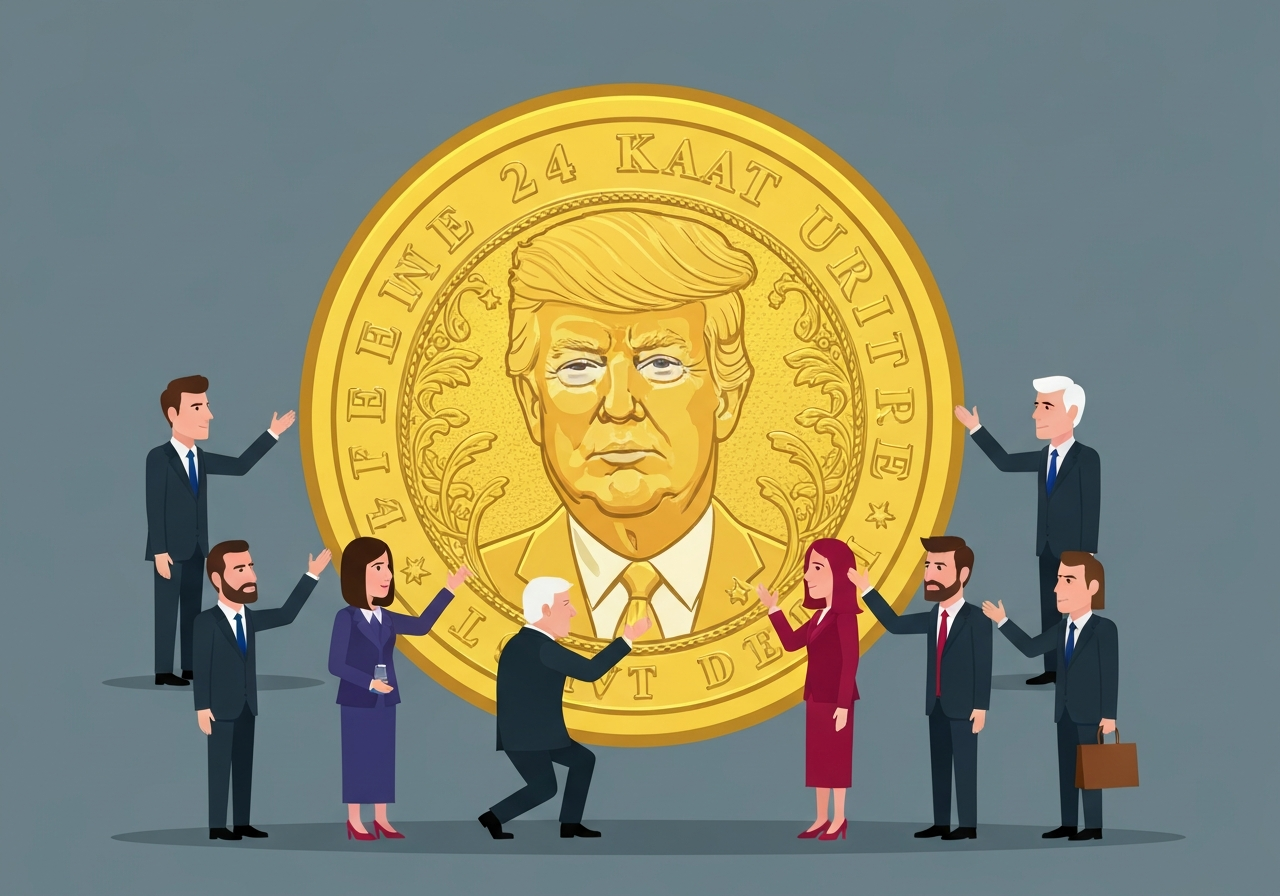
Lead: On March 19, 2026, the U.S. Commission of Fine Arts — whose current members were appointed by President Trump — unanimously approved the design of a 24‑karat gold commemorative coin featuring President Trump’s likeness. The coin, billed as part of the nation’s 250th‑anniversary program, shows Mr. Trump with his fists on a desk and a stern expression; the reverse depicts an eagle. The approval clears a federal advisory step even as legal and historical questions about depicting a living president on U.S. currency remain unresolved.
Key Takeaways
- The Commission of Fine Arts voted unanimously on March 19, 2026, to approve the 24‑karat gold coin design featuring President Trump’s portrait.
- The coin is positioned as a commemorative issue tied to the United States’ 250th anniversary and includes an eagle on the reverse.
- The administration is planning at least three coins bearing Mr. Trump’s image, including a $1 piece intended for circulation.
- Historical practice and the 1866 Thayer Amendment limit living persons’ likenesses on U.S. currency; the law explicitly states portraits must be of deceased individuals.
- Approval by the Commission of Fine Arts is advisory and procedural; Treasury and minting decisions and potential legal challenges remain outstanding.
- Design details — Trump with fists on a desk and a glowering gaze — have prompted debate about symbolism and precedent in U.S. numismatic tradition.
Background
Debate over living individuals appearing on U.S. money reaches back to the republic’s earliest years. Many founders explicitly resisted monarchical trappings, including elevated portrayals of living officials on coinage and paper money. Historically, U.S. practice has generally restricted portraits to deceased figures, with only a few exceptions prior to modern reforms.
The Thayer Amendment, originating in 1866, is frequently cited in these disputes; its language is read by some legal scholars as a clear bar on living persons’ portraits on United States currency and securities. The Commission of Fine Arts is an independent federal advisory body that reviews and comments on the aesthetics of federal projects, including coins, but it does not itself authorize minting or circulation.
Main Event
On March 19, 2026, the Commission convened to review design proposals associated with the federal 250th anniversary program. Members, all appointed during the current administration, examined imagery and technical specifications for a proposed 24‑karat gold commemorative coin that prominently features President Trump’s visage. The panel voted unanimously to approve the submitted design, a step described by commissioners as fulfilling their advisory remit.
The coin’s obverse shows Mr. Trump leaning forward, fists placed on a desk and a severe expression that designers say aims to convey resolve. The reverse uses a stylized eagle, a conventional emblem on U.S. coins. Administrations often commission commemoratives and medals for major milestones, but this proposal stands out because it places a living president front and center.
Officials involved in the planning have indicated the project is part of a broader slate that includes at least three designs bearing Mr. Trump’s likeness, one of which is a $1 coin slated for circulation. That prospect has expanded the conversation from commemorative collectors’ items to legal and policy questions about everyday currency and public symbolism.
Analysis & Implications
Symbolically, approving a gold coin with a sitting president’s image breaks with longstanding rhetorical and symbolic norms that informed early American views on republicanism. Founding‑era sensitivities against monarchic imagery are often invoked by critics to frame the commission’s action as historically tone‑deaf. Supporters counter that modern commemoratives and medals have evolved as legitimate ways to mark milestones.
Legally, the Thayer Amendment (1866) is the most frequently cited obstacle. Its text, used in arguments on both sides, reads in plain terms about portraits on currency. How courts would treat a contemporary coin approval — especially if one of the designs is intended for circulation as a $1 piece — is uncertain and would likely prompt litigation focused on statutory interpretation and administrative authority.
Politically, the approval may deepen partisan debate: proponents frame the coins as patriotic commemoration tied to a major national anniversary, while opponents view them as an unprecedented personalization of federal symbols. Internationally, U.S. coinage norms have sometimes been watched as indicators of democratic practice; this episode could generate commentary about American political symbolism abroad.
Comparison & Data
| Proposed Item | Type | Public Status (March 19, 2026) |
|---|---|---|
| 24‑karat gold coin | Commemorative | Design approved by CFA |
| $1 coin | Circulating currency | Planned by administration; not minted |
| Additional coin(s) | Commemorative/medal | Planned; details pending |
The table summarizes designs publicly associated with the 250th‑anniversary program as of the Commission’s March 19, 2026 meeting. Approval by the Commission of Fine Arts clears an advisory stage but does not equate to authorization to mint or distribute. Any circulating coin would require further executive and statutory procedures, and could invite legal challenge under existing statutes.
Reactions & Quotes
“Only the portrait of a deceased individual may appear on United States currency and securities.”
Thayer Amendment (1866)
“The Commission voted unanimously to approve the submitted design after reviewing technical and artistic criteria.”
U.S. Commission of Fine Arts (official advisory body)
Legal scholars and numismatic experts offered sharply divergent takes in interviews after the vote. Some emphasized that the commission’s approval was procedural and limited in authority; others noted that the plan to place a presidential image on circulating coinage would raise novel legal questions that courts have not squarely decided in recent decades.
Unconfirmed
- Whether the Treasury Department will authorize minting or circulation of the proposed $1 coin remains unresolved and could be blocked by policy or litigation.
- Any expected production timeline, mint run sizes, or sales pricing for the 24‑karat gold commemorative coin have not been publicly released.
- Potential court outcomes over the Thayer Amendment’s applicability to modern commemoratives are speculative until litigation is filed and adjudicated.
Bottom Line
The Commission of Fine Arts’ unanimous approval on March 19, 2026, moves the Trump administration’s coin designs past an advisory threshold but does not settle the substantive legal and symbolic disputes they raise. The proposal to place a living president’s likeness on both a high‑value commemorative and a potential circulating $1 coin departs from common historical practice and triggers statutory questions under the 1866 Thayer Amendment.
Observers should expect further administrative steps, possible litigation, and continuing public debate. The next concrete markers will be formal Treasury or mint actions on production and any court filings challenging those steps; those developments will determine whether the design becomes a collectors’ piece only or a widely circulated emblem of a sitting president.
Sources
- The New York Times — news reporting on Commission vote and design (news)
- U.S. Commission of Fine Arts — official federal advisory body on design matters (official)
- U.S. Department of the Treasury — federal agency responsible for coinage and mint policy (official)