
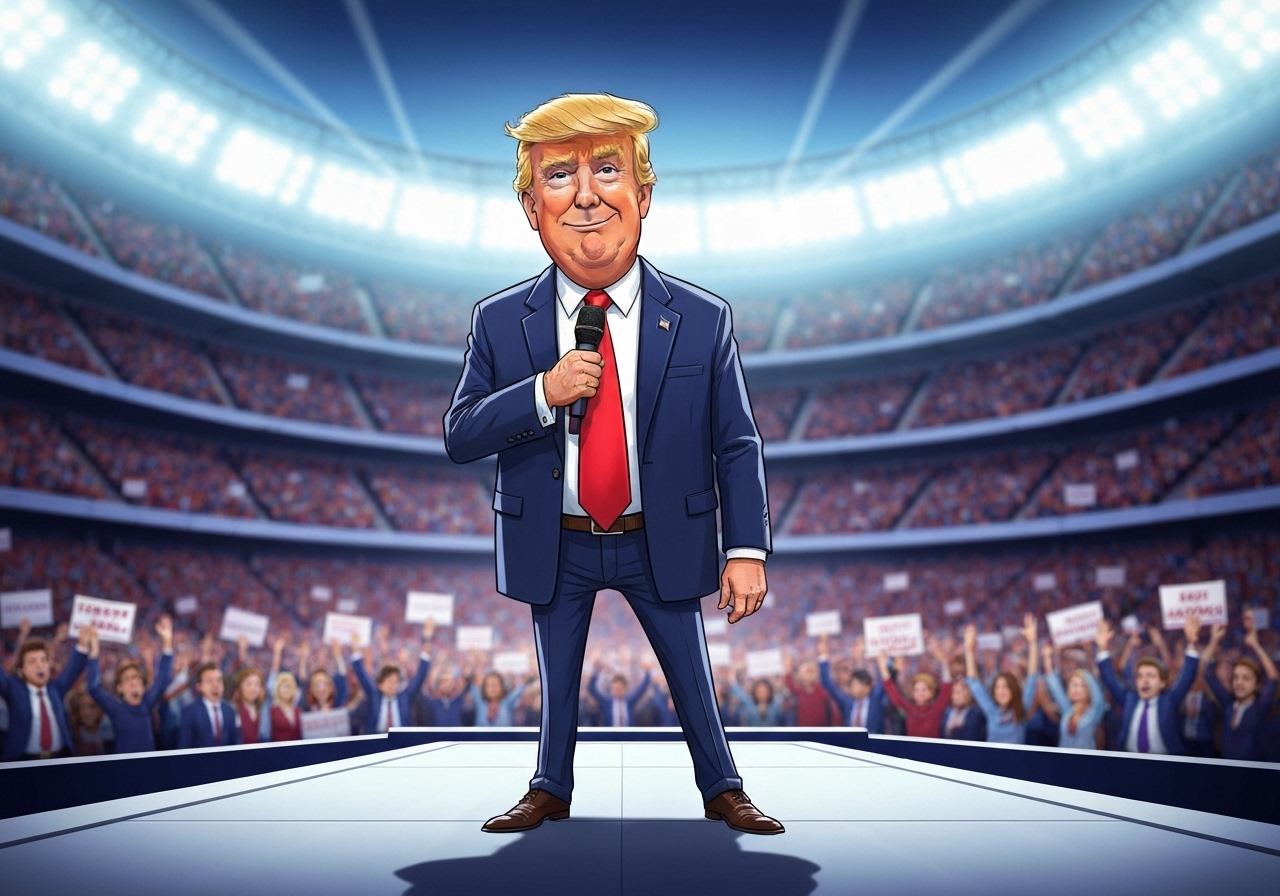
Lead: In Miami on Wednesday, President Donald Trump spent the morning after a poor election night for Republicans privately debriefing GOP senators and later urged his party to emphasize his administration’s economic record. He told a financial conference that Republicans need to sell factory openings, job gains and other measurable wins, even as his own public remarks often veered away from policy. The speech came a day after multiple Democratic victories that underscored the messaging challenges the GOP faces, especially over the length and fallout of a record-long government shutdown. Trump’s mix of economic talking points and wide-ranging digressions left allies saying the economy will be central to the coming midterm fight even as questions remain about discipline and focus.
Key Takeaways
- After Tuesday’s losses, Trump told GOP senators in the State Dining Room that the party is losing the messaging fight over the record-length government shutdown and must communicate economic successes more clearly.
- In a Miami speech billed as a major economic address, Trump repeatedly shifted topics — touching on transgender athletes, a U.N. teleprompter glitch, Denali/Mount McKinley, Saudi diplomatic wealth and a personal McDonald’s anecdote.
- He framed the political choice in stark terms, saying “communism” 14 times while mentioning Mayor-elect Zohran Mamdani only once; his speech recalled the Nov. 5, 2024 victory several times.
- White House and campaign aides signaled a pivot to cost-of-living messaging ahead of critical midterms; James Blair said Trump will focus intensely on prices and affordability.
- Polling cited by CNN shows broad dissatisfaction: 68% say the country is going badly, 72% rate the economy poorly, 47% call cost of living the top issue, and 61% say Trump’s policies worsened economic conditions.
- Trump’s first nine months have included heavy foreign engagement and high-profile domestic renovation projects, even amid the shutdown and attendant service disruptions.
Background
The immediate backdrop is a disappointing election night for Republicans that highlighted vulnerability on kitchen-table issues, especially the cost of living. The party also faces criticism for its handling of the prolonged government shutdown, which has become a central line of attack for Democrats. Historically, presidents encountering poor midterm or off-year results often conclude that better communication, not policy change, will correct voter misperceptions — a strategy Trump echoed by urging more promotion of his administration’s accomplishments.
Trump’s presidency has blended conventional economic claims with unconventional public remarks and theatrical gestures, a pattern that stretches back through his political career. Allies argue that emphasizing measurable outcomes — jobs, factory openings, changes in trade balances — can restore the GOP’s long-running advantage on economic credibility. But opponents and some voters point to real-time pocketbook pain: groceries, energy and housing remain acute concerns that shape vote choice.
Main Event
Early Wednesday, Trump met with Republican senators over breakfast in the State Dining Room and made a direct assessment: the GOP was losing the argument over the shutdown. He followed that meeting with a scheduled economic address in Miami, marking roughly one year since his Nov. 5, 2024 election victory. While the speech was billed as a policy-focused presentation, the delivery ranged widely, intermixing economic claims with cultural and personal anecdotes.
At the Miami conference he urged Republicans to talk facts — factory starts and jobs created — and argued that communicating those facts makes elections easier to win. Yet the speech repeatedly detoured: Trump raised questions about transgender weightlifters, recalled a malfunctioning U.N. teleprompter, discussed the Denali/Mount McKinley name change and even reminisced about working a McDonald’s drive-thru during last year’s campaign.
Trump also tested a new rhetorical frame aimed at the left-right divide, contrasting “communism” with “common sense” while invoking last year’s electoral triumph. After the event he spoke to Fox News’ Bret Baier and reiterated that Democrats have successfully used the term “affordability” to shape voter concerns, suggesting Republicans must adopt similar language. House Speaker Mike Johnson publicly said Trump had pledged active campaigning — rallies and tele-town halls — ahead of the midterms.
Analysis & Implications
The administration’s messaging challenge is twofold: quantify and simplify policy wins while preventing the candidate from undermining that clarity through off-script remarks. Trump’s instinct to pivot from economic specifics to cultural flashpoints can dilute a tightly packaged message about jobs and prices. For voters focused on daily costs, nuance about factory openings matters less than whether grocery and energy bills are easing.
Democrats have seized on cost-of-living language effectively in recent state and local races in New Jersey, Virginia and New York, linking price pressures to Trump-era policies despite presidential promises of an economic turnaround. That rhetorical adoption shows how readily a single persuasive term — “affordability” — can reshape debates and complicate the GOP’s presumed advantage on the economy. For Republicans, reclaiming that terrain will require disciplined messaging, local outreach and measurable short-term wins that voters can feel.
Operationally, the White House faces competing priorities: managing foreign policy engagement and high-profile renovation projects while trying to assert domestic economic leadership. Trump’s continued focus on diplomacy and the White House refurbishment — including a planned 90,000-square-foot ballroom in the East Wing — may complicate the optics of an economy-first campaign, especially during a shutdown that has disrupted services for millions.
Comparison & Data
| Metric | Survey Result |
|---|---|
| Americans saying the country is going badly | 68% |
| Americans rating the economy poorly | 72% |
| Share naming economy/cost of living top issue | 47% |
| Share saying Trump policies worsened economy | 61% |
The CNN poll numbers provide a snapshot of voter mood immediately after the election night results; they indicate broad frustration that parties on both sides will try to address before the midterms. While polls are a moving picture, the figures suggest Democrats’ framing around affordability resonated with sizable shares of the electorate. For Republicans, converting macroeconomic claims into pocketbook improvements perceived by voters remains the principal communications and governance challenge.
Reactions & Quotes
Republican lawmakers publicly refrained from blaming Trump for losses and instead emphasized his continued role in campaigning. House Speaker Mike Johnson framed the president as indispensable to GOP fortunes and said Trump had promised active involvement ahead of the midterms.
“He is, in a very real sense, on the ballot. He’s fiercely committed to us winning. He is going to help.”
House Speaker Mike Johnson (public remarks)
Campaign and White House aides signaled a more focused economic push in coming months, stressing that turnaround takes time but fundamentals are in place.
“The president is very keyed into what’s going on… you’ll see him be very, very focused on prices and cost of living.”
James Blair, deputy White House chief of staff (quoted to Politico)
In Miami, Trump himself urged Republicans to present concrete facts about growth and jobs, even as his own comments wandered across cultural and personal topics.
“I tell Republicans, you want to win elections, you got to talk about these facts.”
President Donald Trump (Miami speech)
Unconfirmed
- Whether a renewed economic messaging push alone can reverse voter dissatisfaction before the midterms remains unproven and depends on material changes in prices and services.
- Claims that specific renovation projects will be completed on schedule or will produce political benefits are projections that have not been independently verified.
- The extent and format of Trump’s future campaign involvement (frequency of rallies, tele-town halls, and exact targets) are subject to change and have not been exhaustively documented.
Bottom Line
Trump’s call for Republicans to foreground his economic accomplishments acknowledges a real vulnerability: voters are reporting pain on the cost of living and Democrats have successfully shaped the affordability narrative in recent contests. If the GOP hopes to reclaim a governing argument on the economy, it must convert macro claims into locally felt improvements and execute a disciplined, repeatable message across media and ground operations.
At the same time, the president’s public tendency to diverge into cultural flashpoints and personal anecdotes risks diluting a concentrated economic message. The coming months will test whether the White House can sustain a focused campaign around prices and jobs without reverting to the scattershot rhetoric that has marked many of its public appearances.