
Lead
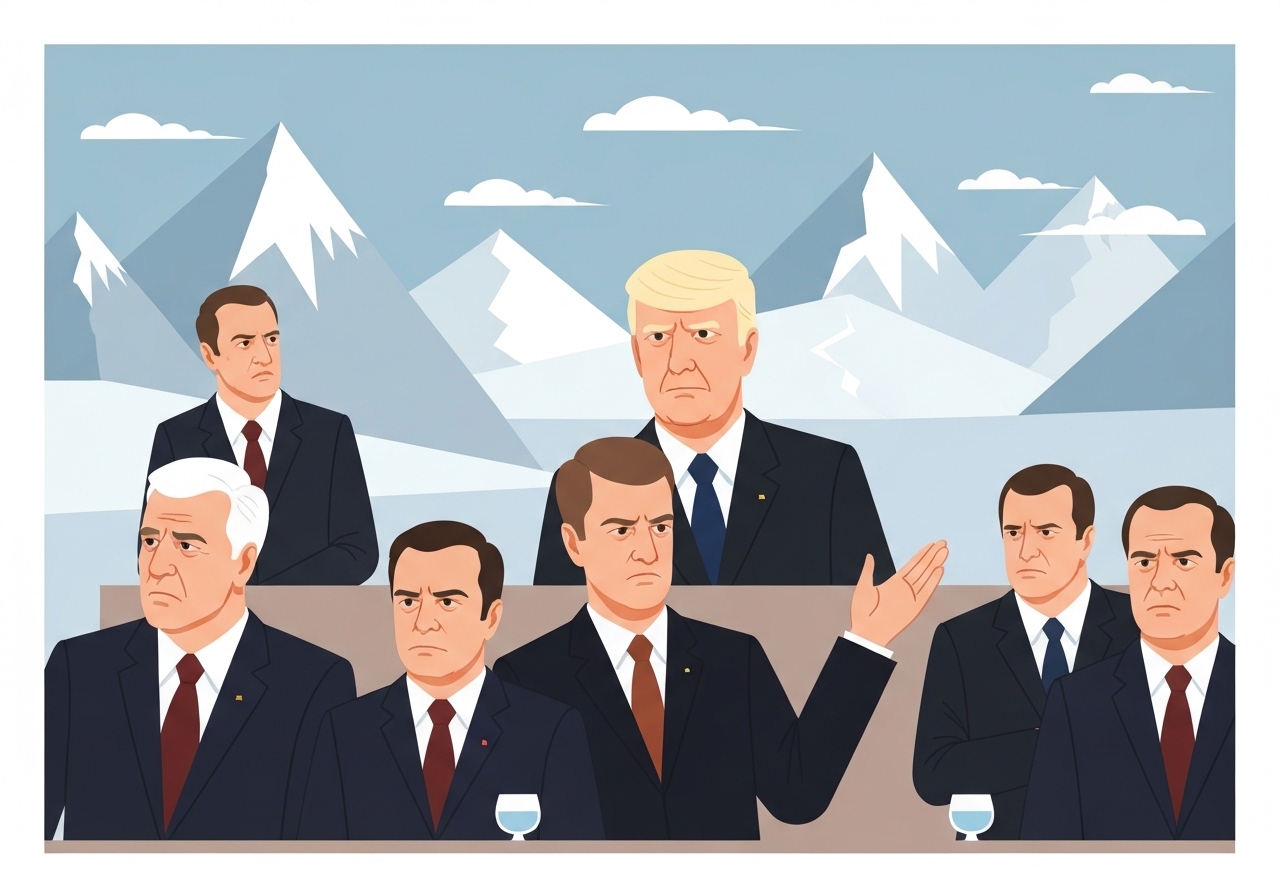
At the World Economic Forum in Davos on January 20, 2026, senior European officials publicly rebuked President Donald Trump’s foreign-policy stance as a diplomatic row over Greenland escalated. European leaders—including Emmanuel Macron and Ursula von der Leyen—warned that aggressive tactics and tariffs risk undermining international norms. The dispute followed a series of social-media posts by Trump and renewed threats to seek US control of Greenland; markets reacted sharply as investors priced in geopolitical risk. Denmark and Greenland have moved to shore up emergency preparedness while discussions continue on the sidelines of the forum.
Key Takeaways
- At Davos on Jan. 20, 2026, Emmanuel Macron and other European leaders criticized US policy, calling out coercive tactics and threats tied to Greenland.
- President Trump posted private messages from leaders—including a text from Macron—publicly escalating the dispute; Trump reiterated interest in Greenland while agreeing to meetings this week.
- Markets moved decisively: the Dow fell 728 points (1.47%), the S&P 500 slid 1.4%, and the Nasdaq dropped 1.7% during the market open.
- Volatility spiked: the VIX rose about 28% and crossed the 20 mark for the first time since November; the US 10-year Treasury yield hit 4.29%.
- Currency and bond flows shifted: the dollar index fell 0.89% as investors pursued the so-called “Sell America” trade.
- Denmark announced additional equipment, advisers and more troops for Greenland while offering crisis-communications and infrastructure support.
- European Commission President Ursula von der Leyen and ECB President Christine Lagarde urged greater EU strategic autonomy in response to geopolitical shocks.
- Ukraine’s President Volodymyr Zelensky conditioned a Davos meeting with Trump on concrete security and prosperity packages for Ukraine.
Background
The dispute over Greenland sits atop longer-running tensions about great-power influence, trade coercion and territorial sovereignty. Greenland is a self-governing territory within the Kingdom of Denmark and has hosted a US military presence for roughly 75 years; its strategic Arctic location has long drawn allied attention. Presidential comments and social-media posts in January 2026 renewed debate about sovereignty and alliances, and evoked wider unease about unilateral actions that could sideline international law.
European unease is also shaped by recent trade frictions and tariff threats used as leverage, which leaders at Davos described as a new pattern of economic coercion. Historical flashpoints—including disputes over the Chagos Islands and other Cold War arrangements—have fed regional sensitivity to perceived attempts to reshape territorial arrangements without multilateral consent. Against that backdrop, middle powers and EU institutions are exploring ways to reduce vulnerability to sudden policy shifts by a single partner.
Main Event
Speeches and bilateral exchanges at the World Economic Forum crystallized the confrontation. French President Emmanuel Macron delivered a broad critique of strongman politics and warned against a world “where international law is trampled under foot,” portraying current pressures as threats to collective governance. European Commission President Ursula von der Leyen urged a “new form of European independence,” citing recent geopolitical shocks as a rationale for deepening intra-EU trade and strategic ties.
ECB President Christine Lagarde linked the uncertainty to economic risk, warning that tariff threats and policy unpredictability can stall growth and disrupt deep US–EU commercial links. Canada’s Prime Minister Mark Carney urged middle powers to coordinate, arguing that rules and legitimacy are the primary levers available to nations without hegemonic force. Microsoft Vice Chair Brad Smith and other business leaders emphasized that multinational cyber and economic interdependence makes coordinated responses in NATO and allied forums important for stability.
On the ground, Greenlandic and Danish officials responded defensively. Greenland’s Prime Minister Jens-Frederik Nielsen thanked allies for defending the rules-based order and cautioned that while military action was unlikely, it could not be entirely dismissed. Denmark announced reinforcement of emergency preparedness for Greenland—sending advisers, equipment and additional troops—while Greenlandic parliamentarians reiterated a commitment to lawful negotiation over any future status changes.
Analysis & Implications
The episode highlights a triangular challenge: managing the immediate political row, limiting economic fallout, and recalibrating alliance practices. Short-term market reactions—sharp equity declines, rising volatility and flight from the dollar—reflect investor concern that diplomatic friction can quickly translate into trade and financial shocks. If tariff threats escalate or are applied, cross-border investment and supply chains between the US and Europe could be materially affected.
Strategically, European leaders’ public push for “greater independence” signals appetite for redundancy in defense, trade and finance. That may accelerate EU initiatives to diversify suppliers, deepen intrabloc trade and reduce exposure to single-point policy risk. For NATO, the dispute tests alliance cohesion: partners must weigh defending shared security arrangements while responding to what they see as unilateral coercion by a close ally.
For Greenland and Denmark, the immediate priority is preparedness and legal clarity. Greenland’s long-standing ties with the United States—military installations and economic links—complicate a simple pivot. Any U.S. bid to alter sovereignty arrangements would raise complex legal, diplomatic and ethical questions and would likely face intense international resistance, particularly from European institutions and allied governments.
Comparison & Data
| Market | Move |
|---|---|
| Dow Jones | -728 pts (-1.47%) |
| S&P 500 | -1.4% |
| Nasdaq Composite | -1.7% |
| Stoxx 600 (Europe) | -1.26% (Mon: -1.19%) |
| VIX | +28% (rose above 20) |
| Dollar index | -0.89% |
| US 10-year yield | 4.29% (highest since Sept.) |
The table summarizes market moves reported after Davos developments. Equity indices across the US and Europe fell more than 1% on the day, volatility spiked and investors rotated away from dollar-denominated assets. Such synchronous moves are typical when a geopolitical issue suddenly raises the probability of cross-border trade disruptions or policy-driven tariffs.
Reactions & Quotes
“Without collective governance, cooperation gives way to relentless competition,”
Emmanuel Macron, President of France
Macron used his Davos address to frame recent actions as symptomatic of a broader drift toward coercive state behavior, urging collective instruments to defend sovereignty and international law.
“A new form of European independence” is needed in the face of geopolitical shocks,
Ursula von der Leyen, President of the European Commission
Von der Leyen stressed stronger intra-EU economic ties and trade partnerships beyond traditional alliances as insurance against sudden policy shifts by major powers.
“It is unlikely that there will be a use of military force, but it cannot be ruled out,”
Jens-Frederik Nielsen, Prime Minister of Greenland (translated)
Nielsen’s remark, given in Danish and translated by Reuters, reflected both reassurance and caution as Greenland and Denmark strengthen preparedness measures.
Unconfirmed
- Whether President Trump intends to pursue formal annexation of Greenland via military means remains unconfirmed and lacks clear evidence.
- The long-term scope and mandate of the so-called “Board of Peace” cited in public discussion are not fully verified; claims it would supplant the United Nations are not substantiated.
- Some private messages posted on social media by the US president have been authenticated in part, but the provenance and completeness of all leaked screenshots remain under review.
Bottom Line
The Davos exchanges crystallize a new flashpoint in US–European relations: a territorial dispute has quickly become a test of alliances, market confidence and the durability of the rules-based order. European leaders are using public forums to press for strategic buffers—economic and diplomatic—against sudden policy shifts by a major ally.
For markets and policymakers, the near-term task is damage control: reduce escalation, clarify intentions through diplomacy, and shore up trade and investment channels. For Greenland and Denmark, the priority is legal and operational preparedness rather than rhetoric. How the White House, Copenhagen and allied capitals manage next steps will determine whether this episode becomes a contained diplomatic spat or a catalyst for broader realignment.