
Lead
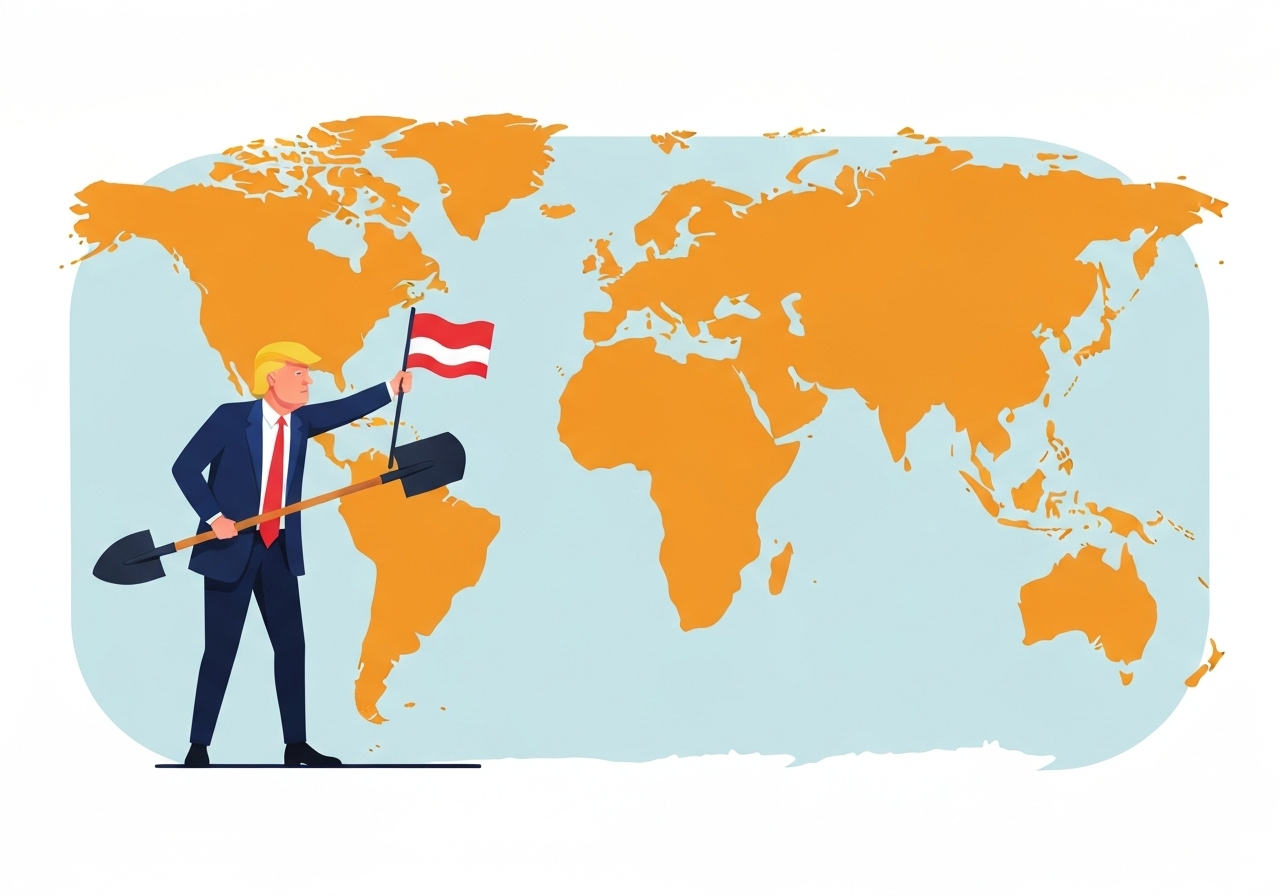
In early January 2026, President Trump and close advisers renewed public calls for the United States to take control of Greenland, a semiautonomous territory of Denmark. Their statements followed a high-profile U.S. raid in Venezuela and have focused on national security and Arctic strategy. Denmark’s prime minister warned that any coercive move could threaten NATO ties, while Greenland’s government rejected the proposal as unacceptable. The exchange has escalated diplomatic tensions across Europe and raised questions about legal, military and political feasibility.
Key Takeaways
- On Jan. 5, 2026, U.S. officials restated interest in acquiring Greenland; President Trump did not rule out force in public remarks. The discussion intensified after a U.S. raid in Venezuela in late 2025.
- Secretary of State Marco Rubio told lawmakers the administration intends to “buy the island,” framing the proposal as an acquisition rather than annexation.
- Danish Prime Minister Mette Frederiksen publicly urged President Trump to “stop the threats,” warning that an attack on Greenland would jeopardize NATO membership and cooperation.
- Greenland’s premier described the rhetoric as “utterly unacceptable,” and local polls indicate a majority of residents oppose being taken over by the United States.
- European capitals rallied behind Denmark, stressing that any change to Greenland’s status must be decided by Denmark and Greenland, not external actors.
- Analysts point to the Arctic’s strategic value—air and missile trajectories, raw materials and shipping routes—as the likely driver of renewed U.S. interest.
- Legal experts say purchase or forced transfer would face significant international-law obstacles and complex domestic approvals on both sides.
Background
Greenland is a large Arctic territory that has been part of the Danish realm for centuries and gained expanded self-rule in recent decades. It is semiautonomous: Greenland handles many internal affairs while Denmark retains responsibility for foreign policy and defense. The island’s location gives it strategic military and logistical importance for transatlantic security, early-warning systems and Arctic access.
U.S. interest in Greenland is not new. Past administrations have shown varying levels of engagement in the Arctic; President Trump publicly floated buying Greenland in 2019. Since then, warming geopolitical competition in the Arctic—driven by Russia’s northern military posture and China’s resource and shipping ambitions—has sharpened attention in Washington on Arctic basing and influence.
Main Event
The current episode began in the wake of a U.S. raid on Venezuela that captured Nicolás Maduro, after which senior U.S. officials reiterated interest in Greenland as part of a broader strategic posture. President Trump and several allies publicly framed Greenland as underprotected by Denmark and therefore a potential U.S. asset for national defense. Those comments accelerated diplomatic pushback from Copenhagen and Nuuk.
Secretary of State Marco Rubio communicated to congressional lawmakers that the administration’s plan was to purchase Greenland. Officials in Denmark and across the EU responded by emphasizing that sovereignty and territorial disposition are matters for Denmark and Greenland to resolve together, not for external negotiation or coercion.
Denmark’s prime minister, Mette Frederiksen, directly addressed the U.S. statements and warned that military action against Greenland would be a breaking point for NATO cooperation. Greenland’s political leadership likewise repudiated the proposal on social media and official channels, framing the remarks as an intrusion on self-determination.
Analysis & Implications
Strategically, Greenland offers clear advantages: extensive airspace coverage over the North Atlantic, proximity to polar flight routes, and access to underexplored mineral deposits. For policymakers in Washington who see great-power competition as existential, those strategic factors help explain why acquisition has resurfaced as a policy idea.
Legally and politically, any attempt to buy or seize Greenland faces steep obstacles. Under international law, transfer of territory normally requires the consent of the sovereign state and, in cases of autonomous regions, meaningful local assent. A forcible approach would contravene treaty norms and provoke widespread diplomatic condemnation.
Within NATO, Denmark’s warning signals a rare moment of acute intra-alliance strain. If a NATO member perceived an ally’s territory was threatened by another member, alliance cohesion and intelligence-sharing could suffer, reducing NATO’s collective deterrent posture at a time when the Arctic is already a contested domain.
Economically, the costs would be substantial. Establishing sustained basing, logistical lines and governance structures in Greenland would require prolonged investment and political capital, while local resistance could make day-to-day operations and development difficult.
Comparison & Data
| Feature | Greenland | Denmark |
|---|---|---|
| Status | Semiautonomous territory | Sovereign state |
| Approx. area | 2.16 million km² | 42,900 km² |
| Population (approx.) | ~56,000 | ~5.8 million |
The table highlights the geographic scale of Greenland compared with Denmark and the small size of Greenland’s population, which informs both governance challenges and the political leverage of local actors in any negotiation. Large geography and sparse population complicate defense, infrastructure, and resource extraction decisions.
Reactions & Quotes
“Stop the threats.”
Mette Frederiksen, Prime Minister of Denmark (official statement)
Frederiksen’s remark framed the U.S. rhetoric as intolerable and linked coercion to broader alliance consequences, including NATO relations.
“Utterly unacceptable.”
Jens-Frederik Nielsen, Prime Minister of Greenland (social media post)
Greenland’s leader used terse language to reject external designs on the island and to assert local authority over the territory’s future.
Unconfirmed
- Whether the U.S. administration has put formal purchase proposals on paper or initiated legal steps toward acquisition remains unconfirmed.
- It is not confirmed that military force is a formal option on the table rather than rhetorical posturing; no operational plan has been made public.
- The level of popular opposition among Greenland residents is described as a majority in polls, but precise, current polling figures and their timing have not been publicly detailed.
Bottom Line
The renewed U.S. interest in Greenland is driven by strategic considerations in an Arctic increasingly defined by competition among great powers. While geography and resources make Greenland attractive to planners, the political and legal barriers to transfer or forcible control are substantial and likely to produce prolonged diplomatic fallout if pursued.
For readers watching this develop, the key questions are whether Washington will move from rhetoric to formal proposals, how Denmark and Greenland will respond institutionally, and how NATO and European partners will balance alliance obligations with regional security. Any credible pathway to change Greenland’s status will require consent from both Denmark and Greenland and will play out over years rather than months.
Sources
- The New York Times — U.S. news organization reporting on statements by U.S., Danish and Greenland officials (news)
- Government of Denmark — official government site for statements and policy on Denmark’s territories (official)
- NATO — alliance official resources on collective defense and member-state obligations (official)