
Lead
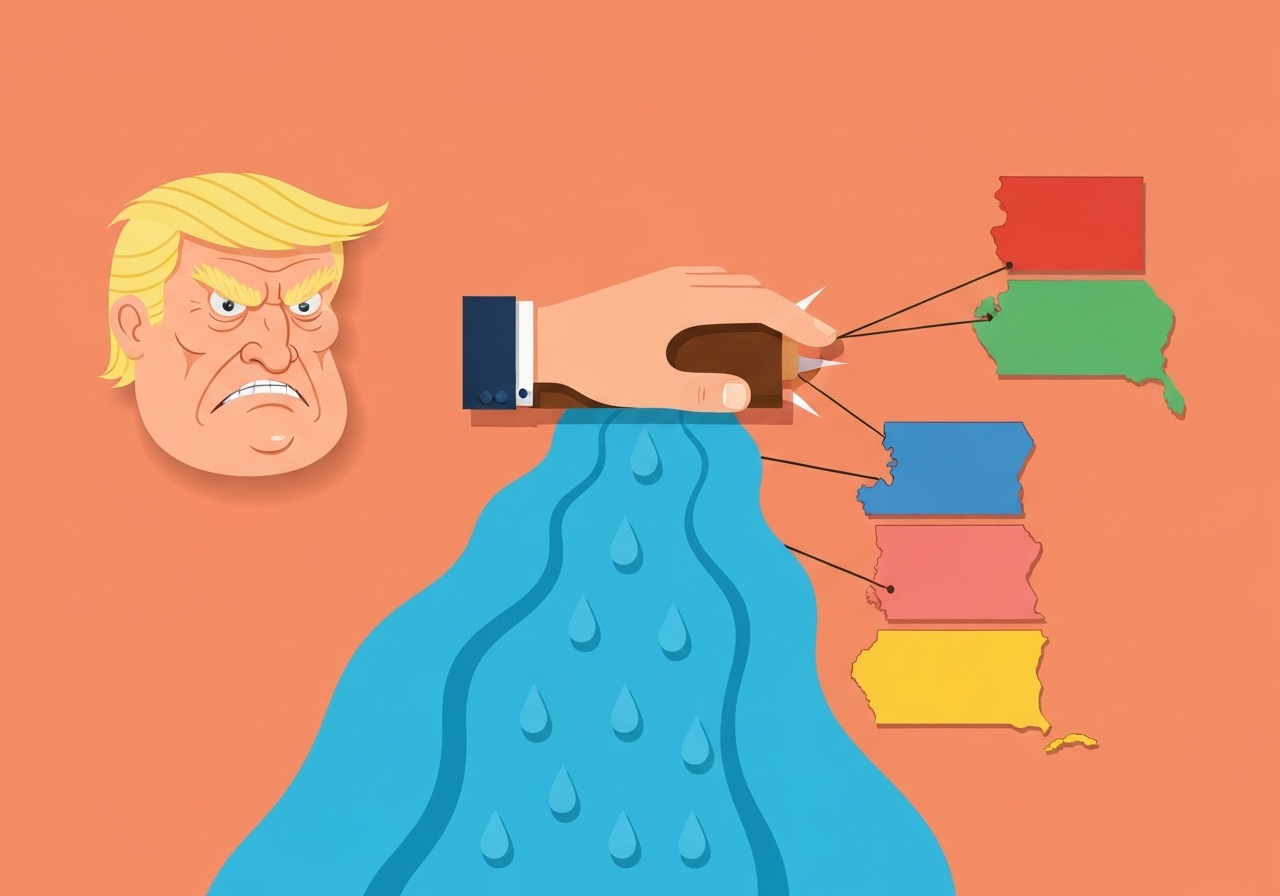
On January 6, 2026, the White House announced it will pause roughly $10 billion in federal social-service funds to five Democratic-led states after alleging widespread fraud, a Department of Health and Human Services official said. The freeze targets about $7 billion in Temporary Assistance for Needy Families (TANF) money, nearly $2.4 billion in the Child Care Development Fund, and roughly $870 million in other social-services grants. Minnesota, New York, California, Illinois and Colorado are identified as affected jurisdictions. State officials and advocacy groups warned the move could disrupt services for low-income families while investigations and legal challenges proceed.
Key Takeaways
- The administration announced the action on January 6, 2026, citing alleged fraud in social-service programs across five Democratic-led states.
- Approximately $7.0 billion in TANF funding has been paused, roughly $2.4 billion in Child Care Development Fund money is on hold, and about $870 million in other grants are affected.
- The five states named are Minnesota, New York, California, Illinois and Colorado; Minnesota has already faced a separate funding freeze announced last week.
- Federal prosecutors in Minnesota have charged more than 90 people in schemes linked to public-assistance fraud; prosecutors estimate losses could reach $9 billion.
- Feeding Our Future — a COVID-era nonprofit tied to a $250 million alleged theft from the Federal Child Nutrition Program — was an initial focus of the Minnesota probe.
- Illinois officials said on Jan. 6 they had not received formal notice of funding changes and called the action politically motivated.
- The administration has previously withheld federal dollars for infrastructure, climate and disaster grants during budget and policy disputes.
Background
Federal funding for state social programs flows through categorical grants and block grants that Congress approves and the Department of Health and Human Services administers. TANF, created in 1996, is a major federal block grant intended to support cash assistance and related services for low-income families; the Child Care Development Fund subsidizes child care so parents can work or attend training. Historically, states manage eligibility, certification and local provider oversight; federal officials monitor compliance and may withhold funds when they determine statutory requirements are not met.
In recent years, political tensions over how federal dollars are overseen have escalated. The current administration has frequently framed enforcement actions as necessary to protect taxpayers and to root out fraud, while Democratic state leaders and advocacy groups argue that reductions in funding threaten vulnerable populations and are often politically motivated. Last year’s government shutdown and prior pauses in infrastructure and disaster grants heightened distrust between the executive branch and several state governments.
Main Event
On Jan. 6, 2026, a Department of Health and Human Services official said the administration would freeze billions in social-service funds to five Democratic-led states pending reviews into alleged program fraud. The announcement breaks down to roughly $7 billion in TANF funds, nearly $2.4 billion from the Child Care Development Fund, and about $870 million in other grants that largely benefit children. The official framed the action as a compliance and anti-fraud measure rather than a policy cut, saying federal oversight is required to ensure legal use of taxpayer dollars.
Minnesota has already been at the center of federal probes: more than 90 individuals face federal charges tied to assistance-program schemes uncovered since 2021, and prosecutors have suggested total losses could approach $9 billion. The scandal began with an alleged $250 million COVID-era fraud involving a nonprofit, Feeding Our Future, accused of misusing Federal Child Nutrition Program funds. Investigations later expanded to include suspected fraud in housing services for seniors and people with disabilities, and programs serving children with autism.
Separately, the administration said it has opened inquiries into childcare providers in Minnesota after a widely viewed video by a conservative content creator claimed some federally supported day care centers were operating without children present. State regulators and CBS reporting later found that most of the named facilities held active licenses and that active locations had recent regulatory visits. Officials in Illinois said they had not received formal notice about funding restrictions and criticized the move as politically motivated and disruptive.
Analysis & Implications
Operationally, withholding large federal payments risks immediate service interruptions. TANF supports cash assistance, job training, child welfare-linked services and administrative functions; a sudden pause could force states to redirect reserves or cut client services. Child-care subsidies help parents maintain employment—delays in those funds could reduce access to licensed care and increase out-of-pocket costs for low-income families. State budgets and local providers often lack the cushion to absorb multi-billion-dollar gaps without short-term harm to beneficiaries.
Legally, the administration’s authority to withhold funds rests on statutory conditions and federal oversight rules, but affected states can and likely will mount administrative appeals and court challenges. Courts will weigh the administration’s evidence of noncompliance or fraud against statutory standards for suspension or termination of funds. Any injunction or stay could return money quickly, but litigation could also prolong uncertainty and administrative costs for states and service providers.
Politically, the pause amplifies partisan fault lines ahead of other policy fights. Democrats argue the move weaponizes federal funding against states with opposing governance, while Republicans frame enforcement as taxpayer protection. The dispute may accelerate congressional oversight hearings and calls for clearer federal-state protocols on fraud detection and remediation. Internationally, the step is unlikely to change foreign relations but could influence how domestic partners perceive U.S. federalism and governance stability.
Comparison & Data
| Program | Amount Paused (approx.) | Primary Beneficiaries |
|---|---|---|
| Temporary Assistance for Needy Families (TANF) | $7.0 billion | Low-income families, child welfare programs |
| Child Care Development Fund | Nearly $2.4 billion | Subsidized child care for working parents |
| Other social-services grants | ~$870 million | Programs largely serving children |
| Total (rounded) | ~$10.27 billion | Varied |
The table shows program-by-program freezes cited by HHS that together exceed $10 billion; reporting and administration statements sometimes round the total to $10 billion. Historically, enforcement actions of this scale are uncommon and typically follow multiagency probes or clear statutory violations. For perspective, previous funding pauses during budget disputes have impacted infrastructure and climate grants, but this is among the largest announced suspensions specifically tied to allegations about benefit-program fraud.
Reactions & Quotes
HHS framed the action as fiscal stewardship and compliance enforcement.
‘For too long, Democrat-led states and Governors have been complicit in allowing massive amounts of fraud to occur under their watch,’
Andrew Nixon, HHS spokesperson
State agencies and officials in affected states pushed back, emphasizing the potential harm to families and the lack of formal notice in some cases.
‘This is yet another politically-motivated action by the Trump Administration that confuses families and leaves states with more questions than answers,’
Illinois Department of Human Services (state agency statement)
The president publicly signaled investigations and criticized state leaders.
‘The fraud investigation of California has begun,’
President Donald Trump, Truth Social post
Unconfirmed
- Claims of broad, systemic fraud at scale in California, New York, Illinois and Colorado have been asserted by the administration but have not been publicly documented with case-level evidence comparable to the Minnesota prosecutions.
- Projections that the total fraud in Minnesota will definitively reach $9 billion are prosecutorial estimates; the final loss figure may change as investigations and prosecutions continue.
- Video evidence cited in some public commentary (showing empty day-care centers) has not been validated as proof of systemic misuse of federal funds across the states named.
Bottom Line
The administration’s pause of roughly $10 billion in social-service funding to five Democratic-led states raises immediate operational risks for programs serving low-income families while triggering legal and political battles. Minnesota’s extensive fraud investigation provides the clearest documented basis for federal action to date; however, analogous evidence for the other states named has not been publicly disclosed, which is likely to shape litigation and Congressional scrutiny.
Watch for three near-term developments: whether affected states secure temporary court relief to restore funds, what documentation HHS releases to justify the broader freezes, and how Congress and state legislatures respond with oversight or legislative changes. The practical stakes are high for beneficiaries and service providers who rely on predictable federal funding to operate programs and support vulnerable populations.
Sources
- CBS News — news reporting on Jan. 6, 2026, including HHS statements and state responses