
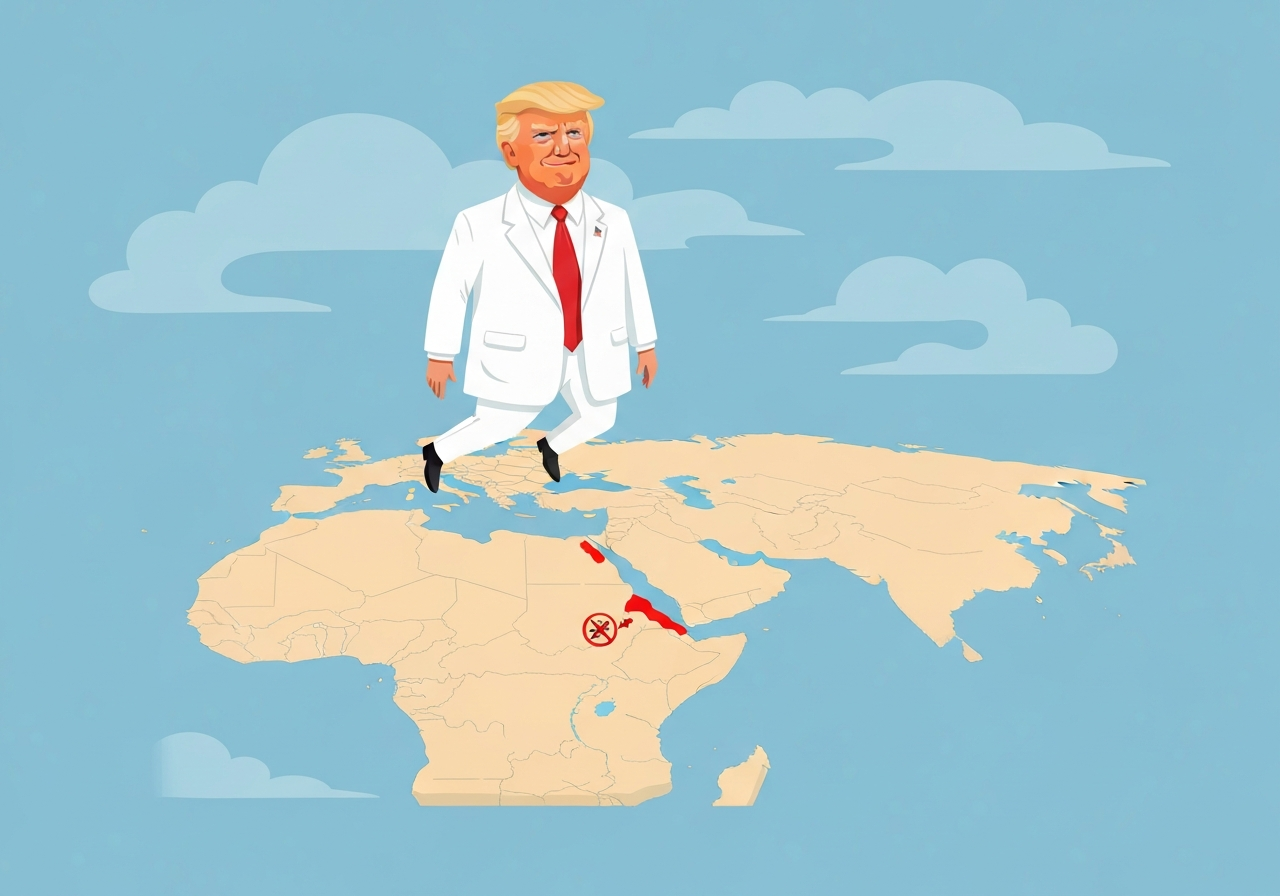
Lead
On March 15, 2026, former U.S. President Donald Trump warned he could postpone a planned summit with Chinese leader Xi Jinping unless Beijing assists in securing the Strait of Hormuz, according to reporting by Bloomberg citing an interview in the Financial Times. Trump framed the demand around China’s reliance on Middle East oil as tensions tied to the US–Israel war have tightened global energy flows. He repeated a call — made a day earlier — for China to join a multinational effort to send ships to the strait, which handles about one-fifth of the world’s seaborne oil. The statement adds a new point of friction between the two economic superpowers ahead of a high-profile bilateral meeting.
Key Takeaways
- Trump signaled on March 15, 2026 that he might delay a Xi summit if China refuses to help secure the Strait of Hormuz, per Bloomberg reporting of an FT interview.
- The Strait of Hormuz transits roughly 20% of global seaborne oil; disruptions there have immediate market and diplomatic effects.
- Trump renewed an appeal made the previous day for China to participate in a multilateral naval deployment to keep the waterway open.
- Reporting links the demand to tightened oil supplies amid the ongoing US–Israel war, which has elevated energy market volatility.
- A delay of a summit between the U.S. and China would raise geopolitical and economic stakes for global trade and energy security.
- Beijing had not publicly committed to a naval role as of the Bloomberg report, leaving implementation and diplomatic fallout uncertain.
Background
The Strait of Hormuz is a narrow chokepoint between the Persian Gulf and the Gulf of Oman through which a substantial share of the world’s oil moves. Historically, disruptions there—whether from state action, proxy attacks, or piracy—cause sharp, immediate ripples in global energy markets. Recent months have seen heightened tension in the Middle East and periodic attacks on shipping and tankers, raising concerns among oil importers and global investors.
U.S.–China relations have oscillated between competition and managed cooperation for years, with high-level summits used to reset the relationship on trade, technology and security. A summit between Trump and Xi Jinping has been under discussion as leaders weigh bilateral and global priorities. Naval deployments to protect commercial shipping are politically sensitive: coalition operations require clear mandates and risk management among participating states, and China’s direct naval engagement outside the western Pacific would be a consequential policy move.
Main Event
According to Bloomberg’s March 15 report, which cites an interview published by the Financial Times, Trump tied the timing of a prospective summit with Xi to Beijing’s willingness to help secure the Strait of Hormuz. He argued that China’s economy depends materially on Middle Eastern crude and that protecting transit routes was therefore in China’s interest. The report frames the comment as part of a renewed effort to enlist China in mitigating oil-supply shocks tied to regional hostilities.
One day before the interview was published, Trump publicly urged China to join a task force to send ships through the strait, a move he presented as a collective security measure to keep an essential energy artery open. The proposal does not, in the Bloomberg account, identify specific rules of engagement, command structures, or which nations would participate beyond the United States and China. Operational details remain the most immediate barrier to any rapid deployment.
Beijing’s official response was not reported as committing to the plan at the time of Bloomberg’s story. Chinese authorities have historically been cautious about participating in military coalitions led by other powers or participating in operations that might be framed as taking sides in regional conflicts. Any decision by China would weigh strategic relationships, domestic political considerations, and the risks to Chinese personnel and assets.
Analysis & Implications
If Trump follows through on delaying a summit, the move would transform an energy-security ask into a bilateral leverage point, increasing diplomatic pressure but also raising the political cost of cooperation. For China, acquiescing to a U.S.-led or U.S.-proposed maritime operation could be perceived domestically and regionally as a step toward alignment with American security priorities, complicating Beijing’s relationships in the Middle East.
For global markets, a public standoff over the summit timetable could be destabilizing. Energy traders react not only to physical disruptions but to the prospect of fractured diplomacy among major consumers and suppliers. Uncertainty about whether China will commit ships or logistical support could keep risk premia elevated in oil prices and shipping insurance costs.
Strategically, a China contribution would mark a significant evolution in Beijing’s approach to maritime security beyond its near seas. That could spur secondary effects: new naval logistics arrangements, expanded intelligence-sharing formats, and pressure on regional states to choose sides or mediate. Conversely, a refusal by China could push the U.S. and its partners toward alternative coalitions, increasing naval activity and the risk of miscalculation in a crowded theater.
Comparison & Data
| Metric | Value |
|---|---|
| Share of global seaborne oil via Strait of Hormuz | ~20% |
| Report date | March 15, 2026 |
| Reported summit status | Possible delay conditional on Chinese action |
The table above places the central facts in context: the strait’s outsized role in energy flows, the timing of the report, and the conditional nature of Trump’s summit comment. Past incidents that interrupted transit through Hormuz have produced immediate price spikes and calls for naval escorts; any escalation in naval activity this time would be weighed against those precedents.
Reactions & Quotes
“If Beijing does not act to help secure the Hormuz, I may delay the summit with Xi,” the interview as reported framed the former president’s position as linking summit timing to Chinese action on maritime security.
Financial Times via Bloomberg
Bloomberg noted the call came amid concerns that the US–Israel war has tightened oil supplies and increased the urgency of keeping key sea lanes open.
Bloomberg (news)
Analysts told reporting outlets that forming a multinational naval task force would require detailed legal mandates, clear rules of engagement and assurances that deployments would not be construed as taking sides in regional conflicts.
Security analysts, as reported in media coverage
Unconfirmed
- Whether Xi Jinping or senior Chinese officials have privately agreed to deploy naval ships in the Strait of Hormuz remains unconfirmed.
- The precise composition, mandate, command arrangements or participating states for any proposed maritime task force were not detailed in the reporting and remain unclear.
- Any formal decision to delay a summit date has not been independently confirmed by U.S. or Chinese government statements at the time of the report.
Bottom Line
The Bloomberg report—drawing on an FT interview—shows a deliberate tactic: linking a diplomatic summit to immediate security cooperation on a critical energy chokepoint. The approach raises the stakes of the U.S.–China relationship by making a high-level meeting conditional on operational support in a volatile theater. For markets and allies, the key near-term variables are Beijing’s response and whether concrete operational plans emerge for protecting transit through Hormuz.
Observers should watch for official statements from Beijing or Washington clarifying the summit schedule, any bilateral or multilateral planning on maritime security, and signals from other potential participants. Those indicators will determine whether the story remains a bargaining posture reported by the press or evolves into executed policy with tangible operational and geopolitical consequences.
Sources
- Bloomberg — (news report citing Financial Times)
- Financial Times — (interview reporting referenced by Bloomberg)