
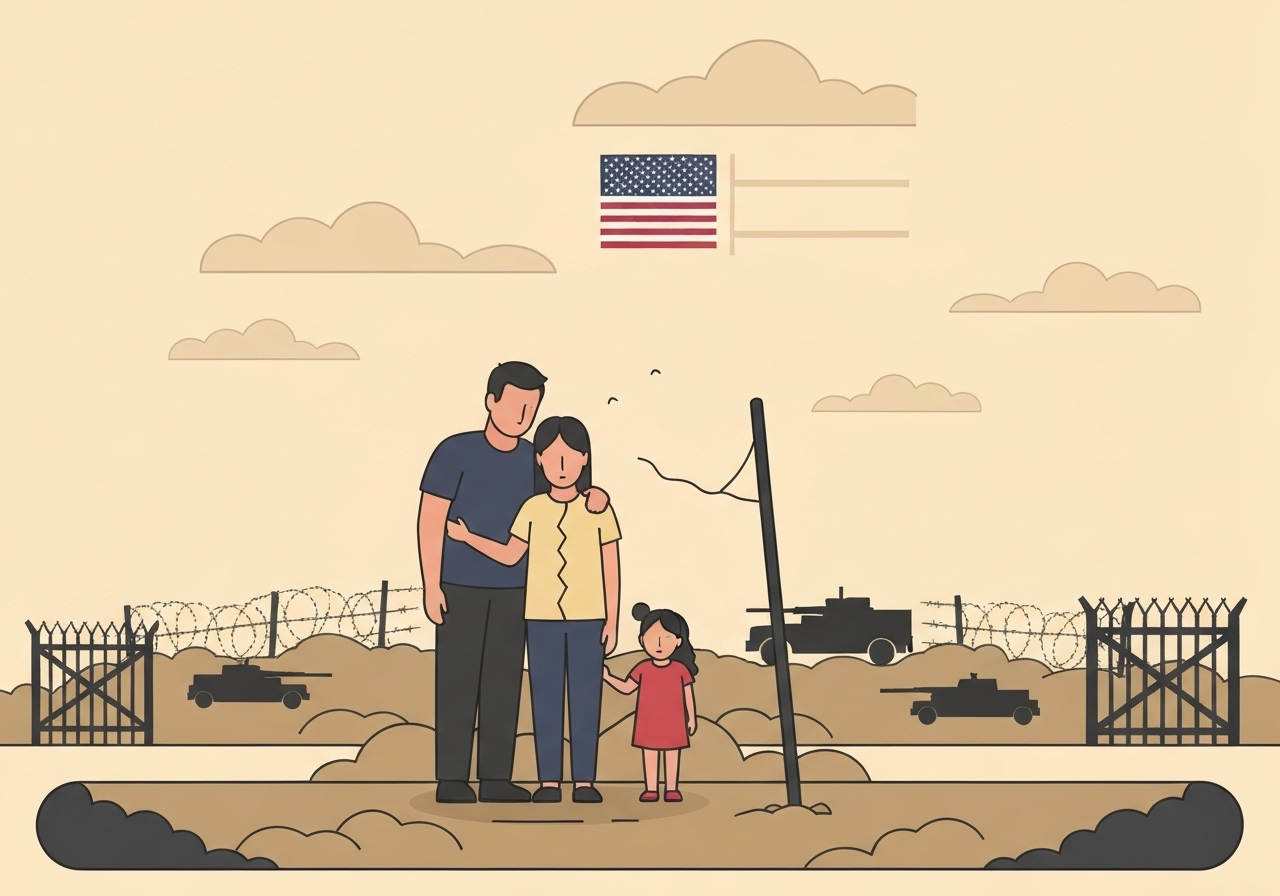
On Nov. 17, 2025, federal Border Patrol agents led a high-profile enforcement operation in Charlotte, N.C., centered in a Home Depot parking lot and immigrant neighborhoods, resulting in at least 130 arrests through Sunday. The sweep, which included Gregory Bovino — a Border Patrol official previously prominent in immigration actions in Los Angeles and Chicago — moved a signature Trump administration enforcement approach into a competitive, purple jurisdiction. Witnesses reported more than a dozen agents at the scene; a masked agent told a resident they were “searching for criminals.” Local leaders warned the raids could produce political backlash in a county where Mr. Trump has recently made gains.
Key Takeaways
- Operation location: Charlotte, Mecklenburg County, North Carolina; an enforcement staging point was a Home Depot parking lot where agents assembled.
- Personnel: Reports indicate more than a dozen federal agents participated; Gregory Bovino, a Border Patrol official known from earlier Los Angeles and Chicago actions, was present.
- Arrests: At least 130 people were detained through Sunday as a result of the multi-day operation.
- Public reaction: Local businesses and corridors serving Hispanic communities were notably quieter during the weekend of the operation.
- Political stakes: Officials including Republican councilor Edwin Peacock III warned of electoral consequences if similar enforcement continues in contested urban areas.
- Geography and demography: Mecklenburg County has a long-established and growing Latino population with concentrated neighborhoods and businesses in Charlotte.
Background
Federal immigration enforcement under the Trump administration has previously focused high-profile actions in large Democratic cities, including Los Angeles and Chicago, where aggressive tactics drew national attention. Gregory Bovino became a visible face of that approach after confrontations in Chicago that later brought judicial rebuke; his presence has symbolically linked earlier crackdowns to the Charlotte operation. The expansion into a southern battleground county represents a tactical and political shift: Charlotte is part of one of the fastest-growing metropolitan regions in the country and a jurisdiction that has swung between parties in recent cycles.
Mecklenburg County’s Latino communities are woven into commercial corridors, churches and small businesses that serve as daily hubs for residents. Operations of this scale tend to produce immediate disruptions to those economic and social routines, reducing foot traffic and prompting heightened fear among mixed-status families. Local officials, including moderates across the political spectrum, often face pressure to balance public-safety cooperation with federal authorities against community trust and civil-rights concerns.
Main Event
Reporting by Eduardo Medina and Bernard Mokam indicates that agents staged in a Home Depot parking lot and then dispersed into immigrant neighborhoods across Charlotte over several days. Observers described federal teams moving through residential areas and detaining people during the operation; officials say the aim was to locate individuals with outstanding immigration cases or criminal records. The deployment included masked agents and marked Border Patrol personnel, and at least 130 arrests were reported by Sunday evening.
When residents questioned the presence and purpose of the operation, a masked agent responded that they were searching for criminals, according to on-scene accounts. The visible staging and detentions left business corridors quieter than usual over the weekend, as community members either stayed away or sheltered at home. Local law enforcement cooperation and the exact operational commands have not been fully detailed in public reporting to date.
Political figures in Charlotte quickly interpreted the sweep through an electoral lens. Edwin Peacock III, a moderate Republican who recently lost an at-large council race, warned that such tactics could provoke voter backlash. Other community leaders framed the operation as a test of how far federal enforcement will extend into politically competitive areas and how local institutions will respond to protect residents’ rights and civic participation.
Analysis & Implications
Bringing a visible Border Patrol operation into Mecklenburg County carries layered implications: operational, social and political. Operationally, deploying agents in densely populated urban neighborhoods poses logistical challenges and heightens the risk of public confrontation, especially when local community members perceive actions as sweep-style targeting. Such tactics can produce rapid short-term detention numbers but also strain relationships that local agencies and social-service providers rely on to maintain public safety and cooperation.
Socially, the immediate chilling effect on Hispanic-owned businesses and congregations can be significant. When residents avoid public spaces out of fear, commerce, education and access to health or legal services can suffer — consequences that compound over time and erode trust between immigrant communities and government institutions. The presence of a high-profile figure like Gregory Bovino — already associated with prior controversial operations — magnifies those trust costs.
Politically, the choice to conduct conspicuous enforcement in a competitive county is both message and test. For the administration, it signals commitment to strict immigration priorities and an intent to demonstrate results beyond traditional battlegrounds. For local and state politicians, it forces a reckoning: distance from federal tactics risks appearing unsupportive of law enforcement, while alignment risks alienating immigrant and moderate voters. Early warnings from local Republicans suggest the operation could reshape voter sentiment in narrowly decided areas.
Looking ahead, if similar operations continue in other purple jurisdictions, analysts should watch voter-registration trends, turnout among Latino communities, and any shifts in municipal policing cooperation. Federal courts and civil-rights groups may also engage, potentially producing legal challenges that could constrain or clarify enforcement practices.
Comparison & Data
| Measure | Value |
|---|---|
| Arrests reported through Sunday | At least 130 |
| Operation staging point | Home Depot parking lot, Charlotte, N.C. |
The table above consolidates two concrete data points reported for the Charlotte sweep: the minimum arrest total and the public staging location. While one operation’s raw arrest count is measurable, meaningful comparison to prior Los Angeles or Chicago deployments requires consistent metrics — for example, arrests per capita, charges filed versus administrative detentions, and subsequent prosecutions — none of which are yet publicly available for the Charlotte action.
Reactions & Quotes
“There is going to be a political response to this,”
Edwin Peacock III, Charlotte City Council (moderate Republican)
Peacock, who recently lost an at-large council race, suggested the enforcement could hurt his party politically if similar operations continue in urban centers.
“We are searching for criminals,”
Masked federal agent (on-scene, Charlotte)
The succinct on-the-ground reply to a resident’s question framed the operation as focused on public-safety targets; however, community witnesses reported widespread fear and confusion about criteria used for detentions.
Unconfirmed
- Whether local law enforcement provided formal operational support or real-time intelligence for the Charlotte sweep remains unspecified in available reporting.
- Any detailed breakdown of the 130 reported arrests — including criminal charges, immigration violations, or charging jurisdiction — has not been publicly disclosed.
- Longer-term political effects on specific electoral outcomes in Mecklenburg County are possible but speculative at this stage and lack direct causal evidence.
Bottom Line
The Charlotte operation represents a deliberate extension of a high-visibility immigration enforcement strategy into politically competitive territory. It delivered measurable short-term results — at least 130 arrests — while producing immediate social and economic friction in Latino neighborhoods and business corridors.
Beyond the arrests themselves, the deployment raises political and governance questions: how federal priorities intersect with local politics, how community trust will be rebuilt if strained, and whether legal or civic responses will follow. Closely watched local election dynamics and forthcoming disclosures about operational details will determine whether this sweep becomes an isolated incident or a model replicated in other battleground jurisdictions.
Sources
- The New York Times (news outlet) — reporting by Eduardo Medina and Bernard Mokam, Nov. 17, 2025.