
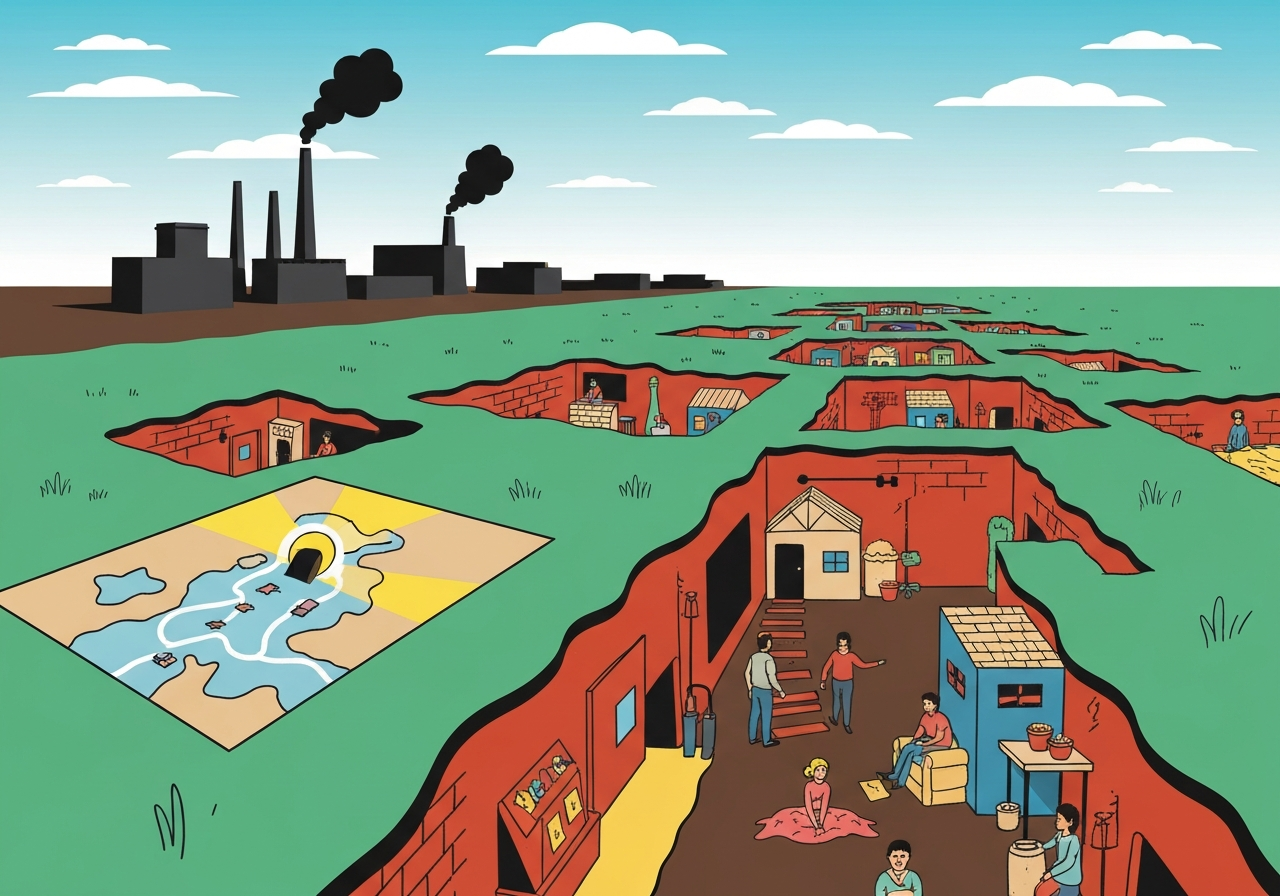
On the night of Feb. 2–3, 2026 in Springfield, Ohio, local residents opened spare rooms and basements to Haitian families who feared immediate immigration enforcement after the Trump administration moved to terminate Temporary Protected Status (T.P.S.) for Haiti. More than 10,000 Haitians live in Springfield, a city of about 58,000 between Dayton and Columbus, many relying on T.P.S. to work legally. A federal court temporarily blocked the administration’s planned termination that would have taken effect on Feb. 3, but the government has appealed and sought emergency review in related litigation that could broaden its authority to end T.P.S. nationwide. In response, community members have organized informal “safe houses” as short-term shelters while legal fights continue.
Key Takeaways
- Springfield, Ohio hosts over 10,000 Haitian residents within a population of roughly 58,000, making the community a local focal point for T.P.S.-dependent families.
- The Trump administration moved to end Haiti’s T.P.S. effective Feb. 3, 2026; a lower court temporarily enjoined that termination on Feb. 2, 2026.
- Officials have appealed the injunction and asked higher courts for emergency relief; a separate request to the Supreme Court in a Syrian-related case could affect T.P.S. policy more broadly.
- Local volunteers and hosts have converted spare bedrooms and basements into informal shelters to protect families from possible enforcement actions.
- Community mobilization includes housing, legal clinics and rapid-response networks intended to provide temporary refuge and legal referrals.
- If T.P.S. protections end, thousands could immediately become removable, increasing pressure on local services and courts and prompting potential large-scale enforcement operations.
Background
Temporary Protected Status is a humanitarian immigration designation that allows nationals of designated countries to live and work in the United States when conditions in their home country are unsafe. The program has been used for decades in waves tied to natural disasters, armed conflict and other crises. The Trump administration announced plans to terminate T.P.S. for Haiti with an effective date of Feb. 3, 2026, a move that would render many long-standing residents unprotected by federal authorization.
Springfield’s Haitian population surged after events beginning in 2024 reshaped migration patterns, and local leaders say many residents have established families, jobs and community ties in the city. Those ties, community organizers argue, have made fears of sudden enforcement and deportation particularly acute. Historically, abrupt federal changes to immigration status have prompted rapid local responses, including legal challenges and sanctuary efforts by private citizens.
Main Event
In the days leading up to the Feb. 3 deadline, community volunteers in Springfield prepared private homes to receive families who said they feared leaving their doors open at night. Hosts cleaned rooms, stocked infant supplies and coordinated with lawyers and translators to ensure immediate access to legal counsel. One 70-year-old resident, who had not previously met the family she sheltered, welcomed a Haitian mother and her one-month-old infant late one evening and guided them to a spare bedroom set aside as a temporary refuge.
Anxiety peaked as a federal judge’s decision was expected at midnight on Feb. 2. When the court temporarily blocked the termination, hosts and legal advocates described relief, but cautioned that the injunction was not an end to the dispute. The Justice Department promptly appealed, and a parallel high-profile legal filing relating to Syrian beneficiaries sought emergency action from the Supreme Court, signaling that the administration might press for broader authority to curtail or end T.P.S.
Local organizers have also established hotlines and rapid-response teams to move families to safe houses if local enforcement activity increases. These networks include volunteers providing food, transportation and connections to pro bono attorneys. Organizers emphasize that the safe houses are short-term, emergency shelters intended to buy time while court challenges proceed.
Analysis & Implications
The situation in Springfield illustrates the intersection of national immigration policy and municipal-level consequences. Terminating T.P.S. for Haiti would not only jeopardize individual families but could strain local governments that provide social services, burden school systems and complicate labor markets that rely on immigrant workers. For towns where a substantial share of the workforce holds T.P.S., rapid status loss could produce gaps in essential sectors.
Legally, the injunction underscores that courts will continue to be the battleground for T.P.S. decisions. If appeals courts or the Supreme Court side with the administration, the ruling could set a precedent enabling faster termination of humanitarian programs across multiple beneficiary countries. Conversely, sustained judicial protections would reinforce the discretion of courts to scrutinize agency reasoning and procedures in immigration policy shifts.
Politically, the case will likely intensify national debate over executive power in immigration enforcement. Advocates for migrants frame the safe-house response as community resilience and a necessary protective measure; proponents of stricter enforcement argue that the administration is restoring statutory fidelity and border control. Either outcome will reverberate in upcoming elections and in congressional discussions about legislative solutions to T.P.S. uncertainty.
Comparison & Data
| Metric | Value |
|---|---|
| Springfield population | ~58,000 |
| Estimated Haitian residents in Springfield | More than 10,000 |
| Planned T.P.S. termination effective date | Feb. 3, 2026 |
| Lower court injunction issued | Feb. 2, 2026 (temporary) |
The table above summarizes the immediate numerical context in Springfield and key procedural dates. Those local figures matter because high concentrations of TPS beneficiaries magnify the practical effects of federal decisions; in urban centers with fewer beneficiaries, the same ruling would produce different local dynamics.
Reactions & Quotes
Local leaders and national groups responded quickly after the injunction and subsequent appeals were announced. Below are representative remarks with context.
We are preparing to shelter families for as long as the legal fight demands; neighbors cannot leave people without options overnight.
Local volunteer host
The host’s comment followed a night when spare rooms and basements were readied with infant supplies and bedding. Volunteers described coordinating with legal aid groups to ensure that any sheltered family could access counsel without leaving the house unnecessarily.
The department is committed to enforcing immigration laws while we pursue appeals consistent with its legal authority.
U.S. Department of Justice spokesperson
The Justice Department’s statement accompanied filings asking higher courts to lift the injunction. Officials framed the action as a legal challenge over statutory interpretation and agency discretion rather than an immediate enforcement order.
Court protections buy time, but advocates urge durable solutions from Congress to prevent repeated crises.
Advocacy attorney (civil liberties organization)
Advocates emphasized that judicial relief, while potentially decisive in the short term, does not resolve underlying policy uncertainty that affects families and communities over years.
Unconfirmed
- Exact tally of families currently using informal safe houses in Springfield remains incomplete and is based on organizer estimates rather than a formal census.
- The timing and scale of any potential enforcement operation in Springfield have not been publicly scheduled by federal authorities.
- Whether the Supreme Court will accept emergency review in the related Syrian case and the precise scope of any ruling remain unresolved.
Bottom Line
Springfield’s rapid community response of converting homes into temporary shelters highlights how federal immigration decisions translate into immediate local action. Even with a temporary injunction protecting T.P.S. beneficiaries, the underlying legal challenges and appeals mean uncertainty will persist for months, if not longer.
Watch for three developments that will determine the next phase: appeals court rulings, any Supreme Court emergency order, and federal enforcement plans. Meanwhile, local networks—legal clinics, hosts and service providers—will continue to be crucial buffers for families caught between shifting policy and persistent community ties.
Sources
- The New York Times (news reporting)
- U.S. Citizenship and Immigration Services (official guidance on T.P.S.)
- U.S. Department of Justice (official statements and court filings)
- American Civil Liberties Union (advocacy and legal analysis)