
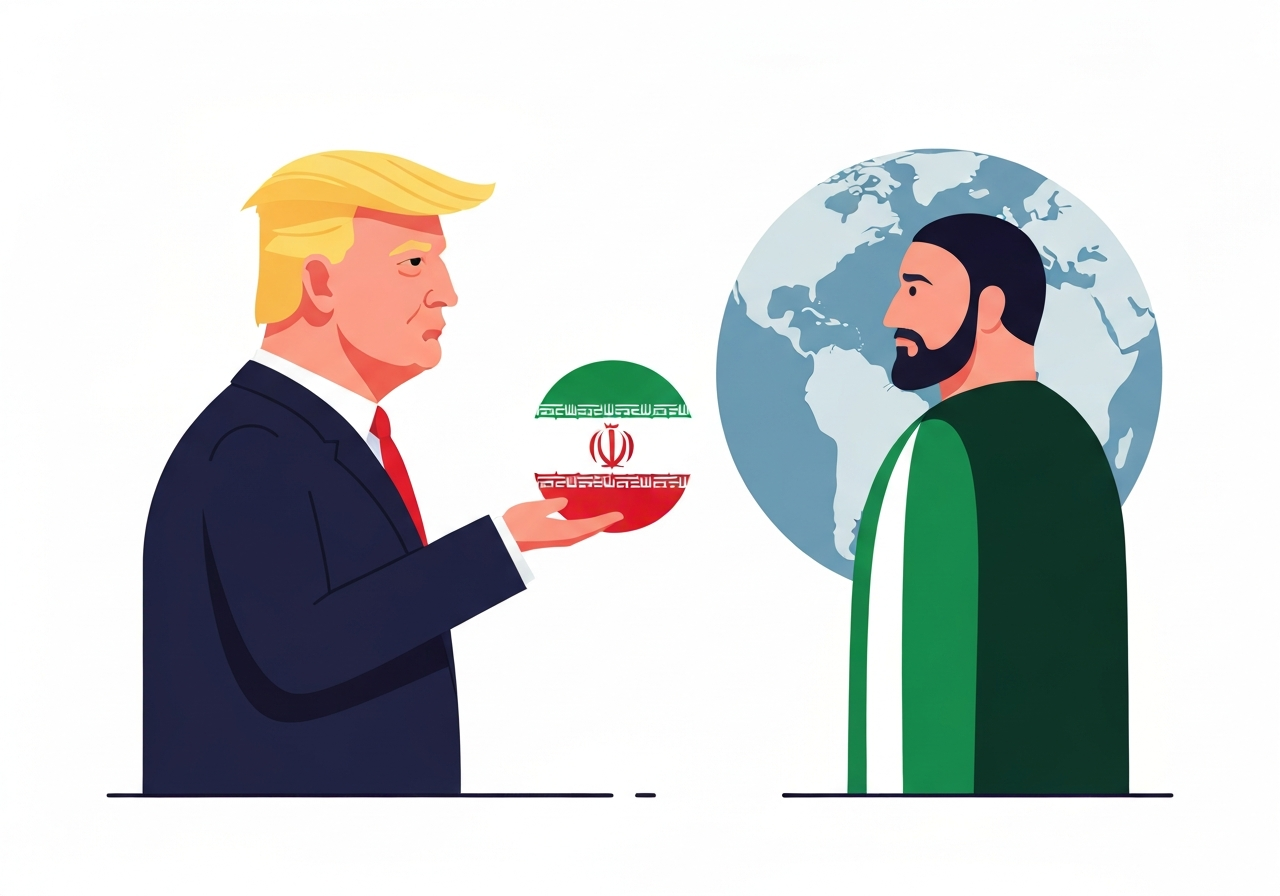
On , former president Donald Trump told Fox News that Iran is “talking to” the United States and suggested a negotiated outcome could prevent American military strikes. He said a large naval force, led by the USS Abraham Lincoln carrier group, is moving toward Iranian waters while negotiations continue, and that some operational details are being withheld from regional partners for security reasons. Tehran has responded with guarded openness to talks on nuclear issues but insisted its missile and defensive capabilities not be on the agenda. The deployment and rhetoric have raised concerns of potential escalation as both sides signal readiness to negotiate or to fight.
Key Takeaways
- Trump said Iran was “talking to” the U.S. and hinted at a possible deal to avoid strikes, commenting on Fox News on 31 January 2026.
- The U.S. has deployed a naval battle group led by the USS Abraham Lincoln off Iran’s coast; Trump described it as “a big fleet” en route.
- Iran warned it would respond with missile strikes on U.S. bases, ships and allies, including Israel, in the event of an attack.
- Iranian officials signalled conditional openness to nuclear talks if missiles and defenses are excluded from the agenda.
- The U.S. designated the Islamic Revolutionary Guard Corps (IRGC) a terrorist organisation in 2019; the EU followed on Thursday (as reported), prompting strong Iranian objections.
- Domestic unrest in Iran has been intense since protests began on , with an official death toll of 3,117 and an alternative tally of 6,563 reported by the US-based Human Rights Activists News Agency (HRANA).
- Iran staged a two-day live-fire naval exercise in the Strait of Hormuz, and U.S. Central Command warned against unsafe behaviour near U.S. forces.
Background
U.S.–Iran tensions have a long history, punctuated by sanctions, proxy conflicts and periodic direct military confrontations. The IRGC has been a central focus of U.S. policy since its designation as a foreign terrorist organisation in 2019, a step that deepened Tehran–Washington hostility and complicated diplomatic channels. In June prior to these developments, U.S. forces struck key Iranian nuclear sites during a brief period when Washington joined Israel in a 12-day war with Iran’s regional adversary, increasing the risk of retaliatory steps.
Domestic politics in Iran have also fed the crisis. Protests that began on over rising costs of living widened into a broader anti-government movement by early January, peaking on and . Tehran reports an official death toll of 3,117, while HRANA, a U.S.-based monitoring group, reported 6,563 deaths including 6,170 protesters and 124 children. These figures have heightened international scrutiny and provided one stated rationale for U.S. intervention talk.
Main Event
On 31 January 2026 Trump told Fox News that Iran was “talking to us” and that officials were “negotiating,” while also warning that military options remained on the table if diplomacy failed. He said a large U.S. naval force led by the USS Abraham Lincoln was heading toward Iran’s waters and that some operational plans were withheld from regional allies for security reasons. Trump framed secrecy as necessary to protect operations while emphasising negotiation as the preferred path.
Tehran’s senior security and political figures struck a mixed tone. Ali Larijani, head of Iran’s Supreme National Security Council, described negotiation arrangements as progressing despite what he called media-driven hype; the Kremlin reported Larijani had met President Vladimir Putin in Moscow. President Masoud Pezeshkian told Egypt’s Abdel Fatah al-Sisi that Iran did not seek war and that broader conflict would harm both Tehran and Washington.
Military leaders in Iran issued stark cautions. Army chief Amir Hatami warned the U.S. and Israel that Iranian forces were “at full defensive and military readiness” and would respond to any attack with strikes that could threaten regional security and Israeli interests, according to state media. Concurrently, Iranian authorities denied that several Saturday incidents, including an explosion in Bandar Abbas, stemmed from sabotage; local firefighters attributed that blast to a gas leak.
U.S. Central Command announced that the Revolutionary Guards planned a two-day live-fire naval exercise in the Strait of Hormuz, and it warned Tehran against unsafe actions near U.S. ships. Iran’s foreign minister, Abbas Araghchi, criticised the U.S. deployment as an attempt to dictate how Iranian forces conduct exercises in their own waters, posting his remarks on X.
Analysis & Implications
The simultaneous movement of a U.S. carrier strike group and public signals of negotiation create a classic deterrence-and-diplomacy mix: force posture to raise costs for Iran while leaving room for a negotiated de-escalation. That posture aims to coerce concessions on Iran’s nuclear and missile behaviour but risks miscalculation if either side interprets the other’s signals as preparatory for attack. The presence of the USS Abraham Lincoln is intended to reassure U.S. domestic and regional audiences while pressuring Tehran; however, secrecy about operational details can alienate partners and complicate unified regional responses.
For Tehran, conditional willingness to talk — explicitly excluding missiles and defence — is both a bargaining stance and a domestic signal of resolve. Iranian leaders appear to be balancing the desire to remove immediate military pressure with the need to avoid concessions that would be politically costly at home. If negotiations proceed with narrow technical scopes, they may reduce short-term risk but leave core issues unresolved, sustaining long-term instability.
Regionally, the situation could affect energy markets and alliance politics. Any military exchange in the Persian Gulf risks disrupting oil transit through the Strait of Hormuz, spiking global prices and pressuring economies dependent on stable energy supplies. Allies such as Israel and Gulf states face a dilemma: coordinate closely with Washington at the risk of being targeted rhetorically by Tehran, or distance themselves to avoid direct escalation. The reported withholding of strike plans from allies underscores this tension.
Comparison & Data
| Item | Official / State | Independent / NGO |
|---|---|---|
| Protest-related deaths | 3,117 (official Iranian figure) | 6,563 (HRANA, US-based) |
| Protest start | 28 December 2025 (nationwide unrest noted) | |
| U.S. naval deployment | USS Abraham Lincoln carrier strike group deployed to Persian Gulf region (reported) | |
The table highlights divergent casualty tallies and the juxtaposition of domestic unrest with external military posturing. Discrepancies in death counts reflect differing methodologies and access: official tallies come from state sources, while HRANA compiles reports from activists and local contacts abroad. Analysts say such gaps complicate international responses and feed competing narratives that shape diplomatic leverage.
Reactions & Quotes
U.S. and Iranian statements have combined assertiveness with limited openings for talks. Below are representative remarks given in context.
“They are negotiating,” Trump said, adding that a large naval formation was en route and that talks could forestall strikes.
Donald Trump, former U.S. president (Fox News interview)
Context: Trump framed the deployment as a pressure tool while insisting negotiation remained possible. His comments emphasised deterrence and the option of diplomacy without detailing concrete bargaining positions.
“Structural arrangements for negotiations are progressing,” Ali Larijani said, seeking to reassure that diplomatic channels exist despite media attention.
Ali Larijani, head of Iran’s Supreme National Security Council
Context: Larijani’s phrasing, reported after a Moscow visit, signals Tehran’s preference for managed, structured talks rather than open-ended bargaining under threat.
“If the enemy makes a mistake… it will endanger its own security,” Amir Hatami warned, stressing Iran’s readiness to respond.
Amir Hatami, Iran’s army chief (state media)
Context: Hatami’s statement frames Iranian military posture as deterrent and underscores official intent to defend perceived red lines, especially regarding attacks on bases, ships or allies.
Unconfirmed
- Whether direct back-channel talks between senior U.S. and Iranian officials have produced concrete terms is not independently verified.
- Claims that specific incidents (including the Bandar Abbas explosion) were sabotage remain unproven; local authorities cited a gas leak.
- Reports that all regional U.S. partners have been kept entirely uninformed of operational plans are based on official U.S. statements and are not corroborated by independent allied confirmations.
Bottom Line
The situation combines coercive military posture with tentative diplomatic openings: Washington’s carrier deployment raises the stakes while public comments from both sides leave space for negotiation. Short-term de-escalation through narrowly focused technical talks is plausible, especially if nuclear issues can be separated from missile and defence matters — but that approach may not resolve deeper strategic friction.
Risks remain high. Miscommunication at sea, opaque operational secrecy, and differing domestic political calculations in Washington and Tehran could quickly reverse any progress. Observers should watch whether negotiations move from public signalling to verifiable, trackable steps and whether regional partners are brought into a coordinated approach that reduces the chance of accidental confrontation.
Sources
- The Guardian — international news reporting on 31 January 2026 (media)
- U.S. Central Command — official statements and warnings regarding operations near Iran (official)
- IRNA — Islamic Republic News Agency reporting on Iranian officials’ remarks (state news agency)
- Human Rights Activists News Agency (HRANA) — U.S.-based monitoring group reporting alternate protest casualty figures (NGO)
- The Presidency of the Islamic Republic of Iran — official summaries of presidential calls and statements (official)