
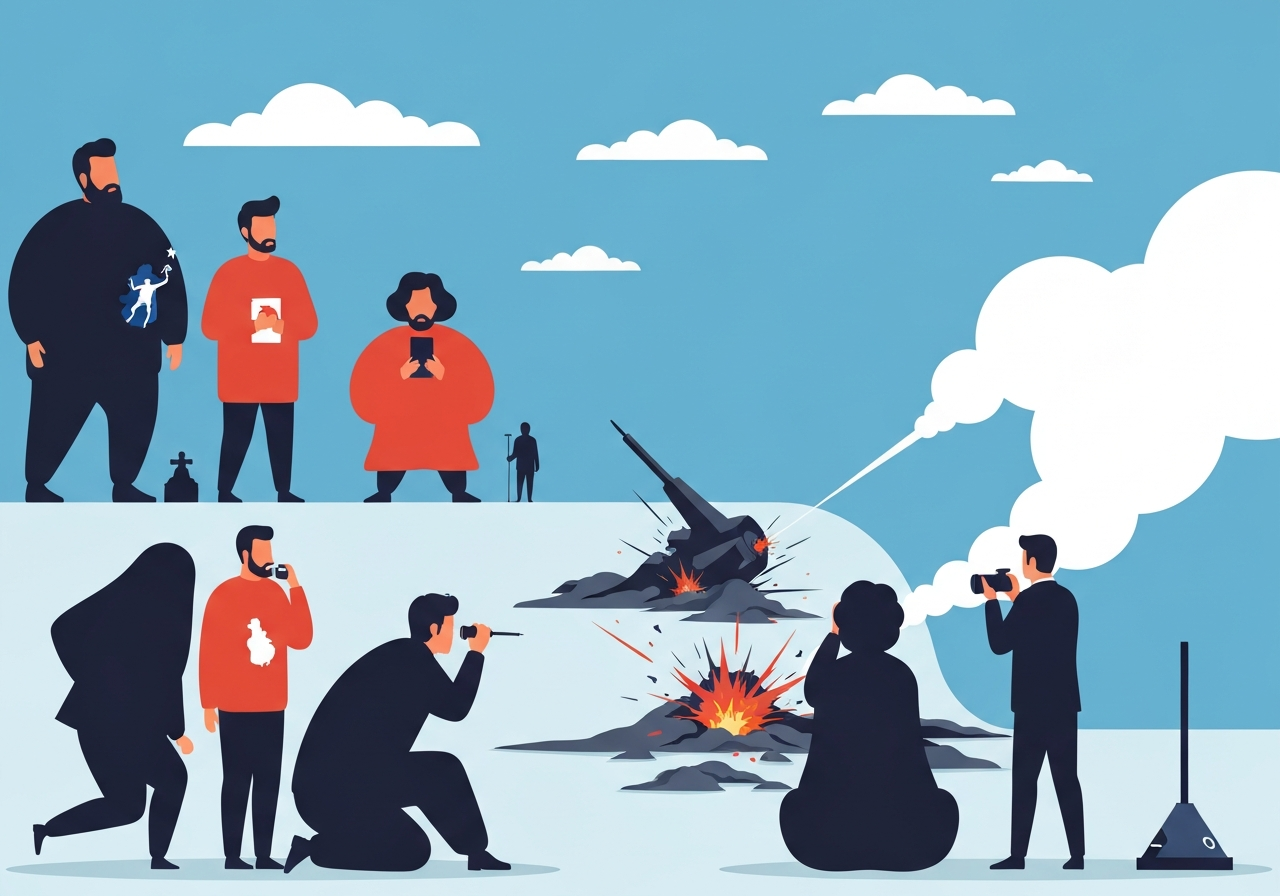
In the days after U.S. and Israeli air strikes struck Iranian cities and a U.S. operation killed Iran’s supreme leader on Saturday, European capitals found themselves largely excluded from planning and response. Leaders from Berlin to Madrid offered a mix of guarded acceptance, public unease and calls for renewed diplomacy while struggling to reconcile security concerns with political constraints. The patchwork of statements reflects growing recognition in Europe that Washington is acting with less deference to long-standing postwar norms. That dynamic is reshaping alliance politics and raising questions about Europe’s ability to influence outcomes in the Middle East.
Key Takeaways
- U.S. and Israeli air strikes hit multiple Iranian cities in early March 2026, following the targeted killing of Ayatollah Ali Khamenei on Saturday; European governments were not part of public planning around those operations.
- German Chancellor Friedrich Merz suggested Europe cannot substitute for U.S. military action, while Spain’s Pedro Sánchez called the strikes destabilizing and France emphasized existing commitments to Ukraine.
- Analysts say the events underscore a broader shift in U.S. behavior under President Trump: unilateral decisions on tariffs, military actions and covert operations that sideline allies.
- European officials face a dilemma: publicly defend the liberal order and rules-based diplomacy while privately managing security risks and limited strategic options.
- The incidents cited include the January 2026 nighttime capture of Venezuela’s president Nicolás Maduro and other recent unilateral U.S. actions that have alarmed allies.
- Immediate regional risks include escalation with Iranian proxies, disruption to energy markets, and increased pressure on NATO’s political cohesion.
Background
The recent round of strikes follows a period of heightened tensions between the United States and Iran. According to public reporting, an operation that killed Iran’s supreme leader occurred on Saturday, and U.S. and Israeli warplanes subsequently struck targets inside Iran. These developments came after months of cross-border incidents and rising rhetoric that had already strained diplomacy.
European leaders have long relied on close coordination with Washington for security planning, diplomatic bargaining and crisis management. That post-World War II architecture assumed transatlantic consultation on major uses of force; recent unilateral moves by Washington have tested those expectations. The result is political discomfort in capitals that must balance public opposition to escalation with the practical need to protect their own citizens and interests.
Domestic politics in several European states complicate responses. Coalition dynamics, public opinion on Middle East policy, and electoral calendars are all factors shaping leaders’ statements. At the same time, European militaries have limited capacity to project power independently at the scale of U.S. operations, constraining their leverage in a fast-moving crisis.
Main Event
In the immediate hours after the operation that killed Iran’s top leader, U.S. and Israeli aircraft struck multiple sites across Tehran and other Iranian cities. Publicly available reporting describes concentrated attacks on command-and-control facilities and selected infrastructure. Western officials say the strikes were intended to degrade Iran’s ability to coordinate immediate retaliatory measures, though Iranian state media reported civilian casualties.
European capitals received briefings after strikes began, officials say, but were not included in prior operational planning. That exclusion left allies responding in diplomatic channels rather than on the military planning floor. Statements from EU foreign ministers called for restraint and a return to dialogue, but with differing emphases about blame and next steps.
Chancellor Friedrich Merz of Germany offered cautious praise for actions he said Europe could not undertake alone, while Spain’s Pedro Sánchez condemned the strikes as destabilizing and rhetorically distant from Madrid’s preferred path. President Emmanuel Macron of France sought to redirect attention to Europe’s security work in Ukraine, emphasizing that the continent must maintain readiness in multiple theaters.
Analysis & Implications
First, the episode highlights a growing decoupling between U.S. operational choices and allied expectations. Under President Trump, policymakers in Washington have repeatedly launched actions—from aggressive tariff measures to targeted military operations—without seeking sustained allied endorsement. That pattern erodes routine consultation and forces allies into reactive postures.
Second, Europe’s strategic autonomy remains limited. Political leaders may wish to shape outcomes, but military capability gaps, logistical constraints and dependence on U.S. intelligence and force projection curtail rapid independent action. The result is a recurrent bifurcation: strong diplomatic language but limited coercive follow-through.
Third, the strikes raise acute regional risks. Iran’s network of allied militias and proxy actors across Iraq, Syria, Lebanon and Yemen could mount asymmetric responses that complicate Western force posture and threaten commercial shipping and energy infrastructure. Markets and transit routes will likely react to prolonged uncertainty.
Finally, there are longer-term political costs for the transatlantic relationship. When Washington bypasses allies on high-stakes operations, it reduces trust and bargaining leverage in multilateral fora. That dynamic could push Europe to accelerate investment in defense capabilities, deepen strategic ties with like-minded partners, or seek new diplomatic frameworks to manage crises independently of U.S. leadership.
Comparison & Data
| Event | Date | U.S. Approach |
|---|---|---|
| Targeted killing of Ayatollah Ali Khamenei | Saturday (reported) | Direct action without public allied planning |
| Strikes on Iranian cities | Early March 2026 | U.S. and Israeli air operations |
| Night capture of Nicolás Maduro | January 2026 | U.S. operation cited in reporting |
The table summarizes recent incidents cited by Western reporting to illustrate a pattern of unilateral U.S. action. While dates and operational details are drawn from public reports, many operational specifics remain classified or contested. European leaders now face the practical task of preparing for spillover while negotiating diplomatic responses in multilateral settings.
Reactions & Quotes
European leaders issued a spectrum of responses that reflect competing priorities and domestic constraints.
“Europe cannot be expected to do everything alone; there are limits to what we can deliver militarily,”
Chancellor Friedrich Merz, Germany (public statement)
Merz’s comment framed a pragmatic acceptance of operational limits while signaling a need for clearer burden-sharing. By contrast, Spain’s prime minister emphasized the dangers of escalation.
“These strikes risk destabilising the region and must be met with renewed diplomacy,”
Prime Minister Pedro Sánchez, Spain (official statement)
France emphasized continuity in its commitments to other theaters and the importance of coordinated international responses.
“Europe must remain focused on its obligations and prepare for all contingencies,”
President Emmanuel Macron, France (press remarks)
Analysts noted the symbolic weight of these divergences, suggesting limited near-term impact on operational conduct but meaningful political consequences for alliance cohesion.
Unconfirmed
- No independent public verification yet exists of the full operational planning that led to the strikes; the extent of allied foreknowledge is not confirmed.
- Attribution of all reported casualties and damage inside Iran is contested; independent casualty counts have not been released.
- Claims about legal authorization at the U.N. or formal allied approval for the operation have not been publicly substantiated.
Bottom Line
The recent strikes and the removal of Iran’s top leader, as reported, mark a pivotal moment for transatlantic relations: allies are being asked to respond to major security events without having been part of their shaping. That dynamic strains political cohesion and forces difficult calculations in capitals balancing public opinion, security interests and legal norms.
In practical terms, Europe is likely to increase diplomatic engagement, press for de-escalatory mechanisms and accelerate discussions on strategic autonomy and defense investment. For U.S.-Europe ties, the test will be whether consultation can be restored quickly enough to prevent a deeper trust deficit and expanded regional escalation.
Sources
- The New York Times — News reporting and analysis (primary article)
- Johns Hopkins SAIS (Vali R. Nasr profile) — Academic institution (expert commentary)