
Lead
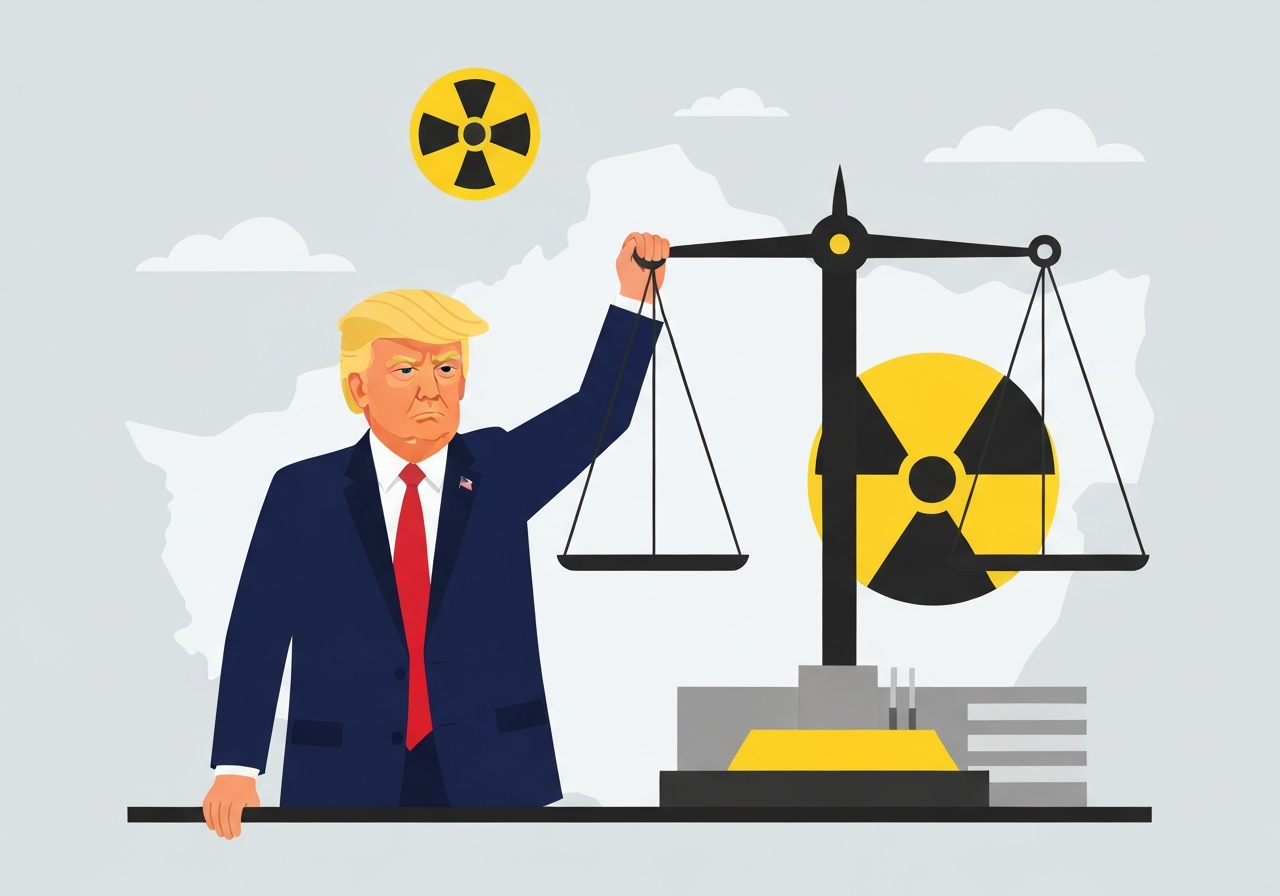
President Donald Trump has been publicly weighing a high-risk ground operation to seize or destroy near-bomb‑grade nuclear material reportedly stored beneath a mountain in central Iran, officials and analysts say. The deliberations intensified in mid‑March 2026 after renewed U.S. warnings that Tehran was nearing a nuclear weapon capability. The potential mission, discussed in private and referenced in public remarks, would aim to remove or neutralize fissile material believed to be at or near Isfahan; planners warn it would carry exceptional operational and political hazards. If ordered, the operation could reshape the war’s next phase and complicate efforts to end hostilities quickly.
Key Takeaways
- President Trump publicly reiterated in March 2026 that Iran was close to a weapon and suggested striking now to prevent its use; he said it could be used “within one hour or one day.”
- U.S. debate has shifted to whether a commando mission should “go in and get it,” language cited recently by Secretary of State Marco Rubio to Congress, reflecting consideration of a ground seizure.
- The material in question is described as near‑bomb‑grade fuel, believed concentrated in storage canisters under a mountain near Isfahan and possibly in tunnel complexes such as Pickaxe Mountain near Natanz.
- Experts warn that piercing storage canisters risks toxic and radioactive gas release and, if assemblies cluster, a risk of an accelerating nuclear reaction; exact locations and consolidation of the fuel remain uncertain.
- Military planners assess such an operation as more complex and perilous than past U.S. raids, including the 2011 operation that killed Osama bin Laden.
- Stopping combat now, without securing the material, could leave a weakened but embittered Iranian regime with means and expertise to pursue a bomb, analysts say.
Background
Concerns about Iran’s enrichment program have dominated U.S. policy debates for two decades and intensified after Tehran’s steps to expand enrichment capacity following the collapse of the 2015 nuclear accord. By March 2026 U.S. officials and the president argued publicly that Iran had moved far enough along to pose an imminent threat to regional partners, especially Israel. The claimed presence of near‑bomb‑grade material in hardened, underground stores has focused attention on facilities near Natanz and Isfahan, where centrifuge halls and tunnel complexes exist.
Historical precedent complicates choices. Past U.S. operations to remove or destroy sensitive material have been enormously difficult and politically consequential; the 2011 raid on Osama bin Laden’s compound required precise intelligence and specialized forces and carried substantial risk. Military and civilian stakeholders — from the Joint Chiefs to civilian national security advisers — weigh operational feasibility against escalation risk. Congress and allied capitals are also monitoring deliberations, mindful that any ground incursion into Iran would carry broad diplomatic fallout.
Main Event
In public comments in mid‑March 2026, Mr. Trump framed an attack as aimed at preventing an Iranian atomic strike, asserting urgency and repeating that Tehran would use a weapon quickly if it had one. Reporters pressed him on whether he was considering a ground recovery of fissile material; Mr. Trump declined to give operational details, saying that answering such questions would be inappropriate for a president to disclose. He also declared on multiple occasions that ground operations did not frighten him personally.
Senior U.S. policymakers have discussed options ranging from surgical strikes to a commando extraction of canisters believed to hold near‑bomb‑grade fuel. Senator and Secretary of State Marco Rubio told Congress recently that the only way to be sure was to send special operations forces to “go in and get it,” summarizing a line of thinking among some advocates for a forceful removal. Military planners caution that uncertainty about exact storage locations and canister condition would complicate any raid.
Operational planners have highlighted three immediate dangers: locating and accessing buried or tunnel‑protected stores; avoiding dispersion of radioactive or toxic gas if canisters are breached; and preventing an inadvertent criticality event if assemblies come too close together. Planners also note the challenge of extracting material under fire and the likelihood of rapid Iranian military and militia retaliation across the region.
Analysis & Implications
A successful retrieval could significantly delay Iran’s ability to assemble a deliverable nuclear weapon and provide tangible proof of U.S. progress toward that aim. But success is far from guaranteed: intelligence gaps about exact stash locations and canister integrity raise the chances of a failed mission or of creating a humanitarian and environmental emergency at the strike site. The tactical benefits must therefore be balanced against strategic risks, including broader regional escalation and international condemnation if civilian harm results.
Politically, a U.S. ground operation inside Iran would harden Iranian resistance and could strengthen factions that favor retaliation, complicating any negotiated end to hostilities. Domestic U.S. politics would also be affected: proponents would portray a decisive action to eliminate a threat, while opponents would emphasize the unpredictability and costs of a deep ground incursion. Allies such as Israel might welcome a move that removes material, but European and regional partners could worry about uncontrolled fallout and legal ramifications.
Economically and logistically, the mission would demand specialized forces, secure transport, temporary custody arrangements for hazardous material, and coordination with intelligence and scientific teams to assess and stabilize canisters. Even with immediate extraction, long‑term custody, monitoring, and verification would require sustained international arrangements; otherwise, the extracted material remains a proliferation concern if not handled under strict safeguards.
Comparison & Data
| Operation | Year | Nature | Relative Complexity/Risk |
|---|---|---|---|
| Bin Laden compound raid | 2011 | Targeted lethal raid | High (precision intel, limited footprint) |
| Attempted Maduro extraction | Early 2026 | Overnight seizure/abduction | High (political risk, contested reports) |
| Hypothetical Isfahan fuel retrieval | 2026 (proposed) | Seizure of hazardous nuclear material | Very high (radiological, technical, escalation risks) |
The table illustrates qualitative differences: past raids focused on personnel and intelligence, while a fuel‑retrieval mission adds radiological hazards and complex custody challenges. Even with superior special operations capabilities, experts say the unknowns about storage geometry, canister condition, and surrounding infrastructure raise the mission’s risk profile markedly above prior high‑risk raids.
Reactions & Quotes
Administration officials defended urgent action to prevent an Iranian bomb, while some national security experts urged caution. Below are representative statements and their contexts.
“They would use it within one hour or one day.”
President Donald Trump (public remarks, March 2026)
This quotation captures the administration’s stated urgency and is central to the argument for immediate, forceful measures to prevent a purportedly imminent strike. Critics argue such characterizations may compress deliberation time and risk hasty action.
“Go in and get it.”
Secretary of State Marco Rubio (testimony to Congress)
Rubio’s blunt formulation summarizes a faction within Washington advocating a commando seizure. Military staffers note, however, that the phrase understates the complex engineering, medical and containment needs of handling fissile material safely.
“If the war ends before the material is secured, we would risk leaving a regime that still has the means and knowledge to pursue a bomb.”
Matthew Bunn (nuclear specialist, quoted in analysis)
Bunn’s assessment highlights a strategic dilemma: ending kinetic operations without eliminating key material could leave proliferation risks intact. Experts stress that eliminating capability, not only military pressure, must be part of durable solutions.
Unconfirmed
- Precise locations and consolidation of the near‑bomb‑grade material remain unverified; public reporting relies on a combination of classified intelligence and on‑the‑record statements.
- Whether Mr. Trump has formally authorized planning for a specific ground seizure operation has not been confirmed by an official, attributable source.
- The exact condition of storage canisters (corrosion, containment integrity) and the potential for toxic gas release if breached are not publicly documented.
Bottom Line
The core decision facing the president is whether the potential strategic gain of recovering or destroying Iran’s near‑bomb‑grade material outweighs the operational, humanitarian and geopolitical risks. A successful operation could blunt Iran’s pathway to a weapon, but the intelligence gaps, radiological dangers, and high probability of regional escalation make success uncertain and costs potentially large.
Policymakers and the public should expect difficult trade‑offs: delay risks allowing Iran to further consolidate capabilities, while a rushed or poorly prepared raid risks catastrophic consequences. Any final choice will hinge on the quality of on‑the‑ground intelligence, the readiness of specialized containment and transport capacity, and allied diplomatic calculations.
Sources
- The New York Times (news report and analysis)