
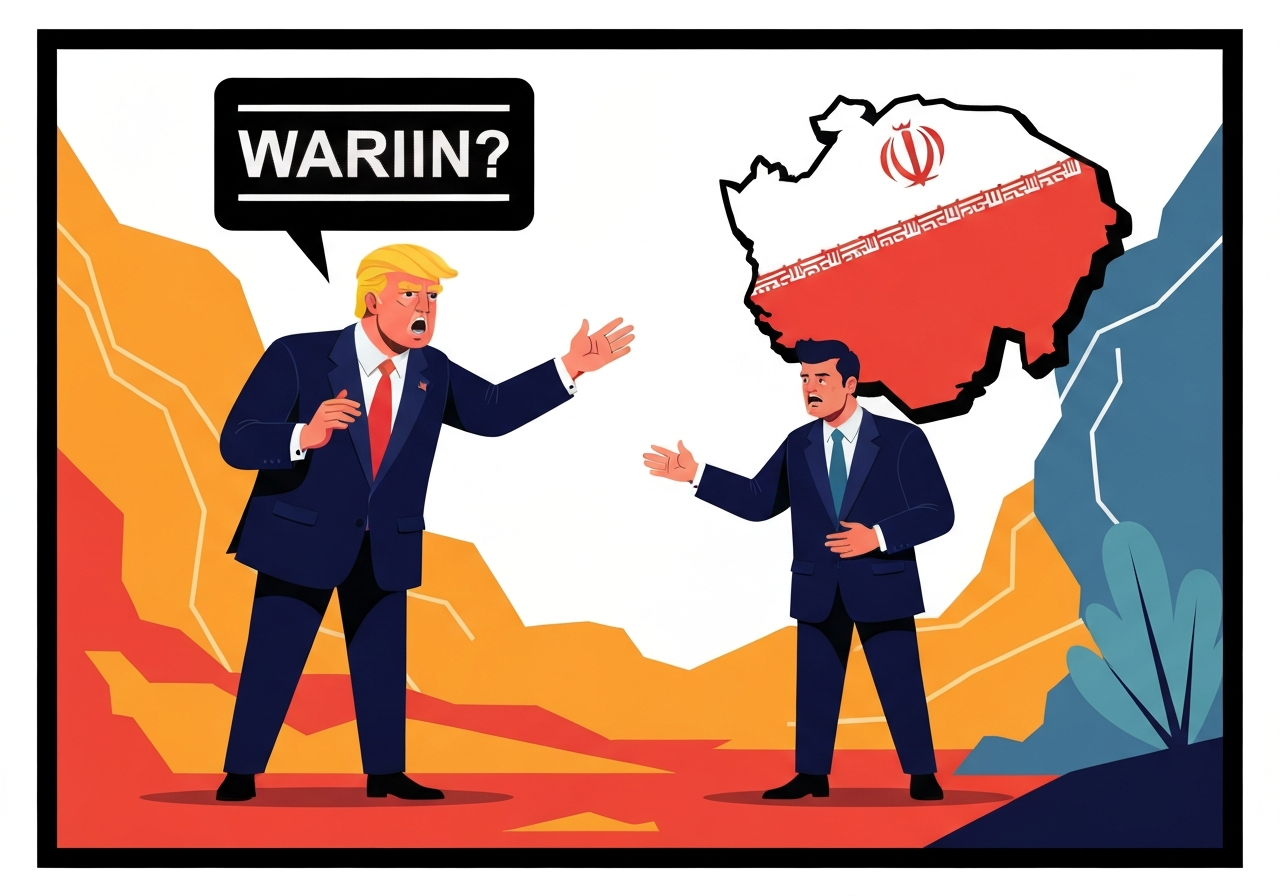
President Donald Trump used a profanity-laced social media post on Sunday to threaten Iran over the Strait of Hormuz, hours after U.S. forces carried out a high-risk rescue of a downed U.S. Air Force colonel inside Iran. The rescue — described by Trump as involving “dozens” of aircraft — followed the shoot-down of two U.S. fighter jets and intermittent Iranian fire that also struck several rescue aircraft. Israeli officials, speaking on condition of anonymity, said they provided intelligence support and temporarily halted strikes in the search area. Fighting across the region continued through Easter observances, while international agencies voiced alarm about operations near Iran’s Bushehr nuclear plant.
- U.S. rescue: A U.S. Air Force colonel was recovered early Sunday after more than a day behind enemy lines; Trump credited a large multi-aircraft operation.
- Aircraft losses: Two U.S. fighter jets were shot down — the first such losses in over 20 years — and several rescue aircraft were reported hit by Iranian fire.
- Casualties and incidents: Since the conflict began six weeks ago, 13 U.S. service members have died in airstrikes and related incidents, and multiple U.S. troops were wounded in a Saudi airbase attack.
- Regional strikes: Israel has targeted Iranian industrial sites, including steel and petrochemical facilities, saying they supported missile production.
- Nuclear concerns: Russia evacuated nearly 200 workers from the Bushehr nuclear plant; the IAEA says it is “deeply concerned” about nearby fighting.
- Diplomatic posture: Trump set a Strait of Hormuz deadline in social posts, escalating public pressure on Tehran with a countdown to a Monday deadline.
- Domestic dissent: Anti-war protests grew in Israel amid the sixth week of the conflict, and religious leaders from the Vatican to the Church of England called for peace.
Background
The current confrontation between the United States, Israel and Iran follows more than a month of escalating strikes and counterstrikes that began after a series of attacks attributed to Iran and Iran-backed groups. U.S. and allied strikes have targeted Iranian military and industrial infrastructure, while Iran and affiliated militias have fired rockets and missiles at regional bases and shipping lanes. Tensions have been heightened by the strategic importance of the Strait of Hormuz, a narrow chokepoint that handles a substantial share of global oil and gas shipments.
Prior incidents have already demonstrated Iran’s growing ability to contest U.S. air operations: in mid-March an F-35 suffered missile damage and made a hard landing, and this weekend marked the first time two U.S. fighter jets were downed since 2003. The broader campaign has produced a mix of conventional airstrikes, covert intelligence exchanges and operations that risk wider escalation among regional actors including Israel, Lebanon-based Hezbollah and state players such as Russia.
Several states and international organizations are now focused on the humanitarian, economic and nuclear safety implications. Russia has been gradually withdrawing its workforce from the Bushehr nuclear plant, and the IAEA has repeatedly warned of the dangers of fighting near nuclear facilities. At the same time, civilian populations in Lebanon, Iran and Israel are experiencing the collateral effects of a conflict that has persisted for six weeks.
Main Event
On Sunday, U.S. officials and the White House publicly acknowledged a complex recovery operation inside Iranian territory to retrieve a U.S. Air Force weapons officer who ejected after his jet was hit. Trump described the service member as a colonel who evaded capture in mountainous terrain before being recovered. The pilot and other crew members had ejected earlier; the pilot was retrieved more quickly, while the colonel remained unreachable for more than a day.
According to U.S. sources, rescue forces deployed multiple aircraft at low altitude to search and recover the downed airman. A U.S. official, speaking on background, said three rescue aircraft were struck by Iranian fire: an A-10 that the pilot kept airborne until reaching Kuwaiti airspace and two helicopters that returned to base. Trump hailed the operation as proof of U.S. air superiority, a claim some analysts question given that the original shoot-downs occurred.
An Israeli military official, speaking anonymously to U.S. reporters, said Israel provided intelligence that aided the search and temporarily halted strikes in the area to deconflict operations. Israel has also claimed responsibility for strikes on Iranian industrial targets — including steel and petrochemical sites — which it says are linked to missile production. Those Israeli claims are contested and remain the subject of independent verification.
The rescue and the president’s public threats came as the White House and Pentagon declined to offer a full operational timeline or detailed disclosures about forces involved. Video geolocated by journalists showed aircraft resembling U.S. search-and-rescue planes over Khuzestan province, roughly 100 miles inland, near a mountainous bridge where some footage was tied to the operation.
Analysis & Implications
The rescue operation underscores both U.S. reach and the risks of deeper escalation. A successful extraction demonstrates the capability to project force and conduct complex recovery missions, which can deter adversaries. At the same time, the downing of two fighters and damage to rescue aircraft indicate Iranian air defenses remain capable of threatening high-value platforms and U.S. operations in its own airspace.
Trump’s public countdown and graphic language on social media amplify pressure on Tehran while narrowing diplomatic space. Deadlines posted publicly can create expectations among domestic supporters but reduce maneuverability for policymakers if the timeline is not met. Repeating deadlines that are later revised also risks eroding credibility in the eyes of allies and adversaries alike.
Targeting industrial infrastructure such as steel and petrochemicals seeks to degrade Iran’s ability to produce missile components and sustain its military logistics. If sustained, that approach can inflict long-term economic harm and provoke countermeasures from Iran and proxies across the region, potentially drawing in states that wish to limit escalation or protect their citizens and assets.
The nuclear dimension is particularly sensitive: continued operations near Bushehr have prompted Russia to evacuate staff and the IAEA to register deep concern. Any damage or mismanagement at the plant could produce contamination risks and force a multinational response, complicating an already entangled conflict that spans conventional, industrial and informational domains.
Comparison & Data
| Item | Count / Note |
|---|---|
| Duration of war | 6 weeks |
| U.S. service members killed | 13 (airstrikes and related incidents) |
| Fighter jets shot down | 2 (first U.S. fighters lost since 2003) |
| Russian staff withdrawn from Bushehr | ~200 (of ~700 total staff) |
These figures illustrate the intensity and costs of the campaign to date. The two fighter losses mark a tactical inflection relative to U.S. operations in the region, while the reported deaths and injuries among U.S. service members reflect operational risk beyond isolated strikes. The partial withdrawal of Russian personnel from Bushehr raises political and safety questions that may force new international oversight or emergency measures if combat continues near nuclear facilities.
Reactions & Quotes
“Open the F***in’ Strait, you crazy bastards, or you’ll be living in Hell – JUST WATCH!”
President Donald Trump, Truth Social post (excerpt)
Trump’s post combined an explicit threat aimed at Iran’s control of the Strait of Hormuz with praise for the rescue operation; the language drew criticism from some diplomats and officials who warn that incendiary rhetoric can escalate tensions.
“Let those who have weapons lay them down! Let those who have the power to unleash wars choose peace!”
Pope Leo XIV, Easter address
The pope used his Easter message to urge an end to hostilities, a theme echoed by other religious leaders and civil society groups calling for humanitarian protections and de-escalation across the region.
“The IAEA is deeply concerned about the safety of nuclear facilities amidst ongoing hostilities near Bushehr.”
International Atomic Energy Agency (IAEA), statement
The agency’s warning highlights the international risk of military operations near nuclear infrastructure and the potential for consequences that extend beyond the immediate battlefield.
Unconfirmed
- Claim that Israel used a missile against an Israeli warship off Lebanon’s coast is contested; Israeli military said it was unaware of such an incident.
- Details about the precise number and types of aircraft struck during the rescue operation are partly from officials speaking on background and have not been fully corroborated publicly.
- Israeli assertions that strikes “destroyed the majority” of Iran’s steel production capabilities have not been independently verified and require industrial damage assessments.
Bottom Line
The weekend’s rescue and President Trump’s incendiary social post reflect a volatile mix of tactical operations and public brinkmanship that raises the risk of wider escalation. The ability to execute a high-risk recovery demonstrates U.S. operational reach, but the initial shoot-downs and damage to rescue aircraft show Iranian air defenses remain a potent factor.
Policymakers face a constrained set of options: continue kinetic pressure that degrades Iran’s military and industrial capabilities, or shift toward diplomatic avenues that could reduce the risk to nuclear facilities and civilian populations. International actors including the IAEA, Russia and allied militaries will play roles in both managing fallout and shaping the conflict’s trajectory over the coming days.
Sources
- NPR (news report on rescue, regional developments)
- Associated Press (AP) (photo coverage and regional reporting)
- International Atomic Energy Agency (IAEA) (official statements on nuclear safety)
- Rosatom (official: Russian state nuclear corporation; statements on staff movements)