
Lead
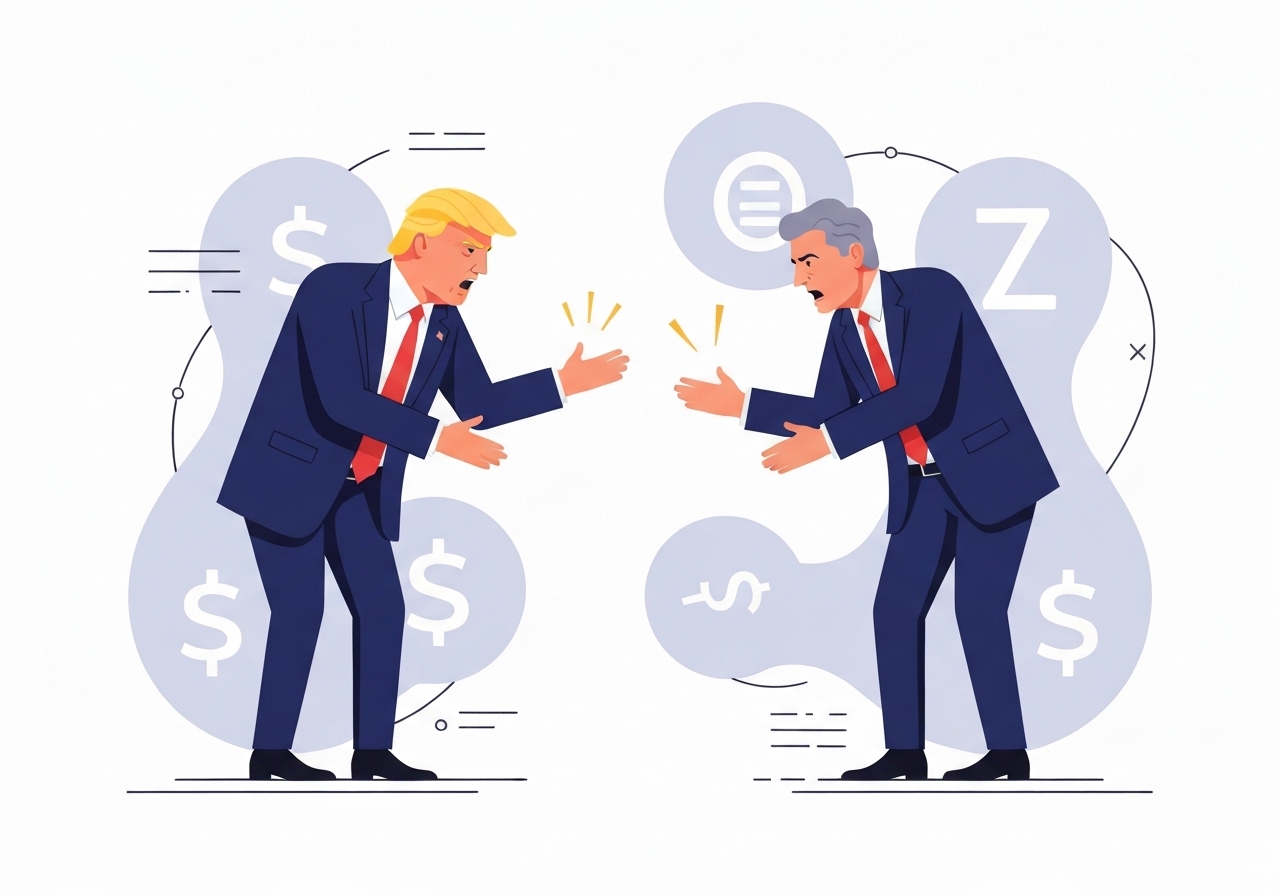
On 23 January 2026, former president Donald Trump filed a 5 billion dollar lawsuit against JPMorgan Chase and its chief executive Jamie Dimon, alleging the bank closed his accounts for political reasons after the 6 January 2021 Capitol riots. JPMorgan has rejected the claim and said the closures addressed legal and regulatory risk, calling the suit without merit. The filing capped a decade of uneasy ties that began with Dimon joining corporate advisory efforts around the 2016 transition and later fractured over Charlottesville, the 2021 riots, and policy fights over the Federal Reserve and interest rate proposals. The dispute now pits one of the United States most prominent banking executives against a former president, with potential financial and political reverberations.
Key Takeaways
- Trump filed a 5 billion dollar legal claim against JPMorgan and Jamie Dimon on 23 January 2026, seeking damages for alleged politically motivated account closures after 6 January 2021.
- JPMorgan has publicly said the closures addressed legal and regulatory risk and described the lawsuit as without merit.
- Jamie Dimon, 69, received 43 million dollars in total compensation in the last reported year and has long been a leading figure on Wall Street.
- The two men had worked in proximate ways since 2016, when business chiefs joined a White House advisory council, but relations deteriorated after the 2017 Charlottesville events.
- Dimon publicly backed Federal Reserve chair Jerome Powell in January 2026 and warned that the Department of Justice inquiry into the Fed chair threatened central bank independence.
- Policy disputes that affect bank margins, including a proposed 10 percent cap on credit card interest rates advanced by Trump, are a material element of the clash.
- At the World Economic Forum in Davos in January 2026, Dimon raised concerns about AI risks and criticized the interest cap proposal as a potential economic disaster.
Background
After Donald Trump stunned political observers with his 2016 victory, many corporate leaders moved quickly to engage with the incoming administration. Executives from General Motors, Disney, Walmart and other major firms joined advisory groups intended to shape pro growth economic policies. Jamie Dimon, as chair and chief executive of JPMorgan Chase and widely credited for guiding the bank through the 2008 financial crisis, was among the most prominent corporate names to participate.
Dimon has been a lifelong Democrat but repeatedly said he would assist any president, describing his actions in patriotic terms when addressing shareholders. He reportedly declined consideration for the US Treasury post early in the Trump administration, and initially offered qualified support for some business friendly policies such as tax reform. His presence on the corporate advisory council lent Wall Street credibility to the transition but also exposed him to public scrutiny given his high profile and compensation.
Tensions emerged over political and ethical flashpoints. In 2017, after a violent white supremacist rally in Charlottesville, Virginia, Dimon and other business leaders publicly criticized the failure to condemn extremism, prompting the economic advisory council to disband. Personal friction increased after Dimon made remarks in late 2018 suggesting he could defeat Trump in a hypothetical contest, comments that Trump later mocked publicly. Those exchanges signaled that the relationship was never purely transactional.
Main Event
The legal confrontation that crystallized on 23 January 2026 centers on Trump’s assertion that JPMorgan closed accounts for political reasons following the 6 January 2021 attack on the US Capitol. The lawsuit seeks approximately 5 billion dollars, arguing reputational and financial harm. JPMorgan has countered that it acted to mitigate legal and regulatory exposures and that the complaint lacks merit, setting up a high profile court battle between a former president and a major financial institution.
Company and political conduct in the post January 2021 period has been under intense scrutiny. Several banks reviewed relationships tied to participants in or supporters of the Capitol events, citing compliance and risk assessments as reasons for account actions. JPMorgan maintains its decisions were risk based rather than political, but the suit frames those decisions as discriminatory and punitive. The case will test how courts weigh bank compliance discretion against allegations of political targeting.
The suit comes amid wider hostilities between Trump and Dimon that had been building for years. In successive public forums Dimon criticized Trump when he deemed it necessary, notably after Charlottesville in 2017 and again in statements about institutional reliability and policy choices at Davos in January 2026. Trump responded with public barbs and social media posts that questioned Dimon and his loyalties, escalating a feud that already involved policy disagreements over interest rate advocacy and regulatory rollback.
Policy conflicts have sharpened the personal dispute. Dimon voiced opposition to moves he regards as undermining Federal Reserve independence after the administration and certain allies criticized Jerome Powell. He warned that actions diminishing central bank autonomy could raise inflation expectations and ultimately push rates higher. Trump in turn has publicly attacked the Fed and suggested Dimon benefits from higher rates, injecting a transactional cast into what began as policy debate.
Analysis & Implications
The lawsuit is more than a personal settling of scores. If a court finds in favor of Trump, the ruling could constrain banks ability to close or restrict accounts on compliance grounds, or at least invite more intrusive judicial review of those decisions. That result would have notable implications for risk management, compliance programs and how banks police politically sensitive accounts. Financial institutions may face a tougher balance between regulatory compliance and reputational or political litigation risk.
Beyond compliance mechanics, this clash underscores tensions over central bank independence. Dimon framed the Department of Justice probe into the Fed chair as jeopardizing the institution that helps anchor inflation expectations. If political pressure on monetary policy persists, capital markets and investor expectations could become more volatile, with consequences for borrowing costs, bond markets and bank profitability. The public posture of a leading CEO in defense of the Fed is itself a significant development in the relationship between finance and political authority.
Politically, the dispute plays into a broader narrative about the alignment between corporate America and political actors. Firms that engaged closely with the 2016 and early Trump administrations have since distanced themselves over ethical and reputational flashpoints. The case may encourage other executives to be more cautious in public engagement with polarizing political figures, or conversely to push back more robustly in defense of corporate prerogatives and institutional norms.
For JPMorgan specifically, the litigation and surrounding statements could affect investor perceptions of governance and risk. Potential legal exposure, combined with public scrutiny of corporate actions around January 2021, may lead to added board attention to litigation strategy, public communications and risk governance. That scrutiny could also influence regulatory engagement and oversight dynamics in the short to medium term.
Comparison & Data
| Year | Event | Significance |
|---|---|---|
| 2008 | Financial crisis; Dimon credited for JPMorgan stability | Established Dimon as a leading banking figure |
| 2016 | Business leaders join White House advisory efforts | Wall Street engagement with incoming administration |
| 2017 | Charlottesville backlash and council disbanded | Public rupture between some CEOs and the president |
| 2021 | 6 January Capitol attack and subsequent account reviews | Compliance driven account actions later cited in lawsuit |
| 2023 | Trump criticizes Dimon on social platforms | Public deterioration of personal relationship |
| 2026 | 5 billion dollar lawsuit filed | High stakes legal and reputational confrontation |
The table frames the dispute in a decade long arc that moves from mutual engagement to public fracture. Key numeric anchors include Dimon compensation of 43 million dollars in the most recent year and the 5 billion dollar size of the lawsuit lodged in January 2026. Those figures emphasize the financial and reputational scale at stake for both parties.
Reactions & Quotes
Corporate and political responses have been pointed and prompt. JPMorgan distribution of public statements framed the account closures as risk management decisions, while Trump and his allies framed them as political retribution. Market actors and policy watchers will track legal filings closely for detail on rationale and internal bank process.
I would try to help any president of the United States because I am a patriot
Jamie Dimon, shareholder remarks cited in reporting
Context: Dimon used similar language after 2016 to explain his engagement with the incoming administration, a posture that underlined his willingness to work across party lines even while retaining independent views.
Highly overrated globalist Jamie Dimon is quietly pushing another non Maga person
Donald Trump, social media post cited in reporting
Context: In late 2023 Trump publicly criticized Dimon for perceived political positioning, an episode that contributed to a more adversarial public relationship ahead of the 2026 lawsuit.
Anything that chips away at Fed independence is probably not a great idea
Jamie Dimon, remarks at a January 2026 press exchange
Context: Dimon spoke in early January 2026 in defense of Jerome Powell, warning that attacks on the Fed could raise inflation expectations and lead to higher rates, and signaling a policy divergence with the former president.
Unconfirmed
- Whether every specific account closure at JPMorgan after 6 January 2021 was motivated by politics rather than by independent risk assessment remains contested and unproven in court.
- Reports of direct White House offers or negotiations about a Dimon cabinet role are based on contemporaneous reporting and private accounts and remain subject to incomplete public documentation.
Bottom Line
The legal clash between Donald Trump and Jamie Dimon transforms what began as a tentative working relationship into a public confrontation with potential consequences for banking compliance practice, corporate political engagement, and the perceived independence of monetary institutions. The 5 billion dollar suit formalizes grievances that have been building for a decade and pushes risk decisions into the courtroom arena.
Short term, markets and banks will monitor filings for specifics on why accounts were closed and whether courts accept the political motivation claims. Longer term, the case may prompt firms to tighten record keeping around risk decisions and may influence how CEOs publicly navigate fraught political terrain. Observers should expect a protracted legal process and intense scrutiny of both bank procedures and the political context in which they were applied.
Sources
- The Guardian — media report summarizing the lawsuit timeline and public comments
- JPMorgan Chase — corporate site for official statements and company information