
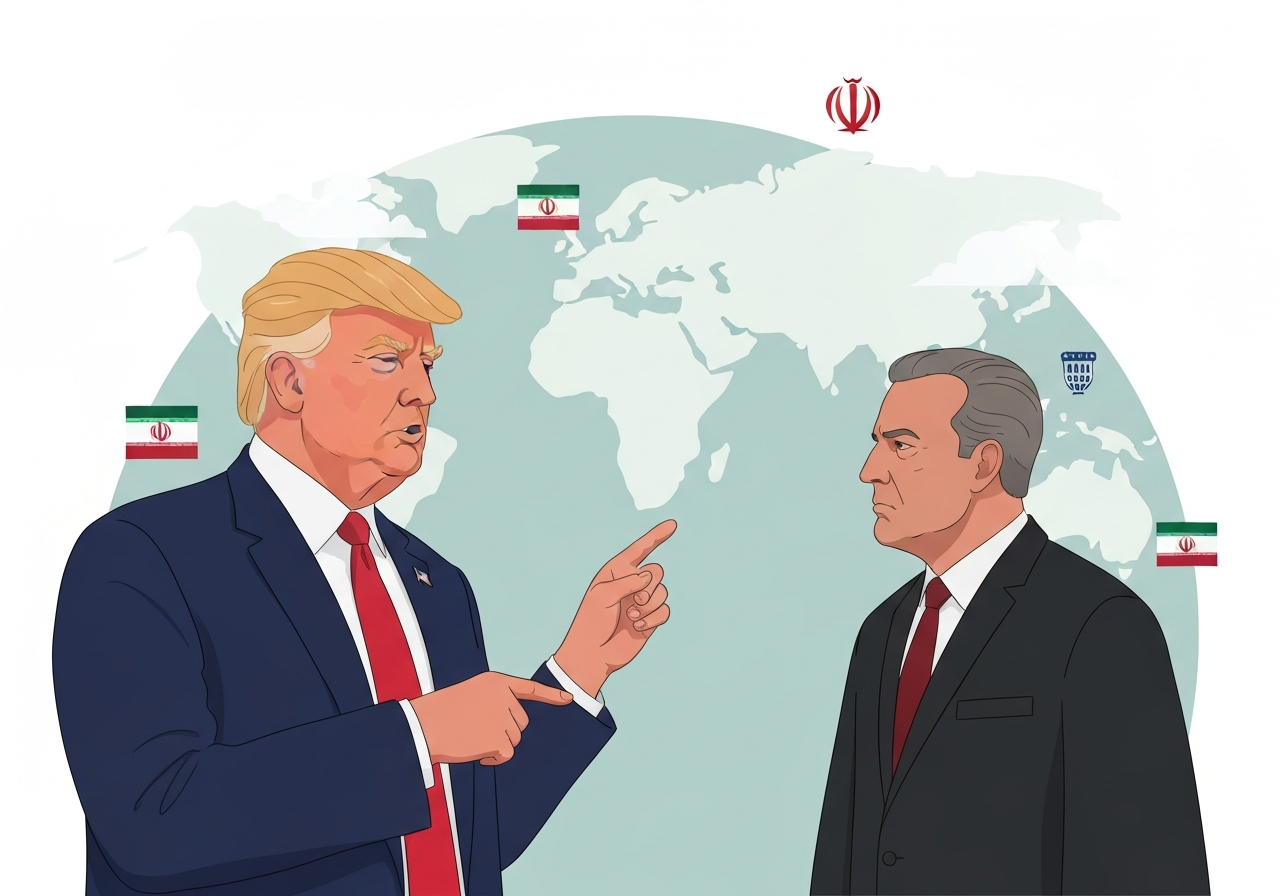
On March 17, 2026, the U.S.-Israeli campaign against Iran intensified after Israel said it had killed senior Iranian intelligence chief Ali Larijani and the U.S. National Counterterrorism Center director Joe Kent resigned in protest. The resignation — and President Trump’s sharp public rebukes of Kent — unfolded amid rising regional strikes, disrupted shipping through the Strait of Hormuz and sharp spikes in global energy prices. Iranian state media confirmed Larijani’s death and Iranian authorities reported heavy civilian casualties from a separate strike on a school. The developments have deepened international debate over the war’s justification and its humanitarian and economic fallout.
Key Takeaways
- Ali Larijani, 67, was reported killed in an overnight U.S.-Israeli strike; Iranian state media confirmed his death on March 17, 2026.
- Joe Kent resigned March 17 as NCTC director, saying he could not back a war he described as not justified by an imminent threat.
- President Trump publicly disparaged Kent as “weak on security” and defended the decision to strike Iran as necessary to counter a perceived imminent threat.
- Amnesty International investigators say a strike on an Iranian school killed 168 children, parents and teachers, alleging U.S. responsibility based on weapon remnants; U.S. officials have been asked for comment.
- Brent crude traded near $103 a barrel March 17, and national gas prices hovered around $3.82 per gallon, reflecting supply concerns tied to the Strait of Hormuz disruptions.
- Save the Children warned $600,000 of medical supplies are stuck in Dubai, threatening care for roughly 400,000 patients across 90 Sudanese clinics.
- Russia reportedly increased intelligence and military aid to Iran, including satellite imagery and drone technology, according to unnamed U.S. officials cited by the Wall Street Journal.
Background
The current escalation followed weeks of mounting bilateral strikes between U.S.-Israeli forces and Iranian-linked targets across the region. Longstanding tensions—rooted in Iran’s nuclear and missile programs, proxy networks, and repeated incidents in the Gulf—have periodically flared into kinetic confrontation since 2019. Iran’s political and security elite include figures like Ali Larijani, a former speaker of parliament and Revolutionary Guard member who served in multiple senior posts; his reported death represents one of the highest-profile losses for Tehran in the conflict thus far.
U.S. policymakers framed recent strikes as responses to what they have described as an imminent and expanding Iranian threat; critics, including some within the administration, dispute that characterization. The Strait of Hormuz, a chokepoint that channels roughly 20% of the world’s oil, has been intermittently closed to routes used by many commercial tankers, producing immediate pressure on global energy markets. Humanitarian organizations say the wider disruption of air and sea cargo is delaying critical relief for conflicts such as the multi-year crisis in Sudan.
Main Event
On the morning of March 17, Israeli officials announced they struck and killed Ali Larijani. Iran’s Fars news agency later confirmed the 67-year-old’s death, identifying him as a senior intelligence figure and former speaker of parliament. Israeli and U.S. statements emphasized removing strategic Iranian command figures; Tehran’s public response included condemnation and calls for international criticism of the strikes.
The U.S. National Counterterrorism Center director Joe Kent resigned the same day, publishing a letter that said he could not support a war he viewed as unjustified by direct threats to the United States. Kent, a former Army Ranger and CIA paramilitary officer appointed in February 2025, said in his letter that Israel’s influence helped precipitate the campaign — a claim that triggered fierce rebuttals from White House spokespeople and several lawmakers.
President Trump replied publicly and on social platforms, calling Kent “weak on security” and defending the decision to strike Iran as necessary to protect American forces and interests. The White House labeled Kent’s claims “insulting and laughable,” stating the president had strong, classified intelligence supporting the assessment of an imminent Iranian threat. Congressional leaders and other senior officials offered mixed reactions, with some endorsing the administration’s threat assessment and others warning about escalation risks.
Military activity around the Strait of Hormuz and regional ports has impeded shipments and raised insurance and routing costs. Humanitarian organizations reported medicine and vaccines stuck in transit — Save the Children cited about $600,000 in essential supplies delayed in Dubai, affecting delivery to clinics that serve roughly 400,000 patients in Sudan. Energy markets reacted quickly: Brent and WTI climbed, and U.S. gas averages rose on tightened supplies and transit uncertainty.
Analysis & Implications
Politically, Kent’s resignation is notable because it came from within the Trump administration and explicitly disputed the administration’s stated rationale for war. A senior aide’s departure over policy credibility can fuel domestic debate, reduce perceived unanimity in decision-making and embolden congressional oversight. It also supplies Iran and its allies with a high-profile talking point to question coalition cohesion and the legal basis for strikes.
Militarily, removing senior Iranian intelligence and paramilitary commanders could degrade Tehran’s operational reach in the near term, but it may also harden Iran’s posture and encourage retaliatory attacks on regional partners and shipping lanes. The United States and Israel have prioritized degrading long-range missile and drone capabilities, yet such strikes rarely eliminate asymmetric threats entirely, and they risk driving proxy groups toward intensified action.
Economically, the immediate impact is visible in energy and financial markets. With Brent near $103 and national gasoline averages around $3.82 per gallon, higher fuel costs will feed into headline inflation measures, complicating central bank decisions. Economists monitoring the Federal Reserve’s March 18 policy meeting flagged that elevated energy prices present an inflationary risk while a slowing U.S. economy could argue for easing — a stagflationary tension policymakers must weigh carefully.
Humanitarian consequences are acute: the reported school strike that killed scores of civilians — if verified — would represent a severe breach of protections for non-combatants and could energize international legal scrutiny. Supply-chain disruptions are already causing medicine shortages for vulnerable populations in third countries (notably Sudan), amplifying the crisis beyond the immediate combat zone and complicating relief logistics.
Comparison & Data
| Metric | Pre-conflict | March 17, 2026 | Change |
|---|---|---|---|
| Brent crude (per barrel) | ~$80 (pre-escalation) | ~$103 | +~$23 |
| WTI crude (per barrel) | ~$75 | ~$95 | +~$20 |
| U.S. nationwide gas (avg) | ~$3.03/gal | ~$3.82/gal | +~$0.79/gal |
| Reported school victims (Iran) | 0 (before strike) | 168 reported deaths | — |
The table above summarizes market and humanitarian metrics reported in the unfolding conflict. Energy price shifts reflect both genuine supply interruptions and anticipatory trading; the human toll reported by Iranian authorities and Amnesty International, if corroborated, marks a severe humanitarian episode. Analysts caution that markets can remain volatile while the military campaign, diplomatic responses and insurance restrictions on regional shipping evolve.
Reactions & Quotes
White House spokespeople and senior lawmakers reacted immediately to Kent’s resignation and to the strikes. Their statements framed the action either as necessary to prevent catastrophic Iranian capabilities or as evidence of reckless escalation, depending on political perspective.
“This is the same false claim… insulting and laughable,”
Karoline Leavitt, White House Press Secretary (statement on X)
Leavitt dismissed Kent’s letter, asserting the administration possessed strong, classified evidence justifying strikes. Her comments were followed by public defenses from other White House officials who reiterated the imminent-threat rationale to both domestic and allied audiences.
“Iran posed no imminent threat to our nation,”
Joe Kent, former NCTC Director (resignation letter)
Kent framed his resignation around a moral objection to the war’s justification and accused external pressure from allies of shaping policy. His statement has been cited internationally by Iranian officials and critics of the campaign as evidence of internal disagreement within the U.S. government.
“President Trump concluded that Iran posed an imminent threat and he took action based on that conclusion,”
Tulsi Gabbard, Director of National Intelligence (public post)
Director Gabbard summarized the administration’s formal assessment as supporting immediate action. Her office’s public remarks sought to underscore that the decision rested on intelligence reviews conducted in the lead-up to strikes.
Unconfirmed
- U.S. government confirmation that it conducted the strike that killed Ali Larijani is not publicly available; Israeli authorities announced the strike and Iranian state media confirmed Larijani’s death.
- Amnesty International’s attribution that a U.S.-launched Tomahawk missile struck the Iranian school is based on field evidence and claims from Iran; an independent, internationally led verification has not been released.
- Reports that Russia has supplied upgraded satellite imagery and drone technology to Iran are based on unnamed U.S. officials cited by the Wall Street Journal and have not been publicly corroborated by Moscow.
Bottom Line
The simultaneous high-profile resignation of an intelligence official and the reported killing of a senior Iranian figure mark a political and operational inflection point in the conflict. Domestically, the episode exposes fractures within the U.S. security apparatus and creates a potent narrative for both critics and defenders of the campaign. Internationally, the strikes and ensuing rhetoric risk catalyzing broader regional retaliation, complicating efforts to protect commercial shipping and humanitarian corridors.
For the public and policymakers, the immediate priorities are clearer: independent verification of civilian-casualty claims, protection of maritime commerce through diplomatic and naval means, and sustained contingency planning for energy and humanitarian supply disruptions. Congressional oversight, third-party investigations and international monitoring will be central to establishing an accepted factual record and shaping next steps.