
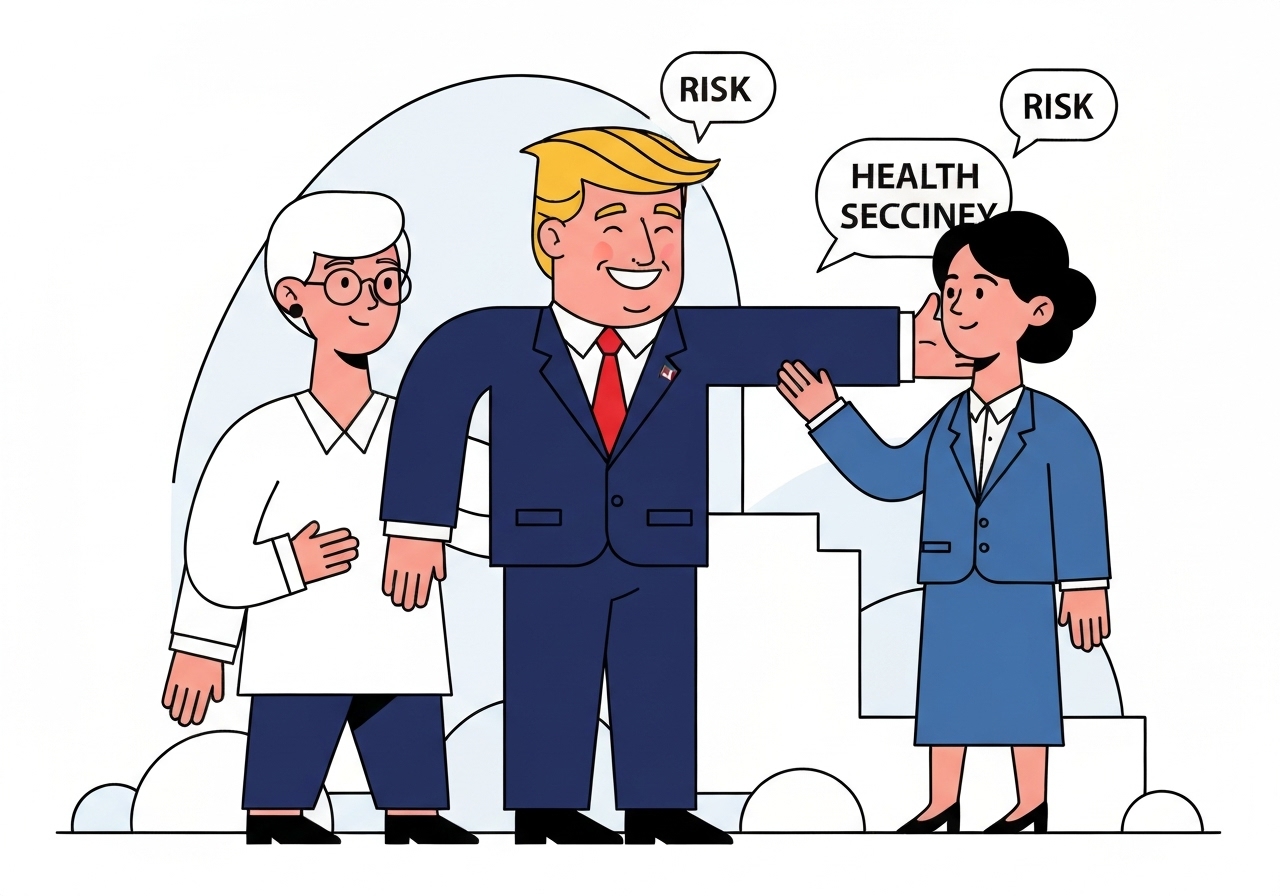
Lead: On Sept. 6, 2025 in Washington, President Donald Trump publicly reaffirmed his support for Health Secretary Robert F. Kennedy Jr. even as Kennedy’s cutbacks to vaccine programs, limits on COVID-19 shot access and agency shake-ups have prompted bipartisan alarm and raised public-health concerns.
Key Takeaways
- Kennedy, as HHS secretary, has reduced funding for vaccine research and restricted access to COVID-19 vaccinations.
- The health secretary removed the head of the Centers for Disease Control and Prevention, altering how U.S. vaccine guidance is developed.
- President Trump has defended Kennedy despite congressional criticism and warnings from public health experts.
- Published research cited by officials estimates COVID-19 vaccines prevented millions of hospitalizations and deaths in 2020–2022.
- Public opinion on routine childhood vaccines has grown more favorable among Democrats but declined among Republicans in recent years, per Reuters/Ipsos polling.
- State actions, such as Florida’s move to end vaccine mandates, reflect widening policy divergence across the U.S.
- Experts warn that lower vaccination rates could increase outbreak risk and create political fallout for the administration.
Verified Facts
Since taking the health portfolio, Secretary Robert F. Kennedy Jr. has overseen cuts to programs that support vaccine research and has introduced policies that limit access to COVID-19 shots at the federal level. He also dismissed the head of the Centers for Disease Control and Prevention, the agency long responsible for U.S. vaccine recommendations.
On Sept. 6, 2025, lawmakers from both parties questioned Kennedy in a contentious hearing. President Trump met the same day with reporters and reiterated his support for the secretary, saying Kennedy has different ideas but means well, according to White House remarks.
Public-health analyses cited in reporting indicate substantial benefits from the COVID-19 vaccination campaign. A study referenced by news outlets estimated that, between December 2020 and November 2022, vaccines prevented more than 18.5 million hospitalizations and about 3.2 million deaths in the United States.
Polling data referenced by lawmakers at the hearing show partisan shifts in vaccine confidence: in May 2025, roughly 75% of Democrats said routine childhood vaccines were “very safe,” up from 64% in May 2020. By contrast, the share of Republicans saying the same fell to about 41% from 57% five years earlier.
Context & Impact
The Trump administration’s backing of Kennedy follows the health secretary’s influential role in the 2024 campaign and his Make America Healthy Again movement, which helped mobilize a segment of voters critical of mainstream vaccine policy.
Public-health officials warn the policy shifts could weaken routine immunization programs, slow biomedical research, and complicate responses to future infectious disease outbreaks. Reduced federal funding and diminished CDC authority may also shift responsibility to states, producing a patchwork of rules.
Political consequences are also at stake. If vaccine uptake falls and a preventable outbreak occurs, the administration could face blame from both voters and elected officials. Conversely, some Republican leaders have expressed cautious support for altering mandates, reflecting evolving party dynamics on health policy.
Policy stakes include:
- Continuity of vaccine research grants and federal partnerships;
- CDC independence in setting clinical guidance;
- State-level divergence on mandates for schools and healthcare settings;
- Public confidence in routine immunizations.
“He’s a very good person … and he means very well,”
President Donald Trump, White House remarks, Sept. 6, 2025
Official Statements
White House officials say the president trusts Kennedy’s judgment and that the two speak regularly, though not daily.
White House official, Sept. 6, 2025
Unconfirmed
- Whether specific recent funding cuts will directly cause measurable increases in particular disease outbreaks in the short term.
- The full list of internal HHS reorganizations and their concrete timelines for restoring or replacing programs affected by recent changes.
Bottom Line
President Trump’s continued public support gives Secretary Kennedy political cover to pursue a markedly different approach to vaccines and public-health agencies. That latitude raises significant public-health and political risks: a decline in vaccination rates could produce both worse health outcomes and electoral backlash if preventable outbreaks follow.
Observers will watch vaccination trends, state responses, and any congressional or legal challenges closely in the coming months.