
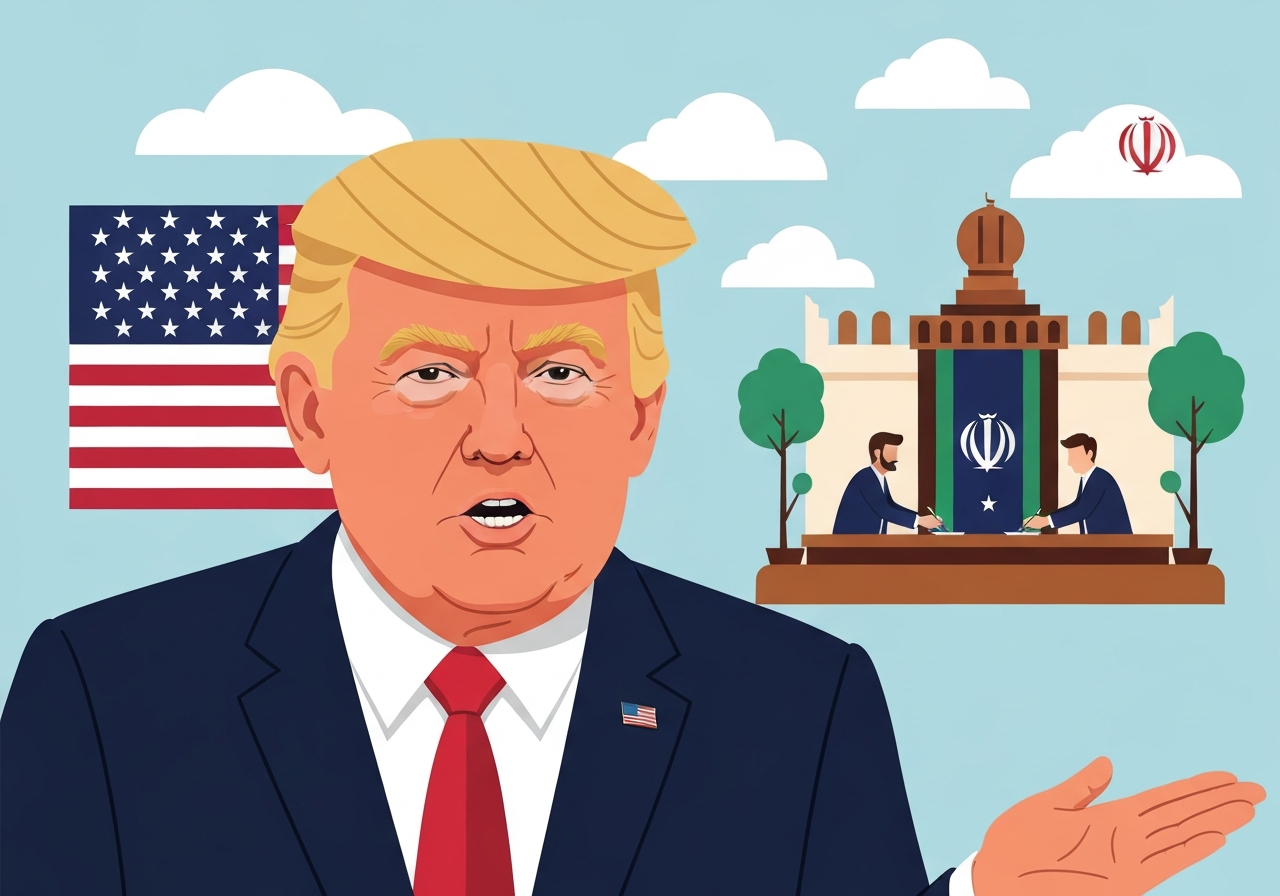
Lead: President Donald Trump told reporters the United States will withdraw forces from Iran “very soon,” saying military action could end in “two or three weeks,” while Tehran’s president, Masoud Pezeshkian, told European leaders Iran has the “necessary will” to end the war if certain guarantees are met. The announcements came amid fresh strikes across the region overnight — including reported missile attacks on Tel Aviv-area communities and heavy air raids in Beirut — and market volatility, with Brent crude posting its biggest monthly gain since 1990. Emergency services in Israel treated an 11-year-old girl in serious condition and two others after projectiles struck near Bnei Brak. Washington has scheduled a presidential address for 21:00 ET, and leaders on all sides are framing next steps as both tactical and political.
Key takeaways
- President Trump said the US will withdraw from Iran “very soon,” suggesting military operations could end in two to three weeks.
- Iranian President Masoud Pezeshkian told the European Council there is a conditional “will” in Tehran to end the war, citing demands for guarantees against renewed hostilities.
- Israel reported a new wave of projectiles from Iran detected just before 06:00 BST (08:00 local time); Israel emergency services treated an 11-year-old girl in serious condition in Bnei Brak.
- Overnight strikes hit Beirut and southern Lebanon; Lebanon’s Health Ministry reports at least seven civilian deaths in recent strikes, and wider fighting has killed about 1,200 people and displaced roughly 1.2 million.
- Brent crude recorded a 64% jump in March — its largest monthly rise since 1990 — with the June Brent contract trading near $105.36 per barrel at report time.
- Experts estimate the US cost of the Iran war at up to $2 billion per day, and the Pentagon reported the first six days cost $11.3 billion to Congress.
- Maritime incidents continued: a tanker reported damage off Doha after an “unknown projectile,” and Gulf fuel depots and vessels were struck by drones and missiles in recent days.
Background
The confrontation escalated following coordinated airstrikes late last month attributed by the US and Israel to strikes on Iranian military and strategic infrastructure. Washington framed those operations as necessary to degrade Iran’s ability to field advanced weaponry and to punish leaders tied to attacks on regional partners. Iran responded with a mix of missile and drone strikes across the Gulf and against Israeli and allied targets, broadening the conflict beyond direct US–Iran exchanges.
Regional maritime routes, especially the Strait of Hormuz, became a focal point: Tehran has threatened restrictions and even proposed tolling vessels passing the strait. Those moves and repeated attacks on tankers have disrupted cargo flows and sent oil markets sharply higher. External actors including China and Pakistan have floated ceasefire initiatives, while Gulf states prioritize defending their territory amid rising uncertainty.
Main event
In remarks at the White House, President Trump said US forces had achieved the objectives set before recent air operations and that the United States now “dominates Iranian skies,” characterizing Iran’s new leadership as “less radicalised” after the removal of some senior figures. He reiterated that once the US is assured Iran cannot develop a nuclear weapon, American forces will withdraw whether or not a formal agreement is signed. The White House has announced a national address at 21:00 ET to provide further detail.
Iran’s presidency framed Pezeshkian’s phone call with the European Council as evidence Tehran is ready to end the war if guarantees prevent a return to hostilities. State media conveyed the message as coming from a relatively moderate office-holder, but analysts stress that real authority in Iran rests with clerical and military institutions, notably the Islamic Revolutionary Guard Corps, which has issued harsher rhetoric and threatened expanded reprisals.
On the ground, Israeli forces reported detecting a fresh salvo of projectiles fired from Iran before 06:00 BST; Magen David Adom said responders treated an 11-year-old girl in serious condition and two other wounded people in Bnei Brak. Separately, the IDF said it targeted a factory in Iran it identified as tied to chemical-weapons research, a claim denied by Tehran, which said the site made medicines. Independent verification of those specific claims is not available.
Across the Levant, Israel conducted strikes in and around Beirut overnight, saying it struck a Hezbollah commander and another senior figure. Lebanese authorities and international monitors reported smoke and heavy explosions in southern Beirut and Jnah, while UN peacekeepers were recently killed by a roadside blast in southern Lebanon (responsibility disputed). The conflict’s human toll includes mass displacement and mounting civilian casualties.
Analysis & implications
Trump’s public timeline for withdrawal—two to three weeks—signals a political desire to limit prolonged US ground exposure, but timelines announced under pressure often change. Withdrawal mechanics will be complex: the US maintains bases, intelligence assets and naval deployments that cannot be dismantled instantly, and a rapid pullback could create local security vacuums that other actors may exploit. Allies in the region and NATO partners are watching for contingency plans and assurances that defensive commitments remain intact.
Tehran’s stated willingness to end hostilities, conditioned on guarantees, opens a diplomatic window but reveals deep mistrust. Guarantees acceptable to Iran—such as non-aggression pledges, sanctions relief or binding security assurances—are unlikely to be accepted by Washington or Israel without verifiable enforcement mechanisms. Moreover, hardline Iranian elements and the IRGC retain influence over military decisions and could constrain any negotiated settlement.
Economically, the conflict has already pushed energy markets sharply higher; Brent’s 64% monthly rise in March illustrates how quickly geopolitics can transmit to consumer prices and inflation expectations. Higher oil and insurance costs will weigh on global growth and compound political pressure on governments to shield households and businesses. In the US, daily operational costs approaching $2 billion impose fresh strain on fiscal planning and budgets debated in Congress.
Comparison & data
| Metric | Latest | Context |
|---|---|---|
| Brent crude (March monthly gain) | +64% | Largest monthly rise since 1990 Gulf War |
| Brent crude (June contract) | $105.36 / barrel | Price at report time; reflecting supply risk |
| Estimated US cost | Up to $2 billion / day | Includes operations, equipment, damage; experts’ estimate |
| Lebanon conflict toll | ~1,200 killed; 1.2M displaced | Ongoing Israeli campaign in southern Lebanon |
The table highlights how military events translate quickly into economic metrics and human costs. Oil benchmarks and defence spending react on different time frames: markets price risk almost instantly, while fiscal and humanitarian burdens accrue and persist. That divergence complicates policymaking, because short-term market fixes do not resolve structural political disputes driving the conflict.
Reactions & quotes
US leadership framed the moment as transitionary and force-limited.
“We will be leaving [Iran] very soon — two or three weeks,”
President Donald Trump, White House remarks
Trump’s remarks were delivered to reporters in the Oval Office and were followed by a preview of a televised national address. The administration presented the timeline as contingent on battlefield conditions and verification that Iranian capabilities had been sufficiently reduced.
Iran’s publicly stated posture was more measured and condition-driven.
“We have the necessary will to end the war if guarantees are provided,”
President Masoud Pezeshkian (reported by Iranian state media)
That comment, relayed during a phone call with the European Council’s president, offered a diplomatic opening but included clear prerequisites; officials outside Iran caution that the presidency is subordinate to other centers of power in Tehran.
On the operational level, Israeli forces described targeted strikes and defensive responses.
“We struck targets tied to terrorist infrastructure and detected incoming projectiles,”
Israel Defense Forces (IDF) statement
The IDF released statements asserting precision counter-strikes and the targeting of specific commanders, while acknowledging operations across Lebanon and Iranian-linked sites. Israeli claims about enemy infrastructure have not been independently verified.
Unconfirmed
- Claims that Israel’s strike destroyed a chemical-weapons production line linked to SPND remain unverified by independent investigators.
- President Trump’s assertion that Iran’s leadership is “begging to make a deal” reflects US assessment and public messaging, but Tehran officially denies such wording.
- Reports that a US freelance journalist was kidnapped in Baghdad are developing and have not been fully corroborated in open-source reporting.
Bottom line
The trajectory of this crisis will hinge on whether diplomatic openings can be translated into credible, enforceable guarantees and whether combatants on each side accept termination terms. President Trump’s public timetable suggests a political aim to limit long-term US entanglement, but a rushed withdrawal risks reopening space for actors who oppose a negotiated settlement.
Markets and civilians are already feeling the effects: oil prices, shipping risk and wartime expenditures raise economic strains that governments must manage even if fighting de-escalates. For observers, the critical shifts to watch over the coming weeks are verification mechanisms proposed by negotiators, the IRGC’s public stance, and whether Gulf maritime traffic returns to normal.
Sources
- BBC live coverage (news outlet, live reporting and aggregated field reports)