
Lead
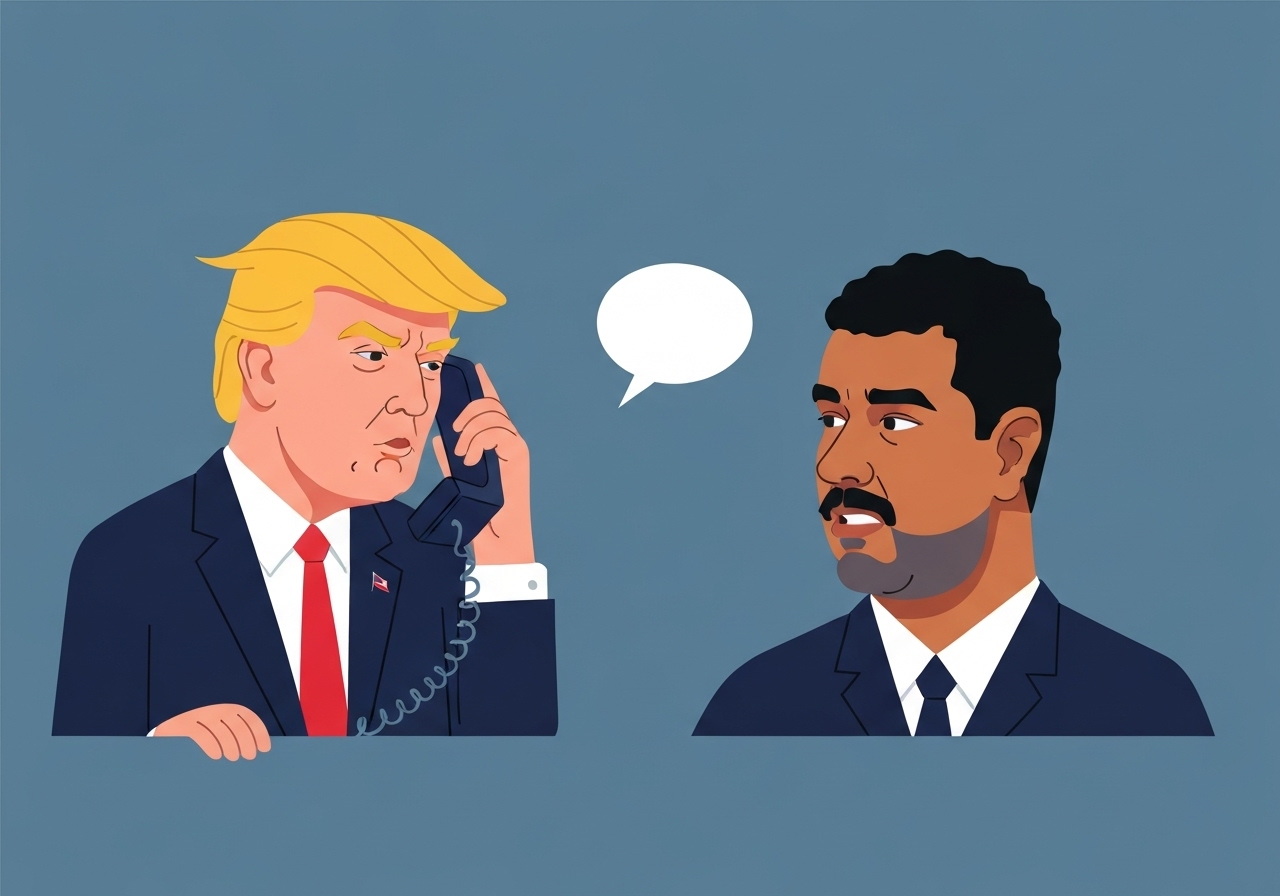
President Donald Trump spoke by phone last week with Venezuelan President Nicolás Maduro, according to multiple people with knowledge of the matter, in a call that included Secretary of State Marco Rubio. The conversation, described as taking place late in the week, covered the possibility of a future meeting in the United States, though no meeting is scheduled. The call came days before a State Department designation that names Mr. Maduro as the leader of what the administration calls the Cartel de los Soles took effect, even as U.S. military forces have been increased in the Caribbean near Venezuela.
Key Takeaways
- The phone call took place late last week and included Secretary of State Marco Rubio, according to people granted anonymity because they were not authorized to speak publicly.
- Participants discussed a potential meeting between Mr. Trump and Mr. Maduro in the United States, but there are currently no plans for such a meeting.
- The conversation preceded a State Department designation that identifies Mr. Maduro as the leader of the Cartel de los Soles; that designation came into effect days after the call.
- The administration has increased its military presence in the Caribbean, which officials say is aimed at deterring drug trafficking while also signaling pressure on the Maduro government.
- The New York Times reported in October that Mr. Maduro had offered U.S. companies a stake in Venezuelan oil fields as part of earlier talks; U.S. officials cut off those discussions soon after.
Background
Relations between the United States and Venezuela have been strained for years, marked by sanctions, diplomatic expulsions and repeated U.S. criticism of Nicolás Maduro’s government. The Trump administration has publicly signaled an interest in removing Mr. Maduro from power, and U.S. officials have repeatedly tied Caracas to illicit networks, including narcotics trafficking.
In October the New York Times reported that Mr. Maduro had proposed economic incentives to U.S. firms, including access to Venezuelan oil, in an apparent bid to reduce tensions. According to later reporting, U.S. officials curtailed those negotiations shortly thereafter. The moment underscores a pattern in which economic offers and diplomatic outreach have at times been overtaken by security and legal actions.
Main Event
Multiple people briefed on the matter said the call occurred late in the week and involved Mr. Trump, Mr. Maduro and Secretary Rubio. Those sources said the leaders discussed the prospect of meeting in the United States, but that no concrete plans were made and none were publicly announced. One source explicitly said there are currently no plans for such a meeting.
Days after the call, the State Department’s designation identifying Mr. Maduro as the leader of the Cartel de los Soles came into effect, escalating legal and diplomatic pressure. The administration has simultaneously increased its military posture in the Caribbean; officials characterize the deployment as aimed at deterring drug trafficking, while commentators read it as additional leverage against Caracas.
White House officials declined to comment on the particulars of the conversation, and Venezuelan authorities did not respond to requests for comment, according to reporting. Two people close to the Venezuelan government confirmed that a direct call occurred but declined to be identified because they were not authorized to speak publicly.
Analysis & Implications
A direct call between the U.S. president and Venezuela’s president, even if brief and exploratory, marks a notable shift from recent years of limited high-level contact. Diplomatic engagement at this level can open channels for crisis management but also complicate messaging when one side is simultaneously pursuing punitive measures. The juxtaposition of a phone conversation and a terrorism-related designation highlights a mixed strategy of outreach plus pressure.
For the Venezuelan government, the call offers symbolic recognition after years of international isolation but does not remove immediate legal or economic threats tied to the designation. The State Department’s naming of Mr. Maduro in connection with the Cartel de los Soles carries potential sanctions and investigative tools that could constrain his international options, even if a direct removal from power remains uncertain.
Regionally, a U.S. military buildup in the Caribbean raises the stakes for neighboring countries and for international actors with interests in Venezuela’s oil and security dynamics. If Washington pairs military deterrence with a credible diplomatic track, it could force tactical shifts in Caracas; if not, the combination risks miscalculation. International companies weighing Venezuelan opportunities will watch whether economic overtures can coexist with legal designations and military pressure.
Comparison & Data
| Timeline | Event |
|---|---|
| October 2025 | New York Times reported Maduro offered stakes in oil fields to U.S. companies |
| Late week, November 2025 | Call between President Trump and President Maduro, including Secretary Rubio |
| Days after the call, November 2025 | State Department designation naming Maduro as leader of the Cartel de los Soles took effect |
This timeline shows sequence rather than precise timestamps; reporting places the October report and the late-November call in close succession, with the designation taking effect shortly after the conversation. The sequence suggests overlapping diplomatic, legal and military tools in U.S. policy toward Venezuela.
Reactions & Quotes
There are no plans at the moment for such a meeting.
Anonymous person with knowledge of the call
This line was provided by a source who spoke on background to describe the state of scheduling after the conversation. The phrasing indicates that while a meeting was discussed, it was not confirmed.
The State Department designation took effect days after the call, increasing legal pressure on Venezuela’s leadership.
U.S. administration official (summary)
Administration officials have framed the designation as a tool to target narcotics networks and to constrain Maduro’s international options. Officials also describe military deployments as aimed at deterring drug trafficking.
A direct call between the two presidents occurred, sources close to the Venezuelan government confirmed.
Two people close to the Venezuelan government
Those individuals confirmed the existence of the call but declined to be named because they were not authorized to speak publicly. Their confirmation aligns with reporting from U.S. sources.
Unconfirmed
- Whether the call included substantive policy compromises or only exploratory language is not independently verified.
- Any specific terms or offers discussed during the call, beyond a reported discussion of a possible meeting, remain unconfirmed.
- How the designation’s legal consequences will affect Maduro’s capacity to negotiate with U.S. companies or third parties has not been fully determined.
Bottom Line
The reported phone call between President Trump and President Maduro is significant primarily as a signal: it reopens a line of high-level communication at the same time the U.S. applies legal and military pressure. That combination broadens Washington’s toolkit but also creates ambiguity about U.S. intentions, mixing potential outreach with punitive measures.
For observers and stakeholders, the important developments to watch are whether the two governments move from exploratory conversation to a defined negotiating track, and how the State Department designation and Caribbean deployments alter incentives for Caracas. In the near term, expect continued close monitoring by regional partners and careful public messaging from both capitals.
Sources
- The New York Times (U.S. newspaper)
- U.S. Department of State (official)