
Lead
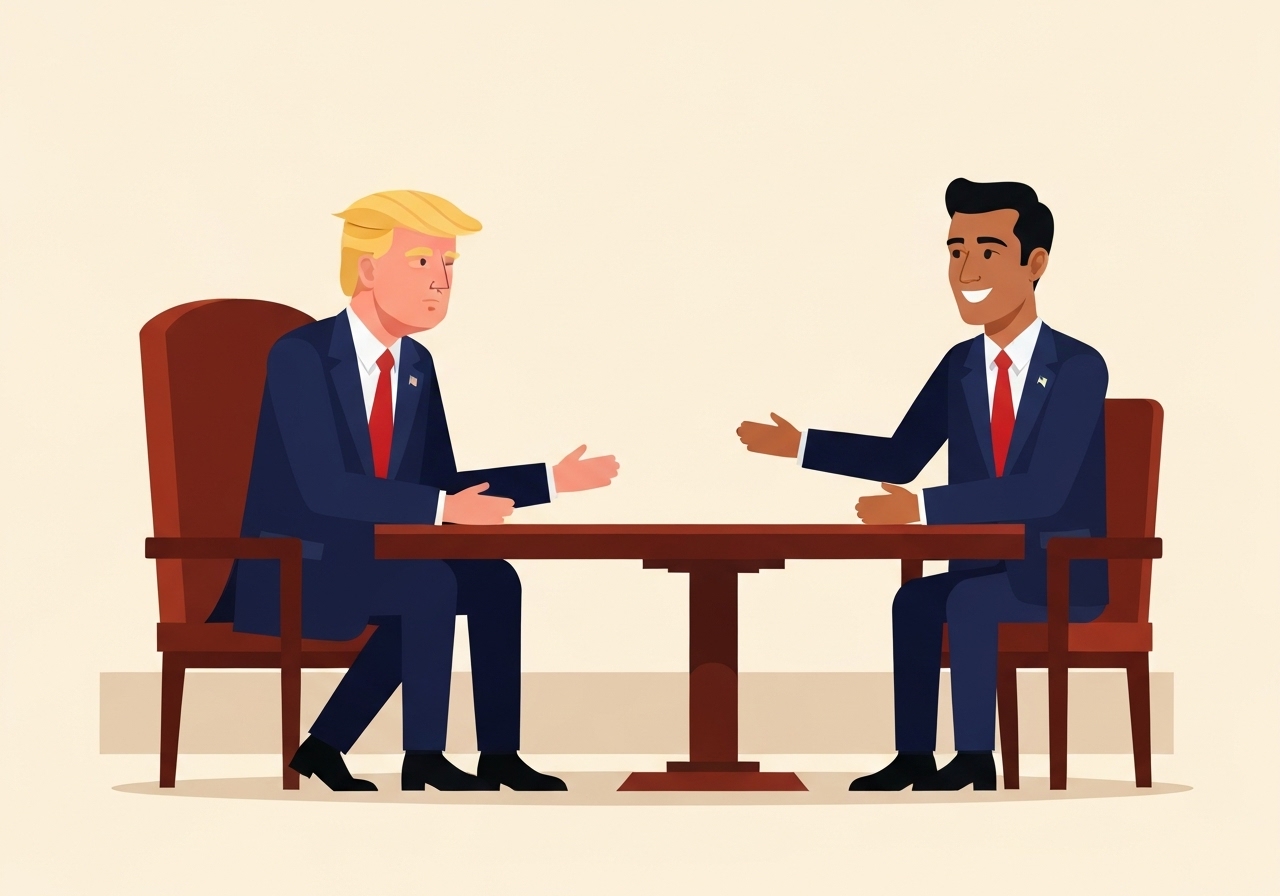
President Donald Trump confirmed on Wednesday night that he will meet New York City mayor-elect Zohran Mamdani in the Oval Office on Friday, ending months of public antagonism between the two. The announcement, posted on the president’s social feed, follows outreach by Mamdani’s team and public comments by both sides over the past weeks. Mamdani’s office says the incoming mayor — who takes office in January — plans to raise public safety, economic security and an affordability agenda that more than one million New Yorkers backed in November’s election. The meeting could signal a tactical truce, though neither side has released a detailed agenda.
Key Takeaways
- Meeting set for Friday in the Oval Office, confirmed by President Trump via social media on Wednesday night.
- Zohran Mamdani, 34, is mayor-elect of New York City and will formally assume office in January 2026.
- Mamdani’s team says the discussion will cover public safety, economic security and an affordability program supported by over one million New York voters.
- Trump has previously labelled Mamdani a “communist,” threatened deportation and hinted at withholding federal funds; those threats remain politically salient.
- Republicans suffered notable losses in the November 2025 cycle in Georgia, New Jersey, Pennsylvania, Virginia and New York, after which Trump emphasized affordability as a campaign theme.
- Both sides have signalled a willingness to meet in person: Trump told reporters he would meet, and Mamdani’s team confirmed a White House outreach.
Background
Zohran Mamdani rose quickly from a state legislator representing parts of Queens to become New York City’s mayor-elect in the November 2025 contest. At 34, he represents a generational shift in city politics and ran on a platform emphasizing housing affordability, public safety and economic security. Mamdani was born in Uganda and became a naturalized U.S. citizen in 2018; his political identity has been described as democratic socialist by multiple outlets and by his own statements.
Donald Trump has publicly attacked Mamdani for months, using strong rhetoric during and after the campaign, including claims that Mamdani’s election would damage the city. Those attacks included descriptions of Mamdani as a “communist” and threats to pursue deportation or reduce federal support — positions Trump has not implemented but that raised tensions. After Republicans underperformed in the November elections across several states, including New York, Trump pivoted rhetorically toward affordability, calling his party the “Party of Affordability.”
Main Event
The White House meeting was first announced by Trump on social media on Wednesday night, where he referenced Mamdani by name and signalled a Friday Oval Office sit-down with the comment “Further details to follow!” Mamdani’s spokesperson, Dora Pekec, characterized a meeting as customary for an incoming mayor and said Mamdani planned to press the president on concrete items that affect city residents.
Trump told reporters on Sunday night that he anticipated meeting Mamdani and that “we’ll work something out,” language that suggested at least a willingness to discuss mutual concerns. Mamdani’s team confirmed contact with the White House on Monday and said the incoming mayor wanted to discuss public safety, economic security and an affordability agenda backed by more than one million voters two weeks earlier.
Inside the Oval Office, the exchange will likely be tightly choreographed: both sides have political incentives to show composure while making narrow, tangible requests. For Mamdani, the meeting offers an early opportunity to press for federal cooperation on city priorities; for Trump, engaging the newly elected mayor gives an opening to claim bipartisan responsiveness on issues such as housing costs and crime.
Analysis & Implications
Politically, the sit-down is as much about optics as policy. Trump’s public posture toward Mamdani had been combative during the campaign, including language that questioned Mamdani’s loyalties and suggested punitive federal measures. A contained meeting in the Oval Office allows both parties to signal statesmanship without committing to large policy shifts.
For Mamdani, the stakes are practical: New York relies on federal resources for disaster relief, housing programs and public-safety grants. Securing clear lines of communication early could help the new mayor translate campaign promises into deliverable programs. Conversely, any hint that federal funds might be withheld would be a substantive risk to city services and would likely become a major legal and political dispute.
On a broader scale, the encounter illustrates how national partisan clashes can be temporarily set aside around municipal governance. If the meeting produces modest, concrete cooperation — such as targeted federal funding or a joint task force on affordability — it could become a template for how municipal leaders engage a politically opposed federal executive. If it produces only symbolic gestures, both sides may quickly return to adversarial posturing.
Comparison & Data
| Item | Zohran Mamdani | Donald Trump |
|---|---|---|
| Age | 34 | 79 |
| Birthplace | Uganda | Queens, New York |
| Citizenship | Naturalized (2018) | Natural-born U.S. citizen |
| Political alignment | Democratic, democratic socialist | Republican |
The table highlights factual contrasts in biography and political affiliation that frame the meeting’s significance. Demographic and ideological differences make the encounter notable beyond routine protocol: a 34-year-old mayor-elect with a reformist agenda meeting a former president who remains a dominant Republican figure. The November 2025 elections, in which Democrats performed strongly in several key states, provide the immediate political context for both leaders’ posturing.
Reactions & Quotes
Officials and commentators offered rapid, constraining reactions after the announcement. Mamdani’s team framed the meeting as focused on policy and city needs, while Trump framed it as a customary exchange between federal and municipal leaders.
“Further details to follow!”
Donald Trump (social media post)
This brief social-post line from the president announced the meeting and set expectations of a short, media-friendly statement rather than a detailed agenda. It was followed by no immediate public schedule.
“It is customary for an incoming New York City mayor to meet with the president; the mayor plans to discuss public safety, economic security and the affordability agenda.”
Dora Pekec, Mamdani spokesperson
Pekec’s statement framed the meeting around policy priorities Mamdani campaigned on and emphasized the institutional nature of the exchange, not a personal reconciliation. Her office signalled a focus on deliverables rather than rhetoric.
“We want New York to show the country how to defeat the president,”
Zohran Mamdani (victory speech)
Mamdani’s victory remarks — and later comments about “Trump-proofing” the city — illustrate the tension: he campaigned in opposition to Trump’s policies while also pledging to work with anyone to benefit New Yorkers.
Unconfirmed
- Whether the meeting will produce any specific, legally binding federal commitments is not yet confirmed; no formal agenda has been published.
- It is not confirmed that Trump will follow through on prior threats to withhold federal money; those remain statements pending concrete action.
- The reasons behind the president’s decision to use Mamdani’s middle name in quotation marks were not explained and remain unclarified.
Bottom Line
The Friday Oval Office meeting between President Trump and New York mayor-elect Zohran Mamdani is a high-profile, low-certainty event: it offers both leaders a chance to demonstrate pragmatism without obligating either side to major concessions. For Mamdani, the encounter is an early test of his ability to convert campaign priorities into federal cooperation; for Trump, it is an opportunity to claim responsiveness on pocketbook issues after a poor November showing for Republicans in key states.
Absent a joint communiqué with specific commitments, the meeting is most likely to yield symbolic statements and limited operational agreements on narrow issues such as grant coordination or data sharing. Observers should watch for any immediate funding announcements or memoranda of understanding; those would be the clearest indicators of substantive progress.
Sources
- The Guardian — news report summarizing the announcement and statements (media)