
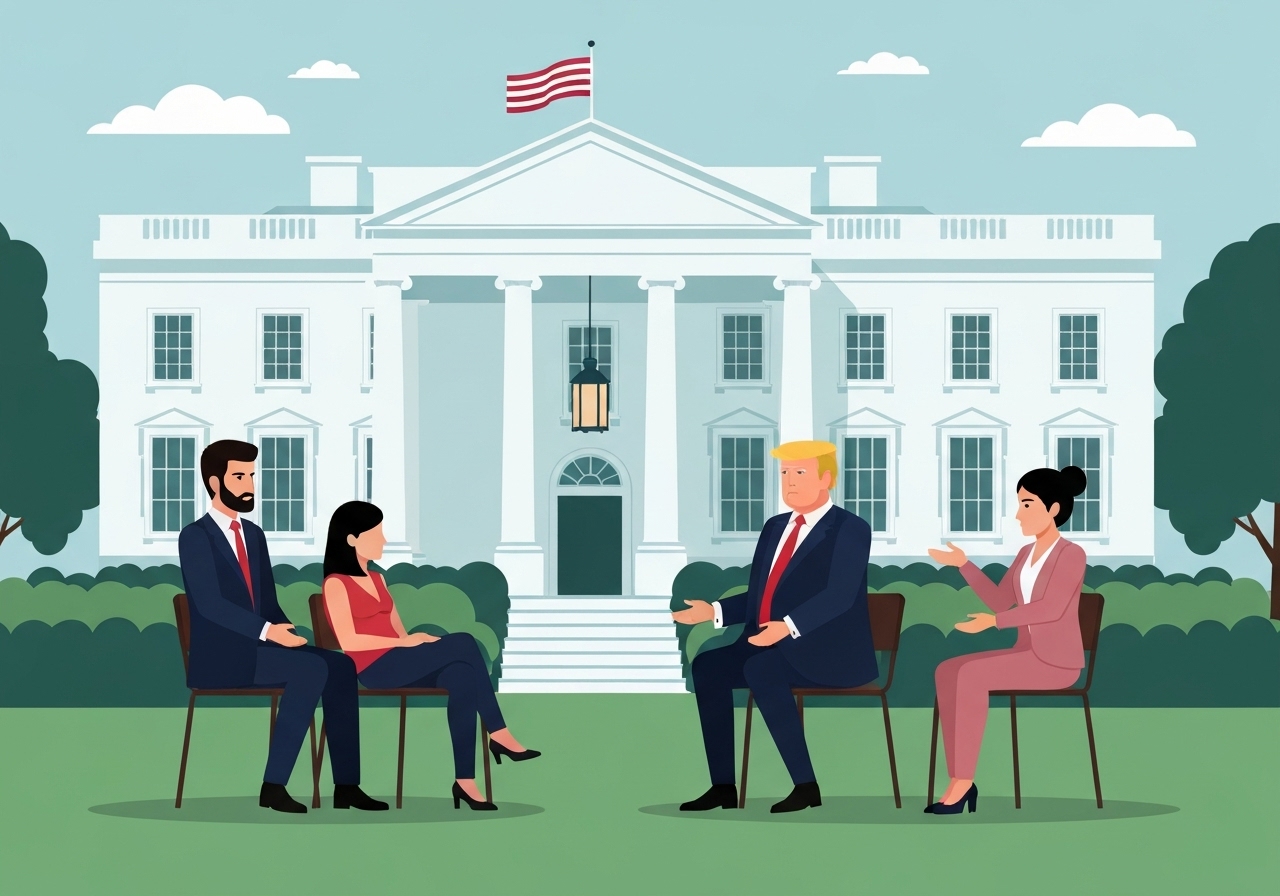
President Donald Trump and New York City mayor‑elect Zohran Mamdani are scheduled to meet at the White House on 21 November 2025 in the first in‑person discussion between two sharply opposed figures. The meeting follows weeks of public sparring, including Trump calling Mamdani a “communist lunatic” and threats to withhold federal support. Mamdani won last month with over 50% of the vote and arrives having mobilised state and national allies to prepare. Both sides present the encounter as an opportunity for negotiation, while tensions over federal funding, immigration enforcement and infrastructure remain unresolved.
Key Takeaways
- Mamidani, who won the mayoralty last month with over 50% of the vote, will meet Trump at the White House on 21 November 2025.
- Trump has publicly criticised Mamdani, using terms such as “communist lunatic” and previously called him a “little communist”; he also told Fox News he was “so torn” about wishing the new mayor well.
- The incoming mayor was naturalised in 2018 after immigrating from Uganda as a child; right‑wing Republicans have suggested investigating his citizenship despite that naturalisation.
- Mamidani’s team consulted Governor Kathy Hochul, Senate leader Chuck Schumer, House leader Hakeem Jeffries and civil‑rights leader Al Sharpton while preparing for the meeting.
- The administration has signalled escalations in Immigration and Customs Enforcement operations in New York and previously withheld federal aid for projects including the Gateway Tunnel and Second Avenue subway.
- CNN’s exit polling from the mayoral election recorded 27% approval and 70% disapproval for Trump among New York voters, while 10% of Trump’s 2024 voters also backed Mamdani.
- Mamidani frames the meeting as an opportunity to press his affordability agenda — free buses, government grocery stores, rent freezes for over 1 million stabilized units and universal childcare.
Background
Zohran Mamdani, formerly a left‑wing state assemblymember, won a commanding victory in last month’s mayoral contest, a result that surprised many observers and reshaped expectations for New York City politics. His campaign emphasised bold, city‑level interventions to tackle affordability, proposing free public buses, expanded rent protections, government‑run grocery stores and a universal childcare program. Those platform elements contrast sharply with the Trump administration’s preference for private sector solutions and tighter immigration enforcement.
President Trump intervened in the mayoral campaign, publicly backing Independent candidate Andrew Cuomo after criticising the Republican candidate Curtis Sliwa as insufficiently competitive. The administration has also used federal levers in recent budget talks: funding for major regional infrastructure projects — notably the Gateway Tunnel and the Second Avenue subway line — was reduced during negotiations, raising long‑running questions about the extent of federal leverage over city priorities.
Main Event
The White House meeting is billed by both sides as a working discussion, but it arrives on the back of vocal antagonism. Trump’s recent comments calling Mamdani a “communist lunatic” and other public barbs set a confrontational tone; at the same time, the president told Fox News he was partly sympathetic, saying, “I’m so torn, because I would like to see the new mayor do well, because I love New York.”
Mamdani’s team initiated the outreach and conducted preparatory calls with state and national Democratic leaders, civil‑rights figures and private‑sector allies including Robert Wolf, former UBS Americas chief executive. The incoming mayor has emphasised he will use the meeting to make the case for his affordability agenda and the city’s operational needs, framing engagement as pragmatic rather than purely political.
Ahead of the encounter, federal agencies signalled pressure tactics: U.S. Immigration and Customs Enforcement officials indicated plans to increase operations in New York City, and several Republicans in Congress floated inquiries into Mamdani’s citizenship despite his 2018 naturalisation. The White House press secretary described the meeting as evidence of the president’s willingness to talk across political divides.
Analysis & Implications
The sit‑down is an early test of Mamdani’s capacity to secure federal cooperation while maintaining his campaign promises. City government depends on federal funding and regulatory levers for transportation, housing and immigration matters; the administration’s recent withholding of infrastructure funds illustrates the leverage at stake. How Mamdani balances advocacy for expanded city programs with the need to keep federal grant flows intact will shape his first months in office.
Politically, the meeting is also a signal to voters and donors. For Trump, engaging a high‑profile, left‑wing mayor‑elect allows him to portray openness while retaining leverage through federal agencies. For Mamdani, the exchange offers a national platform to sell his agenda and demonstrate governing pragmatism to skeptical moderates and the city’s business community.
Policy outcomes hinge on concrete bargaining: access to federal grants, agreements over immigration enforcement priorities, and potential federal support for infrastructure projects. If negotiations succeed, Mamdani might secure partial cooperation while preserving core campaign commitments; if they fail, the administration could escalate financial pressure or enforcement activity, constraining city initiatives and setting a contentious tone for intergovernmental relations.
Comparison & Data
| Metric | Value |
|---|---|
| Mamidani vote share (reported) | Over 50% |
| Trump approval among NY voters (CNN exit poll) | 27% approval / 70% disapproval |
| Overlap: Trump 2024 voters who voted Mamdani | 10% |
| Mamidani naturalisation | 2018 |
The table highlights the political landscape underpinning the meeting: Mamdani enters with a majority mandate in the mayoral race while Trump remains broadly unpopular among New York voters, though a measurable pocket of cross‑party support existed. Those dynamics complicate both negotiation and electoral messaging for each side.
Reactions & Quotes
“I’ll stand up for New Yorkers every single day.”
Zohran Mamdani, mayor‑elect
Mamdani dismissed fears of a hostile Oval Office exchange and emphasised a focus on city priorities and obligations to constituents.
“I’m so torn, because I would like to see the new mayor do well, because I love New York.”
Donald Trump (Fox News interview)
Trump’s comment signalled a mixed posture — public critique combined with a rhetorical openness to the mayor’s success in governing New York.
“President Trump is willing to meet with anyone and talk to anyone and to try to do what’s right on behalf of the American people.”
Karoline Leavitt, White House press secretary
The administration framed the meeting as routine and bipartisan engagement, even as policy disputes and enforcement actions continue to shape the context.
Unconfirmed
- Whether Trump will follow through on earlier threats to withhold specific federal funds is not confirmed and may depend on post‑meeting decisions.
- The full list of White House attendees for the meeting had not been disclosed at the time of reporting.
- Claims by some congressional Republicans to challenge Mamdani’s citizenship have not been substantiated beyond public statements; official records show naturalisation in 2018.
Bottom Line
The White House meeting on 21 November 2025 is more than a photo opportunity: it is an early bargaining session over resources and policy priorities that will shape New York City’s ability to pursue an ambitious affordability agenda. Mamdani must translate campaign promises into workable deals while safeguarding the city’s access to federal funds; how he manages that line will influence his governing reputation.
For the Trump administration, the encounter offers political advantages regardless of outcome: engagement with a high‑profile opponent allows messaging about bipartisanship while preserving leverage through federal agencies. Observers should watch closely for any immediate changes in funding decisions, enforcement activity or cooperative agreements that follow the meeting, because those will indicate whether this encounter sets a pragmatic tone or deepens intergovernmental friction.
Sources
- The Guardian (media) — original reporting on the meeting and preparatory actions.
- Fox News (media) — cited interview where President Trump commented on the mayor‑elect.
- CNN (media) — exit‑poll figures referenced for voter approval/disapproval statistics.
- U.S. Immigration and Customs Enforcement (ICE) (official) — referenced for reported escalation of enforcement activity.