
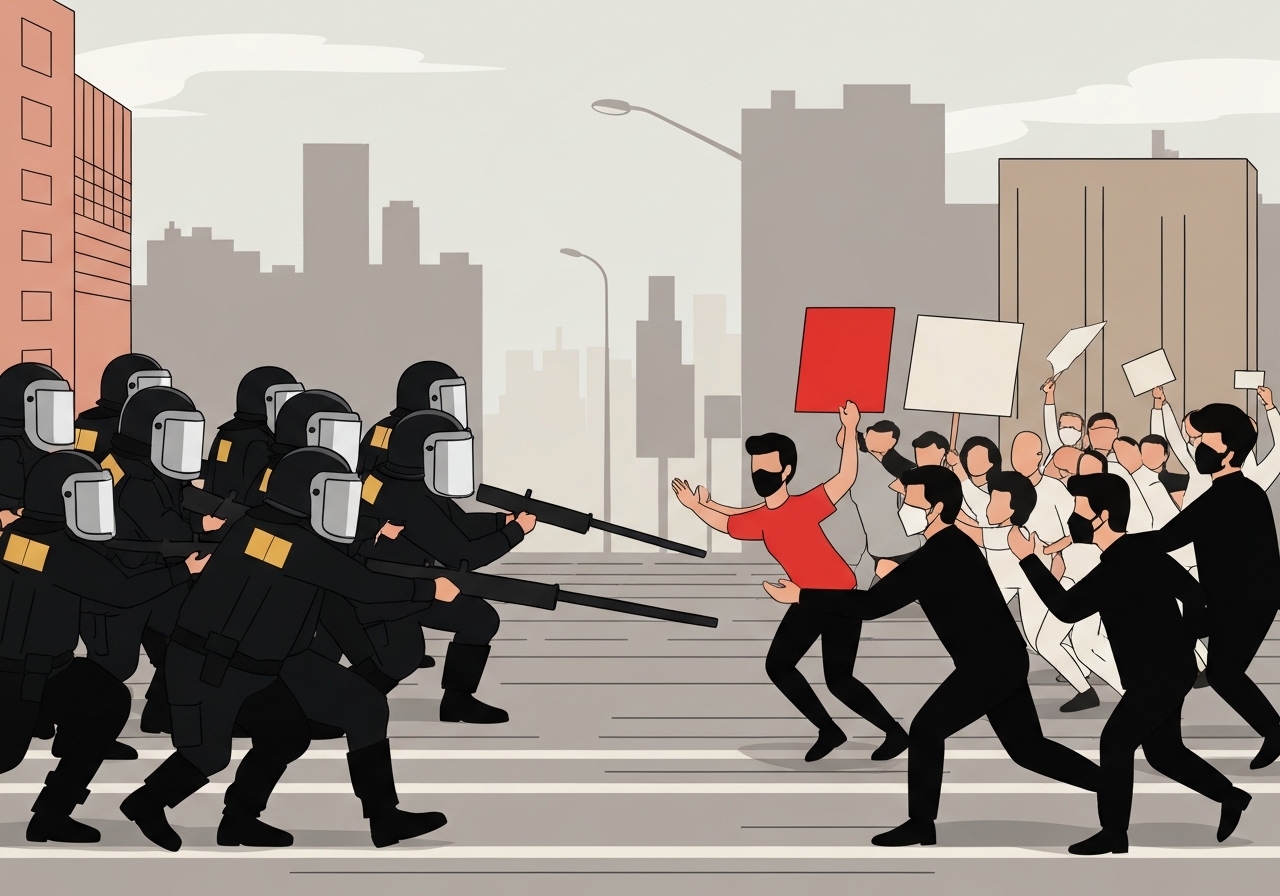
Lead: Senior Trump administration officials issued near-immediate public judgments after federal agents shot and killed a 37-year-old Minneapolis resident, Alex Pretti, during an operation over the weekend reported on Jan. 25, 2026. Statements from top aides and agency leaders characterized Pretti as a grave threat and said an agent fired to protect himself and others. Within hours, videos and witnesses that surfaced raised questions about that account, setting up a clash between official assertions and visual evidence. Observers say the speed and tone of the administration response departed from typical law enforcement practice and risked shaping public opinion before a full investigation.
- Federal agents shot and killed 37-year-old Alex Pretti in Minneapolis during an operation, reported Jan. 25, 2026; Pretti was a registered nurse with no criminal record reported in public filings.
- Senior officials, including homeland security adviser Stephen Miller and Border Patrol operations head Gregory Bovino, made categorical public claims within hours, calling Pretti a domestic terror threat and alleging intent to massacre officers.
- The Department of Homeland Security issued an initial statement saying an agent fired in perceived self-defense, describing the shots as defensive to protect lives.
- Multiple videos that emerged after the shooting appeared to conflict with key elements of the government narrative, prompting calls for an independent review and preserving of footage.
- President Trump publicly shifted blame toward Democrats for alleged noncooperation with the operation, framing party politics as a contributing factor.
- Former CBP official Daniel Altman warned that swift political conclusions in crises can undermine public confidence in investigatory processes.
Background
Federal immigration enforcement actions in urban areas have been politically charged in recent years, especially when they involve raids or high-profile confrontations. The Trump administration intensified immigration enforcement priorities, prompting frequent clashes with local authorities and advocacy groups over jurisdiction, tactics and community safety. Minneapolis has been a focal point of debate over policing and federal intervention since high-profile incidents in prior years, creating heightened public sensitivity to any use of force by government agents.
The victim, identified as Alex Pretti and described in public reporting as a 37-year-old registered nurse, had no publicly reported criminal record. Federal officials said Pretti was filming Border Patrol agents during an operation; supporters and witnesses said he was documenting agents activity in public. The discrepancy between official statements and civilian video footage has amplified scrutiny of how federal agencies present events immediately after shootings.
Main Event
According to agency statements, federal agents encountered a man filming their activity in Minneapolis and an exchange ended with an agent firing shots that killed the man. DHS characterized the shooting as defensive, noting the agent feared for his life and for fellow officers. Administration messaging was rapid and pointed, with senior aides and agency leaders offering categorical descriptions of the scene before investigators had completed fieldwork.
Shortly after the shooting, Stephen Miller, a senior White House homeland security adviser, publicly labeled the individual a domestic terrorist, a term that signals a severe criminal intent. Gregory Bovino, the official overseeing Border Patrol operations, said the man intended to ‘massacre law enforcement’ according to administration briefings. Those statements were widely amplified across administration channels within hours of the shooting.
Within the same time window, videos recorded at the scene were shared online and with journalists, and some clips appeared to contradict core elements of the official narrative. Observers noted that video showed the man pinned down when agents opened fire, but interpretations of the footage remain contested. Local authorities and federal investigators said they were still assembling evidence, and officials indicated internal reviews would follow established protocols.
Analysis & Implications
The administration’s swift, assertive narrative raises questions about the balance between immediate public communication and the integrity of subsequent investigations. Law enforcement practice typically emphasizes preserving the scene and refraining from definitive public attribution of motive until factual evidence is fully collected and reviewed. Rapid political messaging can shape public perceptions, potentially influencing witness cooperation and jury pools if prosecutions follow.
Beyond process, the episode has policy implications for federal-local relations. When federal officials publicly blame local leaders or political opponents, as President Trump did by assigning responsibility to Democrats for alleged noncooperation, it deepens institutional tensions and could complicate evidence sharing. That dynamic may affect future joint operations and the willingness of local agencies to collaborate on sensitive enforcement actions.
There are legal and accountability consequences as well. If investigative findings later differ materially from early official claims, the credibility of agencies and leaders who made those claims could be eroded, prompting calls for independent review mechanisms. Civil rights groups and legal advocates are likely to press for transparent release of footage, after-action reports and timelines to ensure oversight.
Comparison & Data
| Source | Claim | Evidence as Reported |
|---|---|---|
| Administration officials | Individual posed lethal threat; shots defensive | Official statements issued hours after shooting |
| Published video clips | Show man pinned down when shots fired | Multiple short clips circulated online and with journalists |
| Local witnesses | Accounts vary; some corroborate video, others note chaos | Eyewitness accounts collected by reporters |
When compared side by side, the timeline and emphasis in official statements differ from initial readings of publicly shared video. Establishing a definitive sequence will require review of all footage, agent reports, radio communications and forensic evidence. The table above summarizes the primary, immediately available sources and the gaps investigators will need to close.
Reactions & Quotes
Administration officials framed the incident as an example of a threat neutralized in the field, using forceful language to justify the shooting and to defend agency personnel.
He was a domestic terrorist, and he was endangering the lives of officers on scene.
Stephen Miller, White House homeland security adviser
Agency leadership echoed that characterization in public briefings, presenting the shooting as a necessary defensive action.
Our agent fired defensive shots because he feared for his life and the lives and safety of fellow officers.
Department of Homeland Security statement
Other voices emphasized procedural norms and the dangers of premature conclusions from political actors with a stake in public opinion.
Leaders often try to gain political advantage in crises, but snap judgments can undermine trust in investigations.
Daniel Altman, former CBP official
Unconfirmed
- Whether Alex Pretti intended to harm officers beyond filming remains under investigation and is not established by available public evidence.
- Precise sequence of movements in the seconds before shots were fired is contested; fuller footage and communications logs have not been publicly released in full.
- Internal agency communications that might explain the rapid public narrative have not been disclosed, so motivations for the immediate messaging are not independently verified.
Bottom Line
The Minneapolis shooting and the administration response together highlight a broader tension between rapid political messaging and methodical investigative procedure. Officials spoke decisively within hours, but the emergence of contradictory videos underscored the need for caution before issuing final judgments.
For public trust to be sustained, investigators should collect and publish comprehensive evidence as permitted by law, and independent reviewers may be necessary to resolve disputes arising from conflicting accounts. The incident will likely reverberate in debates over federal enforcement practices, intergovernmental cooperation and safeguards that govern the release of information after use-of-force events.
Sources
- The New York Times — news report
- Department of Homeland Security — official statements and press releases
- U.S. Customs and Border Protection — agency information and operational context