
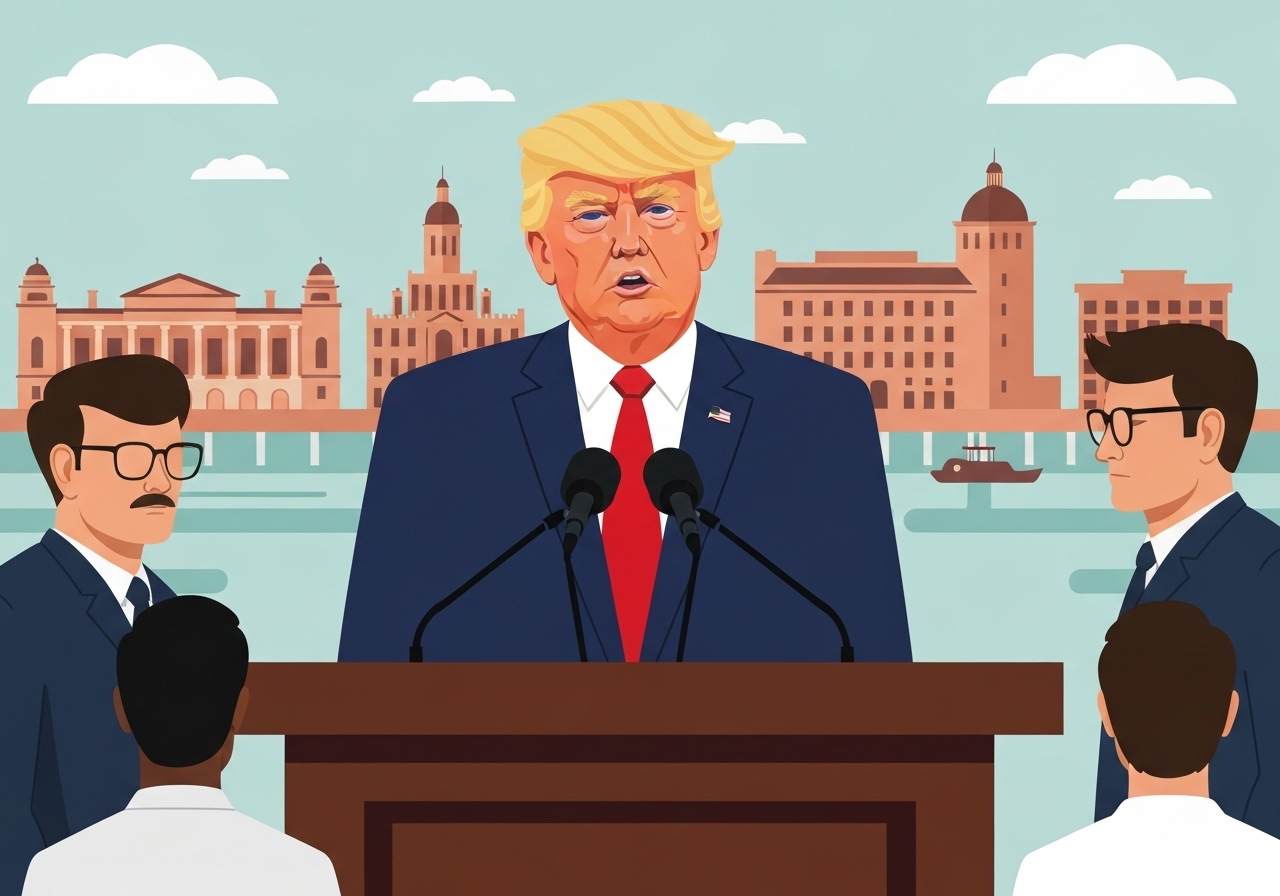
— President Donald Trump said the White House is weighing whether to deploy National Guard troops to cities such as New Orleans and Chicago, saying Louisiana’s governor would welcome federal forces and predicting a quick effort to “straighten out” trouble spots within weeks.
Key Takeaways
- Trump on Sept. 3 said the administration is considering National Guard deployments to New Orleans, Chicago, New York and Baltimore.
- Louisiana Gov. Jeff Landry (R) publicly welcomed federal assistance; Illinois Gov. J.B. Pritzker (D) has objected.
- The administration is facing a federal court loss over a prior troop deployment to Los Angeles that found legal limits were violated.
- Trump suggested governors need to request help but has also asserted authority to send forces.
- Public polling shows many voters oppose deploying service members to Washington, D.C.; violent crime in D.C. continues to decline.
Verified Facts
Speaking from the Oval Office, the president listed New Orleans as an example of a place with a governor who would welcome National Guard assistance and said a deployment there could be completed in about two weeks. He also mentioned Chicago, New York and Baltimore as possible destinations.
Gov. Jeff Landry of Louisiana posted on X that he would accept federal help, saying the state welcomes assistance “from New Orleans to Shreveport.” Illinois Gov. J.B. Pritzker, a Democrat, has publicly opposed a similar deployment to his state.
Earlier this week a federal judge in California ruled that the administration’s deployment of National Guard troops to Los Angeles violated federal law prohibiting the use of military personnel for domestic law enforcement, and the White House is contesting related legal challenges.
Trump has framed the moves as responses to crime and public safety concerns and has criticized Democratic leaders as out of step with voters on those issues. Independent data show violent crime in Washington, D.C., has declined in recent years, reflecting a broader national trend.
Context & Impact
Federal deployments of military or Guard units to U.S. cities raise immediate legal and political questions. State governors generally control National Guard activations unless federal troops are called under distinct authorities.
A court decision finding an unlawful use of troops, as occurred in California, could limit or delay future deployments and prompt renewed litigation if the administration proceeds. Political reaction is likely to split along partisan lines, with Republican governors more receptive and Democratic governors more resistant.
Possible impacts include rapid short-term increases in visible security presence and longer-term legal and civil liberties debates over the appropriate role of federal forces in domestic policing. Local law enforcement leaders may also resist or coordinate with federal units depending on operational agreements.
Official Statements
“We have a great governor, Jeff Landry, who wants us to come in and straighten out… We’ll straighten that out in about two weeks,” the president said in the Oval Office.
President Donald Trump
Unconfirmed
- Precise timelines, troop numbers, and mission rules for any proposed deployment have not been publicly released.
- Whether governors beyond Louisiana will formally request federal forces remains unresolved.
- How federal command would coordinate with local police and what rules of engagement would apply have not been disclosed.
Bottom Line
Trump’s proposal to send National Guard units to cities such as New Orleans has immediate legal and political implications: governors’ consent, active court challenges stemming from prior deployments, and questions about the proper use of military forces in domestic public-safety roles will shape whether and how any deployment moves forward.