
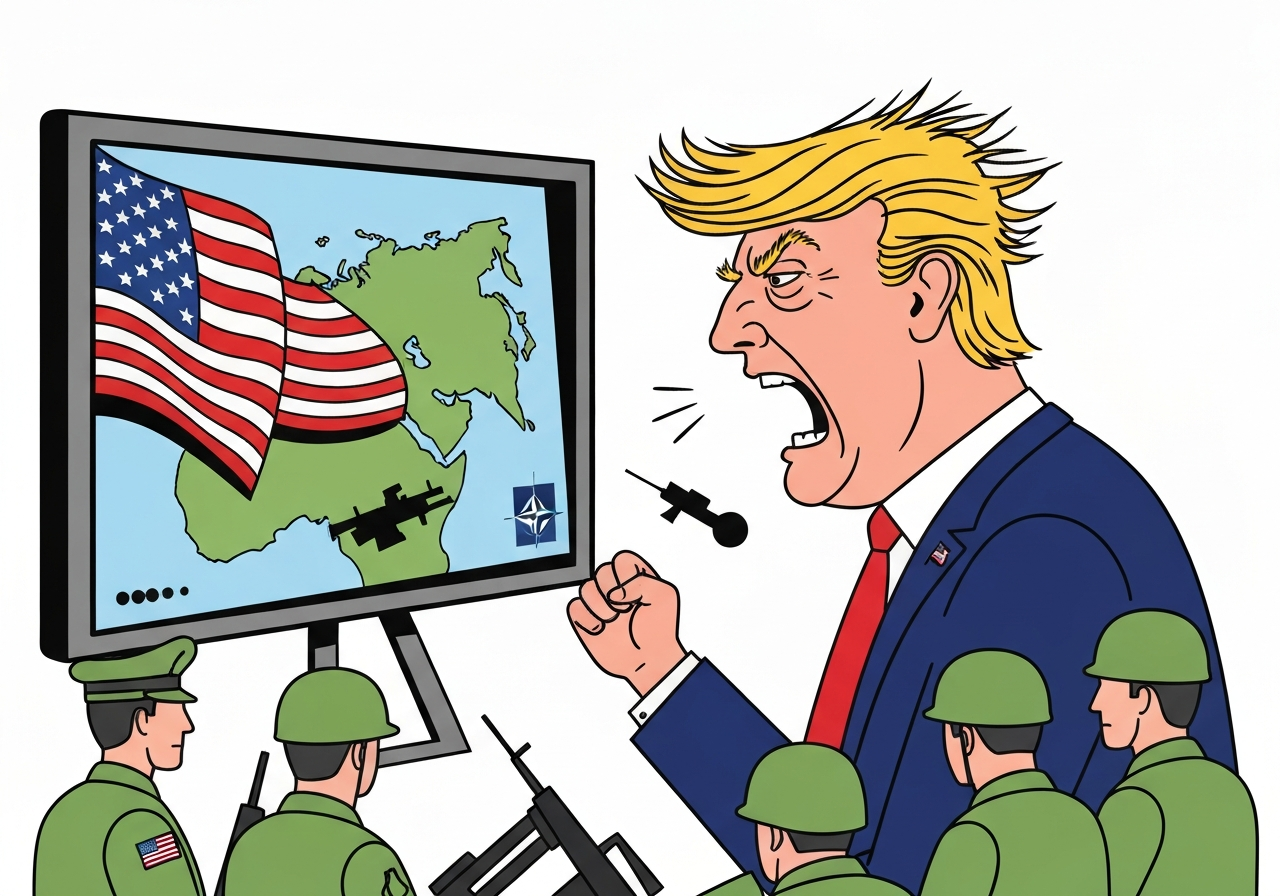
Lead: President Donald Trump on Friday criticized NATO members for what he called reluctance to ‘‘help open’’ the Strait of Hormuz as leaders from more than a dozen U.S. allies pledged to join ‘‘appropriate efforts’’ to secure passage through the waterway. The joint statement — signed by countries including the UK, France, Germany, Italy, Japan, Canada, South Korea, Denmark, Norway, Sweden and Bahrain — gave no operational details. The exchange comes amid reports the U.S. is preparing to send three additional warships and thousands more troops to the Middle East, even as the White House says it is exploring options to ‘‘wind down’’ the conflict with Iran. Trump also rejected a ceasefire, saying he prefers dialogue but not a truce while the U.S. seeks to degrade Iranian military capability.
Key takeaways
- More than a dozen nations issued a joint statement on Thursday offering to join ‘‘appropriate efforts’’ to ensure safe passage through the Strait of Hormuz; the declaration included the UK, France, Germany, Italy, Japan, Canada, South Korea, Denmark, Norway, Sweden and Bahrain.
- President Trump publicly rebuked alliance partners, calling some ‘‘cowards’’ for resisting operations to reopen the strait following repeated Iranian attacks on tankers and other commercial shipping.
- U.S. media and officials report Washington may deploy three additional warships and ‘‘thousands’’ more troops to the Middle East; the Pentagon has not published a final deployment order.
- The Treasury announced a 30-day sanctions waiver allowing purchases of Iranian oil at sea, intended to ease global energy pressures since the start of the U.S.-Israel conflict with Iran.
- Domestic U.S. strains continued: airport security delays worsened amid a Homeland Security staffing crisis, and U.S. markets fell for a fourth straight week amid war-driven oil and risk concerns.
- U.S. agriculture faces rising input costs as Hormuz disruptions and regional instability have hindered fertilizer production and shipment routes critical to American farmers.
- Legal and civil controversies persist at home: the administration filed a new lawsuit against Harvard in Massachusetts, and a federal judge blocked key parts of a Pentagon press access policy upheld by the New York Times challenge.
Background
The Strait of Hormuz is a narrow chokepoint through which roughly one-fifth of globally traded petroleum passes in normal times; attacks on tankers and other vessels have periodically disrupted that flow since the current U.S.-Israel conflict with Iran escalated. Iran has carried out a series of strikes and interdictions targeting commercial shipping, which officials and analysts say has effectively constrained maritime traffic through the route. Those actions have prompted anxiety among energy-importing nations and increased calls for international measures to protect commercial navigation.
NATO and U.S. allied coordination has historically relied on political consensus and burden-sharing; in recent weeks that dynamic has been stressed by divergent risk calculations among capitals. Several partners are wary of actions that might widen the conflict with Iran, while Washington faces domestic pressure to demonstrate a response. The result is a public tug-of-war between U.S. force posture signals and allied caution about deeper military involvement.
Main event
On Thursday, leaders from over a dozen U.S. partners released a joint pledge to support ‘‘appropriate efforts to ensure safe passage’’ through Hormuz but stopped short of outlining naval escorts, interdiction rules, or logistics support. That vagueness reflects differing national rules of engagement, legal authorities and political thresholds for military action. President Trump immediately seized on the statement to press allied governments to do more, using unusually blunt language to describe some partners as ‘‘cowards’’ for hesitancy.
At the same time, multiple U.S. outlets reported that Washington is preparing to send three additional warships and thousands of troops to the region. Administration officials have framed such moves as deterrence and protection for shipping lanes; Pentagon spokespeople have so far offered limited public confirmation pending final orders. Separately, Treasury Secretary Scott Bessent announced a 30-day sanctions waiver permitting limited purchases of Iranian oil at sea to relieve near-term energy market pressures tied to the conflict.
President Trump, asked if he would pursue a ceasefire, said he preferred dialogue but rejected a formal truce while U.S. officials aim to ‘‘obliterate’’ Iranian military capabilities — language he repeated to reporters on Friday. That stance signals continued pressure operations rather than an immediate diplomatic pause. On the home front, the DHS staffing shortfall has produced extended airport security lines, while markets and farmers absorb the spillover effects of regional instability.
Analysis & Implications
The allied joint statement demonstrates political alignment on the abstract goal of securing shipping, but without operational detail it may have limited deterrent power. Effective protection of Hormuz would require maritime coordination, rules of engagement, intelligence sharing and robust logistics — all areas where allies currently diverge. Absent a clear, shared plan, Iran may continue selective attacks that raise insurance costs and reroute shipping, prolonging market uncertainty.
A reported U.S. deployment of three warships and ‘‘thousands’’ of troops would increase American military presence but also raise escalation risks and logistical burdens. Large troop movements change adversary calculations and create targetable concentrations; they also force allies to decide whether to support or distance themselves from potential kinetic operations. Diplomatically, heavier U.S. force posture can be framed at home as decisive action while making it harder to present the U.S. as seeking de-escalation.
The 30-day sanctions waiver for Iranian oil at sea is a short-term, tactical move to steady markets rather than a strategic shift in policy. It may temporarily reduce price spikes but does not remove the underlying security risk posed by attacks on shipping. For farmers and manufacturers dependent on fertilizer and energy imports, even a brief interruption can lead to cascading cost pressures and planting- or production-timing problems in global supply chains.
Politically, the president’s public chastising of NATO partners complicates coalition management. Strong rhetoric can sharpen bargaining positions but risks alienating leaders whose domestic politics constrain military commitments. If the U.S. proceeds unilaterally, it may shoulder disproportionate costs and face long-term strains in transatlantic and transpacific ties.
Comparison & Data
| Item | Reported | Context |
|---|---|---|
| Additional warships | 3 (reported) | Pending Pentagon confirmation; sized to strengthen regional naval posture |
| Additional troops | Thousands (reported) | Unspecified units and missions; could include rotational or surge forces |
| Sanctions waiver | 30 days | Authorized by Treasury to permit limited Iranian oil purchases at sea |
The table summarizes publicly reported figures. Precise deployment orders, unit compositions and operational mandates remain subject to formal Pentagon releases. Even small changes in deployed force posture can significantly alter regional risk calculations and shipping insurance premiums.
Reactions & quotes
“They don’t want to help open the Strait of Hormuz — they’re cowards,”
President Donald Trump, remarks to reporters
Trump used stark language to pressure allies to take a more active role in reopening the maritime route. Officials in allied capitals have publicly expressed concern about escalation and emphasized the need for a calibrated coalition approach.
“We have issued a 30-day waiver to allow purchases of Iranian oil at sea to alleviate immediate supply pressures,”
Scott Bessent, U.S. Treasury official
The waiver is framed by Washington as a temporary measure to stabilize energy markets rather than a long-term policy change toward Iran. Market analysts say such measures can blunt short-term price shocks but do not remove the underlying security risks.
Unconfirmed
- Media reports of U.S. plans to occupy or blockade Kharg Island remain unverified by official Pentagon statements and lack supporting operational detail.
- The exact number, destinations and mission orders for the reported ‘‘thousands’’ of additional U.S. troops have not been publicly released.
- Details on how the joint allied pledge will translate into concrete naval escorts or interdiction operations have not been announced.
Bottom line
The public split between President Trump’s hardline rhetoric and an allied pledge that lacks operational specifics highlights a central dilemma: broad political agreement on securing shipping exists, but divergent risk tolerances and legal constraints limit immediate, unified action. Reported U.S. reinforcements would bolster American capability in the short term but increase the stakes of any kinetic exchange with Iran.
Expect continued volatility: markets and supply chains are already reacting to disruptions in Hormuz and to shifting policy signals. The most stabilizing path would be a coordinated multinational plan that pairs clear defensive measures for shipping with diplomatic channels to lower the likelihood of wider conflict — an outcome that will require sustained negotiation among Washington and its partners.
Sources
- The Guardian — (International news reporting; primary overview of the events cited)