
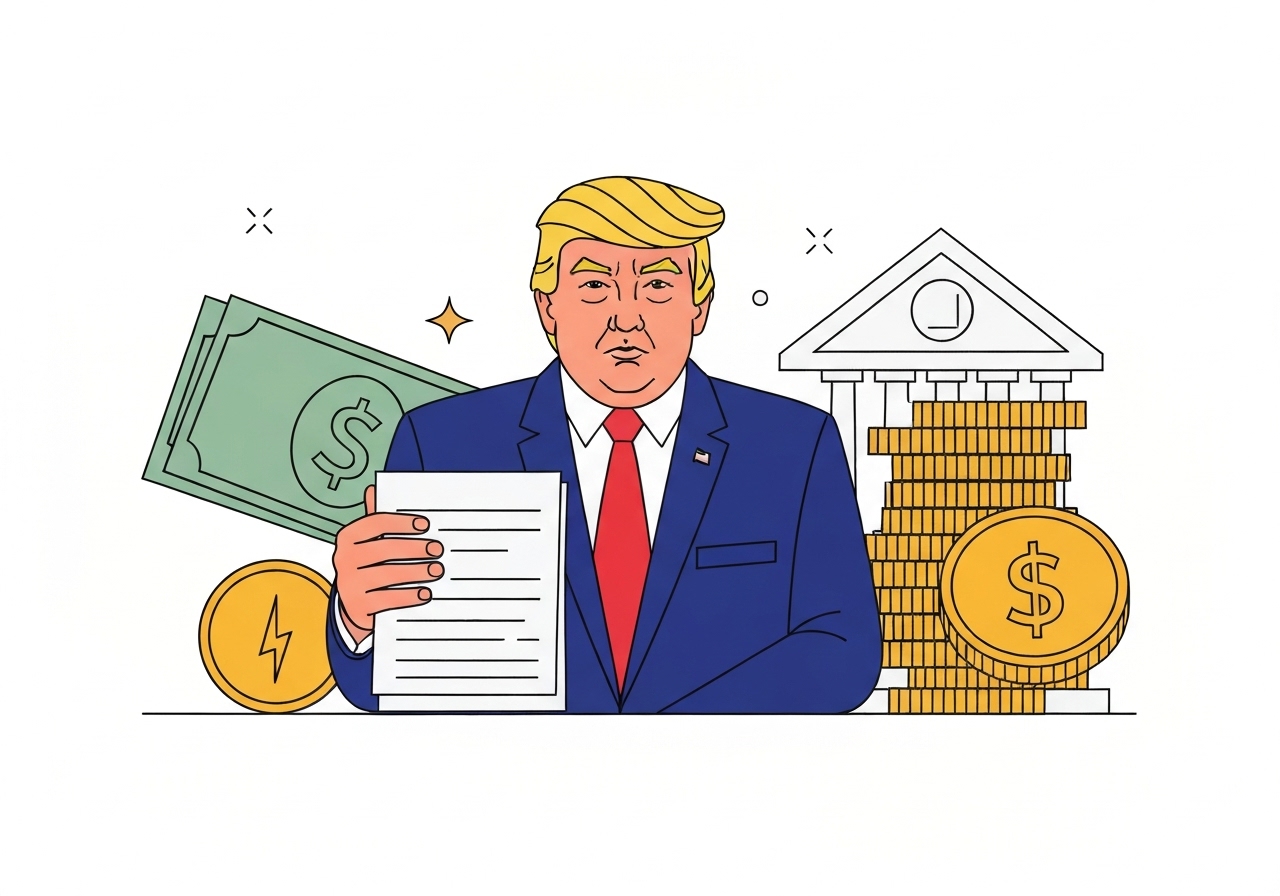
President Donald Trump told reporters on Sunday that he has chosen his nominee to replace Jerome Powell as Federal Reserve chair and will make a formal announcement soon. Speaking at a public appearance, Trump said, “I know who I’m going to pick as Fed Chair,” and added he would reveal the name shortly. He declined to confirm widespread speculation that Kevin Hassett, director of the White House National Economic Council, was the choice. The comment has immediately focused attention on Washington policy circles and financial markets that watch Fed leadership closely.
Key Takeaways
- On Sunday, President Trump said he has selected a nominee for Federal Reserve chair and will announce the decision soon.
- Trump quoted: “I know who I’m going to pick as Fed Chair,” and separately: “I will announce it soon.”
- The president did not confirm reports naming Kevin Hassett as the likely nominee; that possibility remains unverified.
- Jerome Powell, the sitting chair, is the intended replacement target in this transition.
- Markets and policy observers are monitoring how a new nomination could affect interest-rate expectations and Fed independence.
- The White House statement came during remarks to reporters rather than in a formal nomination release.
Background
The chair of the Federal Reserve is a central figure in U.S. economic policy, responsible for guiding monetary policy through interest-rate decisions and communications with markets. Fed chairs are nominated by the president and confirmed by the Senate; their selection often signals the White House’s approach to inflation, employment and financial stability. Jerome Powell has served as chair since February 2018 after being nominated by President Trump and confirmed by the Senate. Presidential statements about prospective replacements typically trigger both political and market scrutiny because the Fed operates with statutory independence even as appointments are made by elected officials.
Speculation about contenders for Fed chair tends to include both sitting officials and outside advisers; in recent months names from across policy circles have circulated in financial media. The White House National Economic Council, led by Kevin Hassett, has been a visible source of economic advice to the president, which is why Hassett’s name has surfaced in commentary. Historically, nominees have ranged from academics to former Fed governors to private-sector economists, reflecting differing presidential priorities for monetary strategy and central-bank governance.
Main Event
On the day of the remark, Trump addressed reporters and confirmed privately that a decision had been made, though he gave no timetable beyond saying the announcement would come soon. The president repeated two brief statements that underscored his intent to nominate someone: “I know who I’m going to pick as Fed Chair” and “I will announce it soon.” He refused to endorse any single reported candidate when pressed, leaving speculation alive and media accounts to report possible contenders.
The lack of a formal White House release means the nomination process had not yet advanced to a public submission to the Senate at the time of Trump’s comments. A formal nomination typically triggers briefings, background checks, and ultimately a confirmation hearing in the Senate Banking Committee before a full Senate vote. Market participants often treat the announcement itself as the key inflection point for adjusting rate expectations and asset prices.
Local and international financial markets reacted to the uncertainty with heightened attention: investors monitor not only who is chosen but statements about policy direction, such as a focus on inflation containment or on supporting employment. Because the Fed chair sets the tone for monetary policy, even an impending nomination—without details—can shift market pricing and political debate about central-bank independence.
Analysis & Implications
A presidential pick for Fed chair carries immediate domestic and global implications. Domestically, a nomination signals the administration’s priorities for inflation control, labor markets and financial regulation; an appointee aligned with the president’s economic outlook can alter expectations for rate paths and regulatory tone. Internationally, changes at the Fed affect exchange rates and capital flows, as investors reassess interest-rate differentials and risk premia tied to U.S. monetary policy.
Beyond near-term market moves, the nomination process tests institutional norms. The Federal Reserve’s independence is not absolute—chairs are appointed by presidents and confirmed by senators—but policy credibility depends on perceptions of professional competence and commitment to the Fed’s legal dual mandate: maximum employment and stable prices. A nominee seen as politicized could prompt concerns from economists and some lawmakers, while a widely respected economist or experienced Fed insider could reinforce stability.
For the White House, timing and communication matter. Announcing a nominee promptly with a clear rationale can shorten market uncertainty; extended ambiguity can magnify volatility. The Senate’s response will hinge on the nominee’s record and testimony; a contested confirmation could consume political capital and distract from other policy priorities. Finally, the identity of the nominee will shape expectations on issues like balance-sheet policy, forward guidance, and the Fed’s response to future economic shocks.
Comparison & Data
| Chair | Nominated by | Nomination Year | Took Office |
|---|---|---|---|
| Ben S. Bernanke | President George W. Bush | 2006 | 2006 |
| Janet L. Yellen | President Barack Obama | 2014 | 2014 |
| Jerome H. Powell | President Donald Trump | 2017 | 2018 |
This table shows recent Fed chair nominations and transitions: Bernanke (nominated 2006), Yellen (2014), and Powell (nominated in 2017 and took office in 2018). Comparing those transitions highlights that nominations can be made in advance of terms beginning and that confirmation and handover timetables vary. Observers will watch whether the new nomination follows a similar schedule or accelerates toward an immediate confirmation process. The past three chairs were nominated by presidents from both parties, underscoring the institutional continuity of the Fed across administrations.
Reactions & Quotes
Trump’s public remarks were the principal source of the new information and immediately drew attention from policymakers, economists and market participants. Reporters pressed for details about timing and identity; the president’s short quoted lines left significant uncertainty about the selection.
I know who I’m going to pick as Fed Chair.
President Donald Trump
When asked about reported contenders, the president declined to confirm any specific name, sustaining speculation and media reporting while formal White House channels remained silent.
I will announce it soon.
President Donald Trump
Market analysts and policy observers responded with analysis and hedging: some emphasized the potential for a more hawkish or dovish tilt depending on the nominee, while others cautioned that committee dynamics at the Fed moderate any single chair’s influence. Official responses from the Federal Reserve and the White House were limited to routine statements about procedure at the time of reporting.
Unconfirmed
- Kevin Hassett’s nomination has been widely reported but was not confirmed by the president at the time of his remarks.
- The precise date for a formal White House nomination and subsequent Senate hearing schedule is not yet announced.
- Any claims about the nominee’s specific policy commitments are premature until nomination materials and testimony are public.
Bottom Line
President Trump’s statement that he has chosen a successor for Jerome Powell and will announce the pick soon is a headline development that shifts Washington attention to the Fed’s leadership. At this stage the information is limited to the president’s remarks; formal nomination procedures have not been completed and Senate confirmation remains necessary. Market participants and policymakers will closely scrutinize the nominee’s background and policy views once a formal announcement is made.
Until the White House submits a formal nomination and the Senate holds confirmation hearings, many important details remain unresolved. Observers should watch for the administration’s stated rationale for the choice, the nominee’s record on monetary policy, and early reactions from Senate leaders and the Fed. Those elements will determine the speed of confirmation and the immediate market and policy consequences.
Sources
- Investors Business Daily (news report summarizing the president’s remarks)
- Federal Reserve (official institution overview and historical chair information)