
Lead
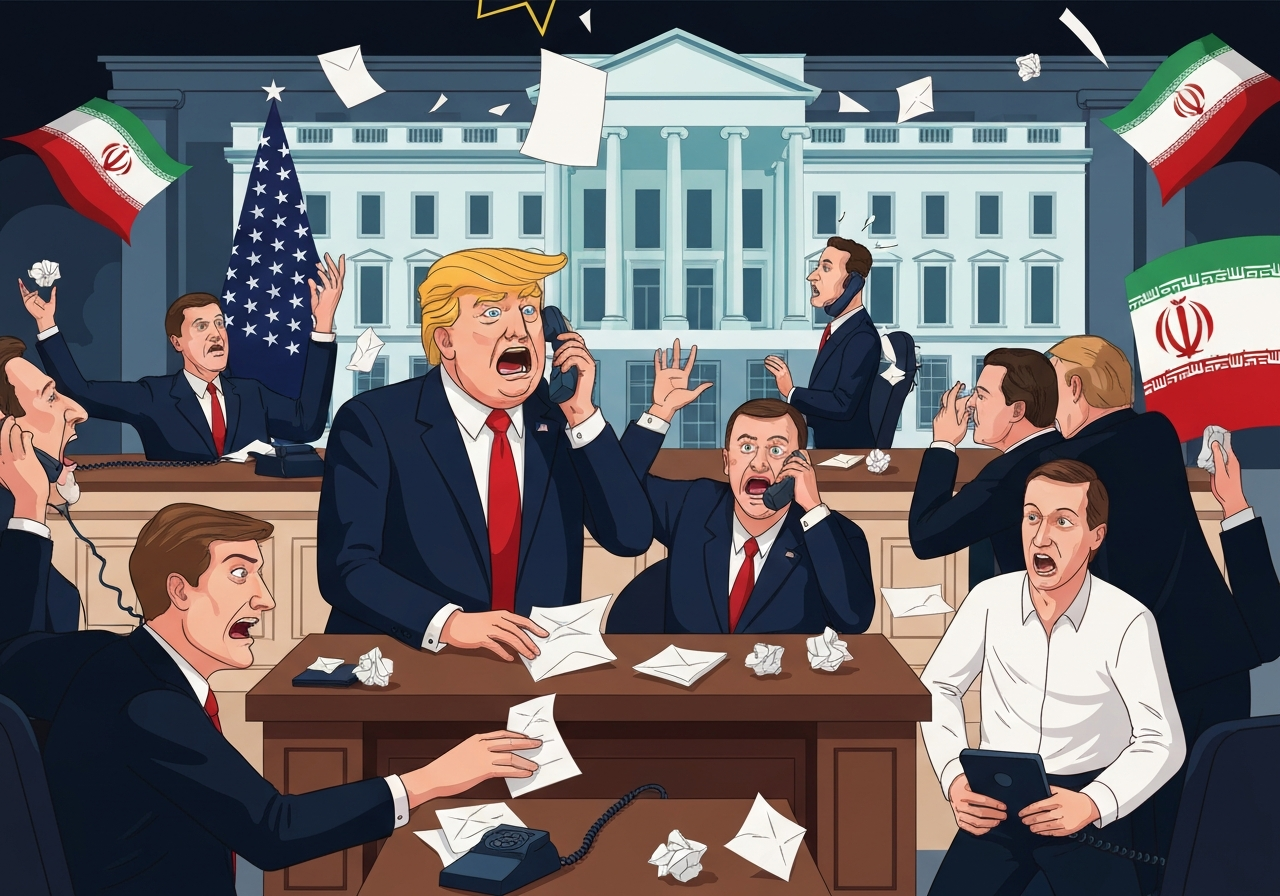
In the week after the United States and Israel struck Iran, the Trump administration has scrambled to respond as global oil prices spiked and U.S. gasoline costs jumped. Officials who expected only a short-lived rise say the scale and persistence of the price shock surprised them, prompting urgent policy talks in the White House. With tanker traffic through the Strait of Hormuz effectively halted and oil briefly approaching $120 a barrel, senior aides are racing to limit economic and political fallout ahead of domestic elections. The surge is threatening to erase parts of the administration’s domestic economic gains unless supply or security conditions stabilize quickly.
Key Takeaways
- The Strait of Hormuz disruption has affected roughly 20% of global oil flows, and up to 20 million barrels per day normally transit the waterway.
- Oil prices approached $120 a barrel early Monday before easing; they had been near $100 a barrel just over a week into the conflict.
- U.S. retail gasoline national average rose about $0.51 per gallon over the last week, reflecting rapid pass-through from crude to pump prices.
- Administration options under consideration include easing domestic shipping regulations, export limits, temporary price controls, Treasury intervention in futures markets, and tapping the Strategic Petroleum Reserve (SPR).
- Senior officials leading the response include Energy Secretary Chris Wright, Treasury Secretary Scott Bessent and Interior Secretary Doug Burgum, supported by the White House’s National Energy Dominance Council staff.
- An earlier White House plan to offer up to $20 billion in insurance for tankers to cross the Strait failed to spur shipping; military escorts are being discussed but logistics are uncertain.
- The Group of Seven discussed a coordinated release of reserves but opted against immediate action; G7 signatories said they “stand ready” to release stockpiles if needed.
Background
The price shock followed military strikes that escalated a week-long confrontation between the U.S. and Israel on one side and Iran on the other. The Strait of Hormuz, a narrow chokepoint off Iran’s coast, is a critical artery: roughly 20% of global crude typically transits it, making any suspension of traffic a direct supply shock to world markets. Traders reacted quickly to the sudden drop in seaborne shipments, bidding crude higher as tanker operators refused to risk transits amid the threat of attack.
The Trump administration entered the crisis with a political interest in lower fuel costs: reduced gasoline prices have been a cornerstone of the party’s messaging to voters ahead of midterm elections. Officials had expected a temporary price bump in the early days of the conflict, but the persistence of halted tanker traffic, combined with a tight global market, has made the problem more intractable. Historically, similar supply shocks—such as war-driven disruptions in 2022—pushed benchmark Brent and WTI prices into sustained volatility and required coordinated policy responses to blunt economic consequences.
Main Event
Interior and economic teams spent days assembling a menu of responses after oil jumped. Administration aides say immediate measures under active discussion ranged from regulatory tweaks to more assertive market actions. Suggestions include easing Jones Act-related limitations to speed domestic deliveries, loosening environmental or permitting constraints that can slow refinery throughput, and encouraging producers to lift output where possible. Officials also considered restricting crude exports to keep more oil in the U.S. market.
Some proposals were markedly more interventionist: potential price ceilings, Treasury market operations aimed at futures, and using the SPR have all been floated internally despite earlier resistance. The SPR, used by the previous administration in 2022 with only limited price relief, remains politically sensitive; President Trump has publicly criticized its past use. Behind closed doors, aides have nonetheless revisited it as a contingency while weighing geopolitical signaling and inventory levels.
Attempts to directly incentivize tanker transits failed to restore traffic. A proposed $20 billion insurance facility to underwrite tanker risk did not persuade shipowners to resume voyages, underscoring that financial backstops cannot fully substitute for physical security. Officials have discussed the prospect of military escorts through the Strait, and the president said in a broadcast interview that the administration is “thinking” about taking control of the route—an option that raises legal, operational and diplomatic complexities and would take time to implement.
Analysis & Implications
Short term, the most direct channel from the Strait disruption to everyday Americans is at the pump. A roughly $0.51-per-gallon national average rise over a week compresses household budgets and risks translating into political costs for incumbents. Economists warn that if higher crude prices persist, inflationary pressures could re-accelerate, complicating monetary policy and consumer confidence.
Policy levers available to the administration are limited. Administrative fixes—permitting tweaks, temporary export curbs or regulatory relief—can ease domestic logistics but are unlikely to replace tens of millions of barrels of seaborne oil lost to the market. Strategic releases from the SPR or a coordinated G7 release can provide temporary relief but do not address the root security problem blocking tanker traffic; once releases end, prices may rebound if the supply gap remains.
Market interventions such as price controls or Treasury activity in futures markets carry risks. Price controls can create shortages and distort allocation, while direct intervention in derivatives markets could spook traders, reduce liquidity and generate unintended volatility. Energy experts argue the most decisive route to normalization is restoring safe commercial transit through Hormuz or resolving the wider conflict rapidly; absent that, any policy will likely be a stopgap.
International coordination will matter. The G7’s readiness statement signals willingness to act jointly, but political divisions—reflected in U.S. skepticism about immediate reserve releases—limit the speed and scale of coordinated supply responses. Meanwhile, producers such as Saudi Arabia and other OPEC+ members could increase output, but they may be reluctant to offset a security-driven shortfall without clearer signals on the conflict’s duration.
Comparison & Data
| Metric | Reported Value | Context / Source |
|---|---|---|
| Strait of Hormuz transit | ~20% of world oil; ~20 million bpd | Typical pre-crisis flow through Hormuz |
| Oil price (one week in) | Near $100 per barrel | Price level shortly after conflict began |
| Oil price (early Monday) | Approached $120 per barrel | Peak before partial pullback |
| U.S. gasoline | + $0.51 per gallon (week) | National average jump over seven days |
The table above summarizes the primary numerical indicators driving policy urgency: large volumes normally transit the Strait, crude surged toward $120 before retreating somewhat, and retail gasoline spiked sharply in the U.S. These numbers help explain why the White House moved from a confidence posture to active contingency planning within days.
Reactions & Quotes
Senior energy and economic officials sought to project calm in public while preparing broader options privately. The administration emphasized that shipping would resume soon and downplayed long-term market disruption.
“We are not too long away, I think, before you’ll see more regular resumption of ship traffic. This is a weeks, this is not a months, thing.”
Energy Secretary Chris Wright (public remarks)
Energy markets analysts pushed back on optimistic public timelines and warned of sustained upward pressure on prices without restored flows.
“It’s hard to see anything but continued upward pressure on prices…People will get hurt at the pump.”
Neil Atkinson, former IEA oil markets division head
Traders and industry commentators highlighted practical limits: insurance and financial incentives did not remove the fundamental risk for ship crews and owners.
“Even if you’re insured against the risk of your ship being sunk, you don’t want your ship to be sunk.”
Tobin Marcus, Wolfe Research
Unconfirmed
- Exact timeline for resumption of regular tanker traffic through the Strait of Hormuz remains unclear and is subject to military and diplomatic developments.
- Whether the administration will deploy U.S. naval control or escorts for commercial shipping has been discussed internally but no formal plan or timetable was confirmed.
- The scope and timing of any coordinated G7 release of strategic reserves were discussed but no immediate, concrete commitments were made at the time of reporting.
Bottom Line
The administration’s rapid shift from confidence to crisis management reflects the scale of the supply shock: a chokepoint disruption that removed the equivalent of roughly 20% of seaborne flows is a market-level event, not merely a short-lived price blip. Practical policy options can blunt near-term pain at the pump but are unlikely to fully replace lost volumes or prevent price volatility if the Strait remains closed.
Political stakes are high: sustained higher gasoline prices would raise living costs for voters and could erode domestic political support. The most direct path to stable energy markets remains a rapid de-escalation of the conflict and safe resumption of commercial shipping; absent that, expect a mix of temporary administrative actions, selective reserve releases, and international negotiations aimed at managing prices rather than permanently solving the supply shortfall.