
Lead
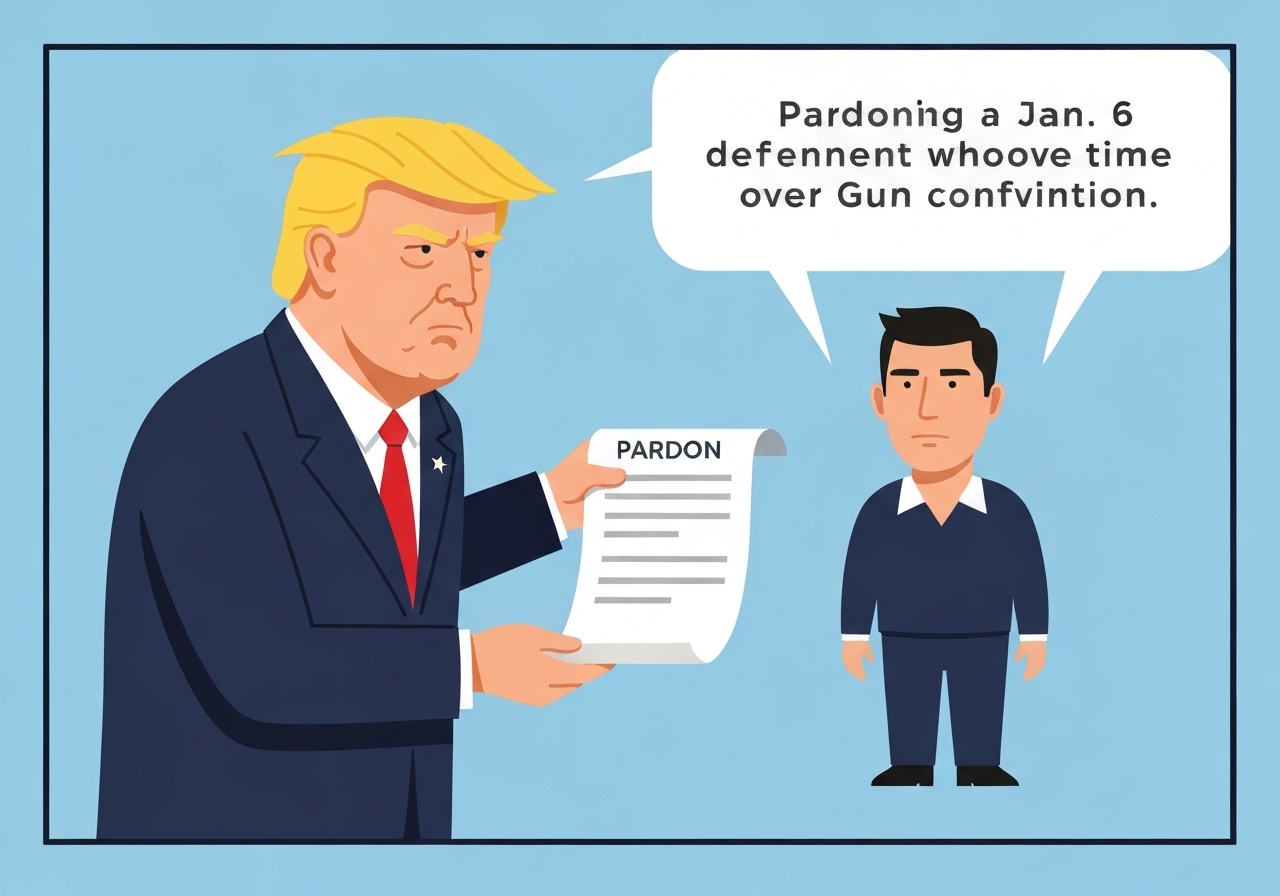
President Donald Trump on Friday issued a second pardon to Dan Wilson, a former Jan. 6 defendant, wiping out a 2023 Kentucky gun conviction that arose after a search tied to the January 6 investigation. Wilson had pleaded guilty in May 2024 to three offenses, including charges tied to his conduct at the Capitol on Jan. 6, 2021, and two Kentucky gun counts. The White House told NBC News the new pardon was granted because the gun charges stemmed from the Jan. 6 probe. The decision follows an earlier mass pardon in January that covered many defendants connected to the Capitol riot.
Key Takeaways
- Dan Wilson received a second presidential pardon on Friday for gun convictions from a 2023 Kentucky search linked to the Jan. 6 probe.
- Wilson pleaded guilty in May 2024 to three offenses: impeding or injuring an officer, Jan. 6-related conduct, and two gun charges from 2023.
- Trump previously issued a broad January pardon covering roughly 1,500 Jan. 6 defendants shortly after his inauguration to a second term.
- The White House told NBC News it granted the new pardon because the gun counts arose from the Jan. 6 investigation.
- After the January mass pardon, Wilson was briefly released, but federal prosecutors later said the release was “erroneous” and insisted he still faced time for the gun convictions.
- The government later sought to persuade U.S. District Judge Dabney L. Friedrich that the January pardon applied to Wilson’s gun charges; the judge expressed skepticism about that legal position.
- DoJ pardon attorney Ed Martin posted that Suzanne Kaye, another former Jan. 6 defendant, was also pardoned this week.
Background
The Jan. 6, 2021, attack on the U.S. Capitol produced hundreds of prosecutions and a raft of legal disputes about criminal liability and executive clemency. In January after returning to the White House for a second term, Trump issued a sweeping set of pardons that his administration said covered many defendants associated with the riot; reports at the time put the number at roughly 1,500 individuals. Legal teams and prosecutors have since litigated the scope of those pardons, arguing about whether subsequent or collateral charges connected to investigations are covered.
Dan Wilson’s case illustrates the swirl of overlapping charges that can follow a high-profile investigation: he pleaded guilty in May 2024 to conduct tied to Jan. 6 and to two separate gun counts that emerged after agents searched his Kentucky home in 2023 as part of the Jan. 6 inquiry. The interplay between plea deals, sentencing, and executive clemency has produced contested releases, revocations and renewed litigation in multiple districts.
Main Event
On Friday, the White House confirmed to NBC News that President Trump signed a pardon for Dan Wilson that specifically addressed the gun convictions from Kentucky. According to public reporting, the administration’s explanation was that the gun counts were a direct outgrowth of the Jan. 6 investigation and therefore eligible for clemency connected to earlier pardons. The new pardon follows Wilson’s prior January relief, which covered charges related directly to the Capitol events.
Wilson had pleaded guilty in May 2024 to three crimes: a charge for impeding or injuring an officer connected to Jan. 6, additional conduct at the Capitol on Jan. 6, 2021, and two gun-related charges from a 2023 search of his home in Kentucky. After the January mass pardon, he was released, but prosecutors later called that release “erroneous,” saying he still faced incarceration for the gun counts until the White House intervened again.
The Justice Department’s public docket shows the government altered its legal position over time, first treating the mass January clemency as not covering the Kentucky gun charges and later arguing the opposite in court. U.S. District Judge Dabney L. Friedrich reportedly reacted with skepticism when the government advanced that revised stance, noting the shift in argumentation and the legal complexity of retroactive pardon coverage.
Analysis & Implications
The second pardon deepens long-running legal and political questions about the scope of presidential clemency and how it intersects with multi-jurisdictional investigations. Legally, the administration’s position—linking out-of-state gun charges to a federal political protest probe—raises contested issues about causal connection and whether a mass pardon can be read to cover collateral offenses. Courts will likely continue to test those boundaries if similar cases arise.
Politically, the move reinforces the administration’s pattern of expansive clemency for Jan. 6 defendants and could energize supporters who view such pardons as corrective to perceived overreach by prosecutors. At the same time, it risks further polarizing observers who see broad pardons as undermining accountability for violence or obstructive acts tied to the Capitol attack. The practical effect for defendants is immediate: individuals with related collateral charges may now seek comparable relief or renewed legal arguments invoking the same rationale.
From a prosecutorial perspective, shifting positions by federal prosecutors—first calling Wilson’s release erroneous, then seeking to treat the earlier pardon as covering the gun counts—will draw scrutiny. Judges evaluating similar claims may give weight to the timing and content of government filings, and appellate courts could be asked to resolve conflicts about pardon interpretation and executive statements tied to mass clemency.
Comparison & Data
| Item | Reported figure / status |
|---|---|
| Mass Jan. pardons (reported) | Roughly 1,500 Jan. 6 defendants |
| Dan Wilson plea | Pleaded guilty May 2024 to three counts |
| Kentucky gun charges | Two convictions from 2023 search |
| Recent pardons noted | Dan Wilson (second pardon), Suzanne Kaye |
The table above summarizes the principal numerical facts in the case and situates Wilson’s second pardon within the administration’s broader clemency actions. While roughly 1,500 individuals were reported as part of the mass January pardons, only a smaller number of follow-on, case-specific pardons like Wilson’s have been publicly confirmed. Statistical follow-through—such as how many collateral charges were later addressed—remains incomplete in public records.
Reactions & Quotes
Wilson’s lawyer reacted strongly to the new pardon, framing it as a legal vindication and a turning point for his client.
“I am elated by President Trump’s bold and unapologetic pardon,”
George Pallas, counsel for Dan Wilson (statement to NBC News)
The Justice Department’s pardon office posted that another former defendant, Suzanne Kaye, was also granted clemency this week, a move that adds to the list of high-profile Republican-era pardons tied to Jan. 6.
“The president has also granted clemency to Suzanne Kaye,”
Ed Martin, Department of Justice pardon attorney (post)
At the federal-court level, a judge flagged concerns when the government changed its legal position about whether the January mass pardon covered the Kentucky gun counts.
“The shift in the government’s argument raises questions,”
U.S. District Judge Dabney L. Friedrich (court remarks)
Unconfirmed
- Whether the White House rationale that the Kentucky gun counts were legally inseparable from the Jan. 6 investigation will withstand appellate review is unresolved.
- It is not yet confirmed how many other defendants will receive subsequent, case-specific pardons tied to the January mass clemency.
Bottom Line
President Trump’s second pardon for Dan Wilson underscores how expansive clemency actions can reverberate through federal litigation, affecting plea outcomes, release decisions and prosecutors’ strategies. The new pardon resolves Wilson’s immediate exposure on the Kentucky gun convictions, but it leaves open broader legal questions about the reach of mass pardons and the interplay between federal investigations and state or collateral charges.
Observers should expect further legal testing of similar claims in district and appellate courts, and advocates on both sides will likely press for clarity on whether mass executive clemency can or should be read to nullify collateral offenses. For defendants and defense counsel, the Wilson case offers both a precedent to cite and a caution: clemency can change outcomes quickly, but durable legal standards will ultimately be shaped by continued litigation.
Sources
- NBC News (U.S. news outlet, report)