
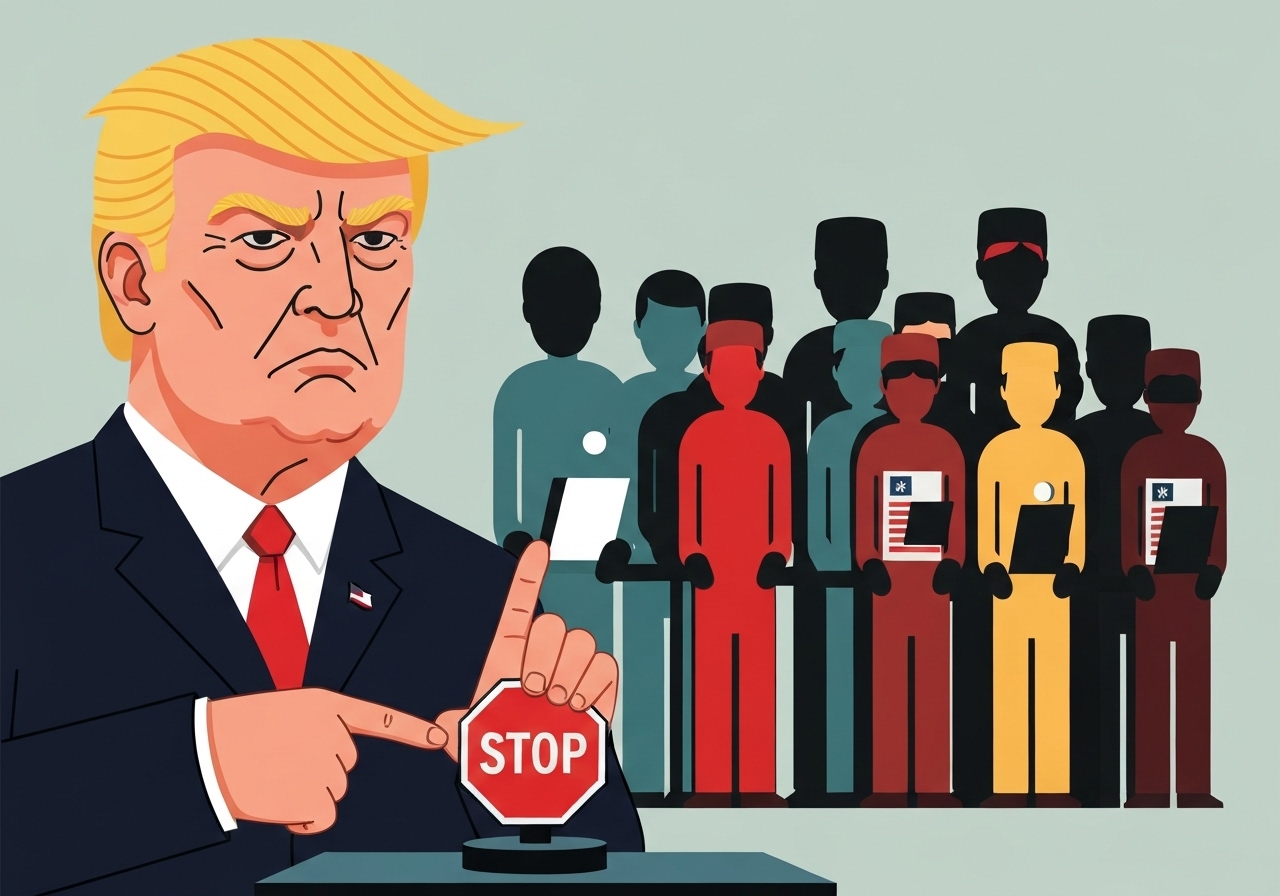
President Donald Trump announced a suspension of all U.S. asylum adjudications and the State Department halted visa processing for Afghan nationals on Friday, Nov. 28, 2025, as federal agencies open a wide review of immigration procedures. The moves followed a shooting on Wednesday, Nov. 26, in Washington, D.C., that wounded two National Guard members; authorities identified the suspect as 29-year-old Rahmanullah Lakanwal, an Afghan national who entered under a temporary evacuation program and was granted asylum in April. U.S. Citizenship and Immigration Services (USCIS) said it would pause asylum decisions while it expands vetting, and the State Department said it would stop issuing Afghan visas, including to those who assisted U.S. efforts in Afghanistan. The actions represent an immediate tightening of immigration controls with implications for thousands of pending cases.
Key Takeaways
- The U.S. paused all asylum decisions on Nov. 28, 2025, pending enhanced vetting by USCIS; the pause applies to pending and future adjudications.
- The State Department announced an immediate halt to visa issuance for Afghan nationals, explicitly including interpreters and others who aided U.S. operations.
- The policy shift followed a Nov. 26, 2025, shooting in Washington that injured two National Guard members; the suspect was identified as 29-year-old Rahmanullah Lakanwal.
- Officials say the suspect entered the U.S. through a temporary program for Afghans and was granted asylum in April 2025, according to people familiar with the case.
- The administration framed the changes as a security-driven review rather than a permanent policy reversal, but no timeline for resuming normal processing was provided.
- The measures expand recent restrictions the administration imposed at the southern border and signal more aggressive screening across immigration pathways.
Background
The pause on asylum adjudications and the Afghan visa halt come against a backdrop of tightened immigration controls since President Trump took office. Early in his term the administration significantly reduced asylum grants by imposing border measures intended to limit irregular entries; those actions already narrowed legal avenues for many migrants. The temporary program that admitted thousands of Afghans after the Taliban’s takeover remained a focal point for resettlement and humanitarian processing, with evacuees entering under expedited or special-parole schemes. Advocates and resettlement agencies have long warned that rapid intake can strain vetting resources, while security officials argue that gaps in screening pose risks.
Immigration adjudication involves multiple agencies—USCIS for asylum decisions and the State Department for most visa issuances—each with separate databases and review protocols. The current steps affect people who are already in the United States and those awaiting consular processing abroad. Previous administrations have adjusted asylum rules in response to security incidents or political pressure, but a full pause on adjudications across the board is uncommon and raises legal, logistical and humanitarian questions. Stakeholders from advocacy groups to governors and Members of Congress will likely press for clarity on timelines and exemptions.
Main Event
On Friday, USCIS Director Joseph Edlow issued notice that asylum adjudications would be suspended while the agency implements expanded vetting procedures. USCIS framed the action as temporary and tied it to an interagency review of screening practices. The State Department, in a separate notice the same evening, stopped issuing visas to Afghan nationals, including those who had served alongside U.S. forces during the Afghanistan conflict. Both announcements emphasized security concerns and the need to reassess intake channels created during the 2021 evacuation and subsequent humanitarian programs.
The immediate trigger for the announcements was a violent incident on Nov. 26, 2025, in Washington, D.C., in which a shooter wounded two National Guard members near the White House. Law enforcement identified the suspect as Rahmanullah Lakanwal, 29, who had been admitted through a temporary Afghan program and reportedly received asylum in April 2025, according to people briefed on the case. Authorities are conducting a criminal investigation into the shooting and a parallel review into whether procedural failures contributed to the suspect’s admission.
Implementation began Friday night: asylum officers were directed to pause final determinations, and consular posts were instructed to suspend new Afghan visa issuances until further notice. Agencies did not specify whether humanitarian categories or high-priority cases will be exempted, nor did they give an estimated timeline for reopening processing. Resettlement partners reported immediate confusion as caseworkers scrambled to inform clients about the new restrictions and to determine possible workarounds for time-sensitive cases.
Analysis & Implications
The pause signals a significant shift in how the administration balances immigration intake against perceived security risks. Stopping adjudications nationwide affects asylum seekers already inside the U.S., potentially prolonging detention or leaving vulnerable people in limbo. For Afghans who supported U.S. operations, the visa freeze could stall reunifications and jeopardize those awaiting relocation, increasing pressure on humanitarian partners and congressional allies who secured evacuation pathways.
Politically, the move consolidates the administration’s position on strict border and immigration controls and may appeal to a constituency prioritizing national security. However, legal challenges are likely: asylum seekers and advocacy groups have secured injunctions in the past when executive actions curtailed access to asylum or protection on procedural grounds. Courts may be asked to weigh whether a blanket pause violates statutory protections or due process for applicants.
Operationally, expanding vetting will require extra personnel, interagency data-sharing, and possibly new legislation to change screening standards. That could lengthen backlogs across USCIS and consular posts worldwide, producing secondary effects such as increased unauthorized crossings, pressure on shelters, and diplomatic friction with allies who host displaced Afghans. International partners and NGOs will watch closely for exemptions on humanitarian grounds and for assurances that recognized allies in Afghanistan are not left behind.
Comparison & Data
| Action | Date | Immediate Effect |
|---|---|---|
| Asylum adjudications paused (USCIS) | Nov. 28, 2025 | All pending and new asylum decisions suspended |
| Visa processing for Afghans halted (State Dept.) | Nov. 28, 2025 | Consular issuance to Afghan nationals suspended |
The table above summarizes the measures announced on Nov. 28, 2025. While comparable policy shifts in previous years often targeted specific entry points or legal categories, this pause is notable for its breadth: it impacts both domestic asylum processes and overseas visa channels at once. Agencies have not published numbers on how many cases are directly affected, but the combination of pending asylum dockets and Afghan processing queues suggests thousands of individuals could face delays.
Reactions & Quotes
Federal officials framed the changes as precautionary steps to strengthen screening. USCIS leaders described the pause as a way to recalibrate adjudication standards and to ensure interagency data checks are fully operational before resuming normal decisions.
We are pausing final asylum determinations while we expand vetting and coordination across agencies.
U.S. Citizenship and Immigration Services (USCIS)
State Department officials emphasized security responsibilities while acknowledging the humanitarian stakes for Afghans who assisted U.S. efforts. Advocacy groups and some lawmakers immediately pressed for exemptions to protect vulnerable applicants and those with documented service to the United States.
The Department has temporarily suspended visa issuances for Afghan nationals to review screening processes; reviews will determine how to proceed.
U.S. Department of State
Unconfirmed
- Whether the pause will include narrow exemptions for immediate threats to life or for people already promised relocation remains unclear and unannounced.
- It is unconfirmed whether the suspect’s motive is linked to his immigration status or to other factors; investigations are ongoing and no final motive has been publicly established.
- Reports that the asylum pause will be indefinite or will extend to other nationalities have not been corroborated by agency statements.
Bottom Line
The administration’s decision to pause asylum adjudications and freeze Afghan visa issuances on Nov. 28, 2025, responds to a recent violent incident and reflects a prioritization of expanded vetting and security reviews. In the short term, the moves create legal and humanitarian uncertainty for thousands of asylum seekers and Afghans who assisted U.S. efforts; resettlement partners and courts are likely to press for clarifications and exemptions. Over the longer term, Congress, federal agencies and civil society will negotiate how to strengthen screening without undermining lawful protections and commitments to allies.
Readers should watch for agency guidance that defines exemptions, timelines for resuming processing, and any legislative proposals that follow. The balance between security and humanitarian obligations will shape policy outcomes and practical impacts on people already enmeshed in U.S. immigration systems.
Sources
- The New York Times — news report summarizing announcements and initial reporting on the shooting and administrative responses.
- U.S. Citizenship and Immigration Services (USCIS) — official federal agency responsible for asylum adjudications (agency homepage).
- U.S. Department of State — official federal agency overseeing visa issuance and consular operations (agency homepage).